
How to Prioritize APP Features: Business Value, User Value, and Development Cost
Every item in a backlog has an advocate: sales says customers need it, leadership says competitors have it, operations predicts growth, and engineering demands a refactor. Releases expand while the core task remains weak.
Prioritization is not one universal formula. It is a transparent, explainable process whose decisions can change with new evidence.
01 Define the One Problem This Stage Solves
A feature ranks differently when the stage aims to validate demand, improve retention, grow revenue, or reduce cost. Without a stage objective, scores mix unrelated value.
Constrain the release with one or two measurable outcomes, such as "new users complete their first order within ten minutes," not "improve experience."
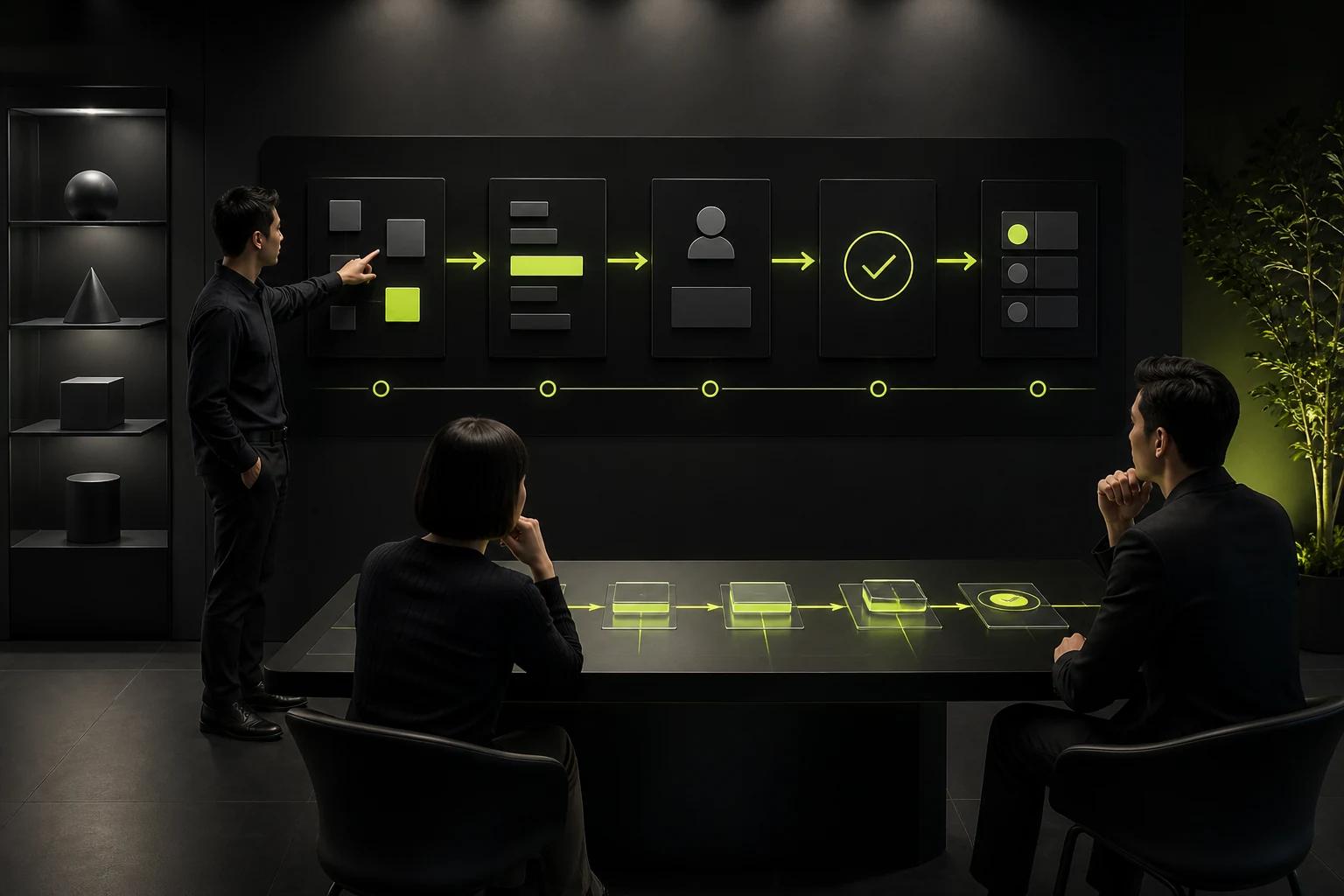
02 Rewrite Features as User Tasks and Outcomes
"Add a message center" is a solution, not a problem. Identify who lacks what information in which context and the consequence before judging whether a message center is the smallest solution.
Task-centered requirements reveal lighter, faster alternatives.
Feature Prioritization Dimensions
| Dimension | Question | Common Bias |
|---|---|---|
| User Value | How serious is the problem, and how many target users are affected? | Treating a few large customers as all users |
| Business Value | Does it affect revenue, retention, efficiency, or compliance? | Calling every benefit "higher conversion" |
| Evidence Strength | Is there data, research, an experiment, or only a guess? | Treating confidence as fact |
| Cost and Dependencies | What are design, development, data, and operating costs? | Estimating development but ignoring maintenance |
| Risk | What are security, compliance, brand, and failure impacts? | Counting upside but not loss |
| Timing | Is there a policy, contract, or market window? | Packaging long-term wishes as urgent |

03 Use Scoring Models for Discussion, Not Automatic Decisions
RICE, ICE, and MoSCoW are useful, but their scores come from assumptions. Explain sources, confidence, and dependencies rather than treating decimals as objective truth.
Security, compliance, and stability requirements may need a separate must-do threshold rather than competing with growth scores.
04 Build a Thin Slice That Validates the Entire Value Chain
An MVP does not make every module crude; it completes the core task with minimum scope. Payment may support one method first, but selection through result must work end to end.
Half a workflow cannot validate value and accumulates temporary states.

05 Consider Dependencies and Combinations
A high-scoring feature may depend on data governance, permissions, or components. Put those dependencies on the roadmap. Several small features that create value only together should be evaluated as a theme.
Organizing roadmaps by goals and problems is clearer than one long feature list.
06 Review Assumptions and Scores After Launch
Record each feature's value hypothesis, success metric, and cost estimate; compare them with use, business results, and maintenance after launch.
Without reviews, teams overvalue new features and undervalue optimization or removal.
Frequently Asked Questions
Which Prioritization Model Is Best?
No model is universal. Small teams may use value-cost; data-rich teams may use RICE. Consistent definitions and reviews matter most.
Must Leadership-Requested Features Be Evaluated?
They may be executed, but document goals, cost, risk, and success criteria so outcomes can be judged.
Should a Customer Request Be Built Immediately?
First assess market representativeness, alternatives, renewal, and contract impact.
How Does Technical Debt Enter Prioritization?
Express it as stability, development efficiency, security, and business risk. Severe risks can be mandatory.
What If Nobody Uses the Feature?
Check discovery, context, and the original hypothesis. If value fails, merge, retire, or stop investing.
| Service | View |
|---|---|
| Related Services | View Service Details |
| Project Inquiry | Contact JVDS Design Studio |
| Design and Website Development Articles | View Service Details |
 Link copied