
When registrations are high and payments are low, teams often change package prices or add more pop-ups first. But trial conversion is an end-to-end chain: Are visitors the target customer? Can they get started? Do they see a business outcome? Who approves the purchase? Is payment easy? Any link can break.
Do not group every unpaid user together. Some are casually exploring, some lack data and permissions, and some already value the product but need executive approval. Each cause needs a different response.
01 Separate “No Value” From “Value Not Completed”
If target customers complete the core task and still find the product unhelpful, positioning or capability is the issue. If users never reach the core outcome, guidance, data preparation, integrations, or workflow complexity are more likely at fault. A promotion cannot solve both.
At minimum, the trial funnel should separate registration, first key action, first completed result, repeated use, collaborator invitation, plan view, and purchase initiation. Registration-to-payment alone cannot reveal the real drop-off.

02 Center the Free Trial on One Clear Scenario
“Every feature free for 14 days” sounds generous but may leave users unsure where to begin. A better trial recommends a path by role or task—for example, “Import one dataset and generate your first weekly report”—so users can verify the outcome they care about quickly.
Products requiring extensive enterprise setup can offer a demo environment, prepared templates, or consultant-assisted configuration. Otherwise, the entire trial may be consumed by preparation.
Typical Reasons Trials Do Not Convert
| Behavior | Possible Cause | First Action | Do Not Rush To |
|---|---|---|---|
| Leaves soon after registration | Traffic mismatch or unclear home-page promise | Analyze sources, keywords, and hero expectations | Extend the trial immediately |
| Enters product but never activates | Blank state, heavy configuration, no sample | Shorten the first-value path | Add more feature introductions |
| Uses frequently but does not buy | Free plan is enough or buyer differs from user | Review paid boundaries and the decision chain | Send coupons only |
| Starts purchase but does not finish | Payment, contract, invoice, or security friction | Simplify the process and supply procurement materials | Add more in-product pop-ups |
| Wants to continue only after expiry | Value appears late | Offer behavior-based extension or consultant help | Extend every trial uniformly |

03 Use Paid Boundaries to Control Cost, Not Damage Experience
A good free plan lets users experience the complete core value, then creates upgrade reasons around team size, usage volume, advanced collaboration, automation, or governance. Hiding export, adding watermarks, or interrupting constantly may drive users away before trust forms.
Limits should correspond to paid value and be explained before users reach them. Suddenly locking data they have invested in is one of the fastest ways to lose trust.
04 Design Communication Between Users and Buyers
In B2B SaaS, users may value the product while procurement has never seen it. Provide a shareable value summary: what has been completed, how many steps were saved, team adoption, and what payment unlocks. Do not force the user to rebuild the business case alone.
For products with substantial security, legal, and finance reviews, make contracts, invoices, data-processing terms, security information, and deployment options easy to access. Many “conversion problems” occur outside the product.
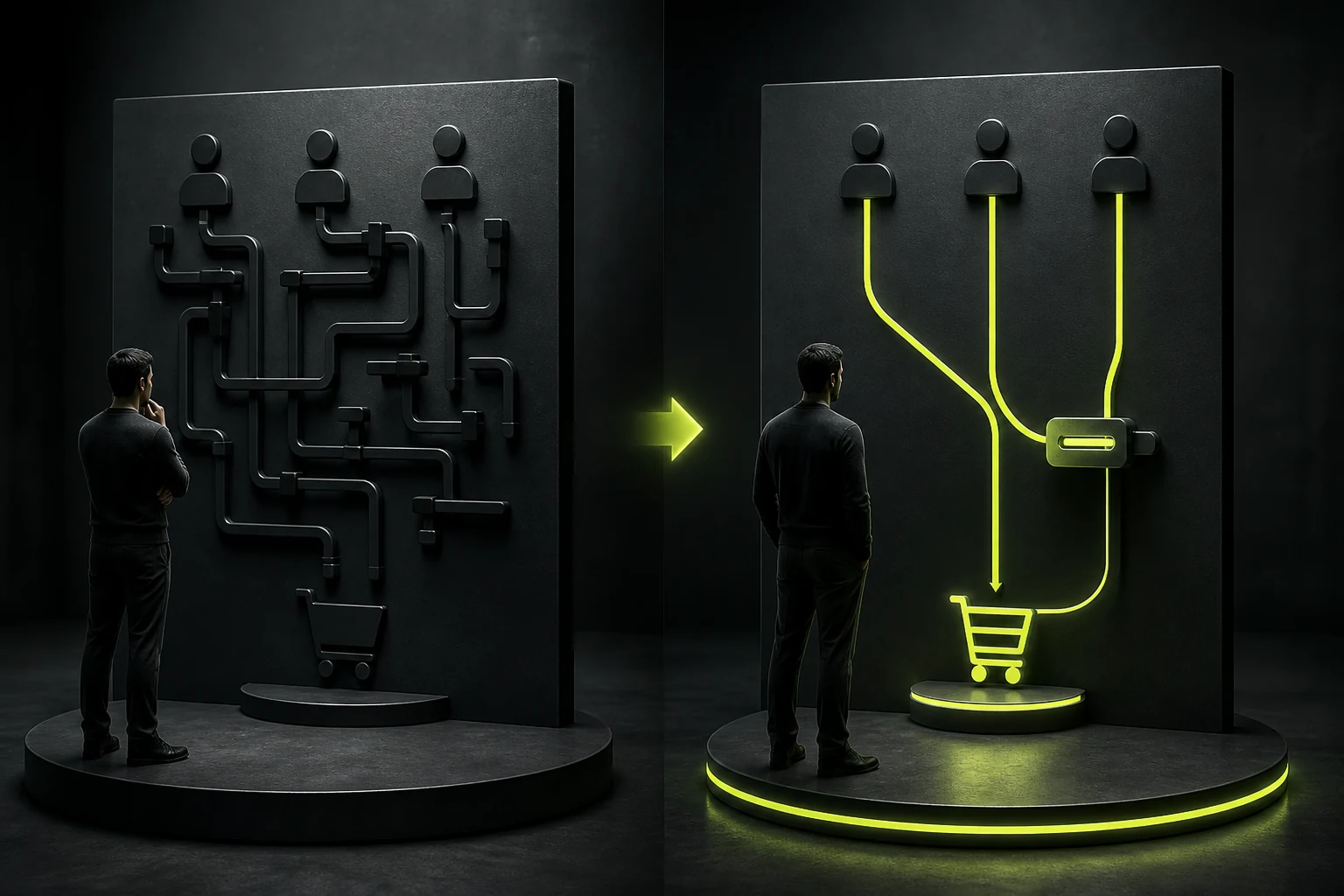
05 Promotions Only Accelerate an Existing Reason to Buy
Discounts can address budget and timing, not unclear value. A countdown creates pressure when users have not completed the critical task; annual discounts or team packages become meaningful after usage habits form.
Segment outreach by behavior. Unactivated users need help starting, activated users need deeper value, and blocked buyers need process and trust obstacles removed.
06 Use Interviews to Explain What Funnel Data Cannot
Behavioral data identifies drop-off points but cannot explain hesitation. Interview unactivated, activated-but-unpaid, paid, and churned users separately, then compare expectations, decision authority, alternatives, and procurement barriers.
Change only one or two critical variables at a time and allow an adequate observation period. If price, packaging, onboarding, and sales outreach change together, the team cannot know what worked.
Frequently Asked Questions
How long should a free trial last?
Match the time required to reach value. A product whose core task takes one day does not automatically need 30 days; configuration-heavy products can extend trials based on behavior.
Should a trial require a credit card?
A card reduces payment steps but can reduce registrations. Test it for high-intent self-service products; enterprise products should account for procurement and contracts.
Should the free plan retain core functionality?
Users need to complete a full value loop to assess the product. Upgrade reasons can come from scale, frequency, advanced capabilities, and governance rather than a broken core workflow.
How many emails should a trial send?
There is no fixed number. Email should support the user’s current stage rather than sending everyone the same day-one, day-three, and day-seven sequence.
When should sales become involved?
Sales and consultants should enter earlier when contract value, configuration, multi-party decisions, or security review are substantial. Low-cost self-service products should avoid unnecessary interruption.
| Service | View |
|---|---|
| Related service | View service details |
| Project inquiry | Contact JVDS |
| Design and website articles | View all articles |
 Link copied