How Does B2B UI Design Differ from B2C? Goals, Users, and Evaluation Criteria
The difference between B2B and B2C is not that one is serious and the other attractive. What truly shapes design is the buyer-user relationship, task frequency, domain expertise, permissions, error cost, and success criteria.
The difference between B2B and B2C is not that one is serious and the other attractive. What truly shapes design is the buyer-user relationship, task frequency, domain expertise, permissions, error cost, and success criteria.
01 B2B Is Not a "Complex B2C," and B2C Is Not a "Prettier B2B"
A common simplification says B2B has more information and emphasizes efficiency, while B2C is lighter and more emotional. This is only partly true. The use relationship changes design: who uses, who pays, how often tasks occur, the cost of error, whether training is available, and how data and permissions change.
One product may include both. A merchant console prioritizes bulk processing and audit, while the consumer side prioritizes quick selection and payment. An enterprise collaboration product needs both administrator governance and low-friction member use. Understand the context before deciding density and visuals.
02 Nine Dimensions Explain Why the Design Methods Differ
| Dimension | Common in B2B | Common in B2C |
|---|---|---|
| User and Buyer | Users, administrators, buyers, and decision-makers may differ | Purchase, use, and evaluation are more often concentrated in one individual |
| Task Frequency | Frequent repetition, long flows, and cross-role collaboration | Short and fragmented tasks, sometimes also frequent |
| Domain Knowledge | Terminology, rules, and industry expertise cannot be fully simplified | Lower the barrier to first understanding |
| Error Cost | May affect funds, compliance, production, and many people's data | Usually personal time, experience, or one transaction |
| Information Density | Requires comparison, filtering, bulk work, and context | Focuses more on the current choice and progressive disclosure |
| Permission Relationships | Complex organizations, roles, data scopes, approvals, and audits | Accounts and privacy still matter, but organizational hierarchy is usually simpler |
| Learning | Training, documentation, and long-term proficiency have value | Needs stronger self-explanation and rapid onboarding |
| Lifecycle | Iteration is affected by processes, migration, compatibility, and customer configuration | Experiments may move faster but are affected by scale and brand |
| Success Criteria | Efficiency, accuracy, control, and business outcomes | Acquisition, activation, retention, satisfaction, and conversion |
These are not absolute rules. Consumer securities trading and healthcare products also carry high risk; lightweight SaaS may need extremely low learning costs. The table raises questions rather than assigning labels.
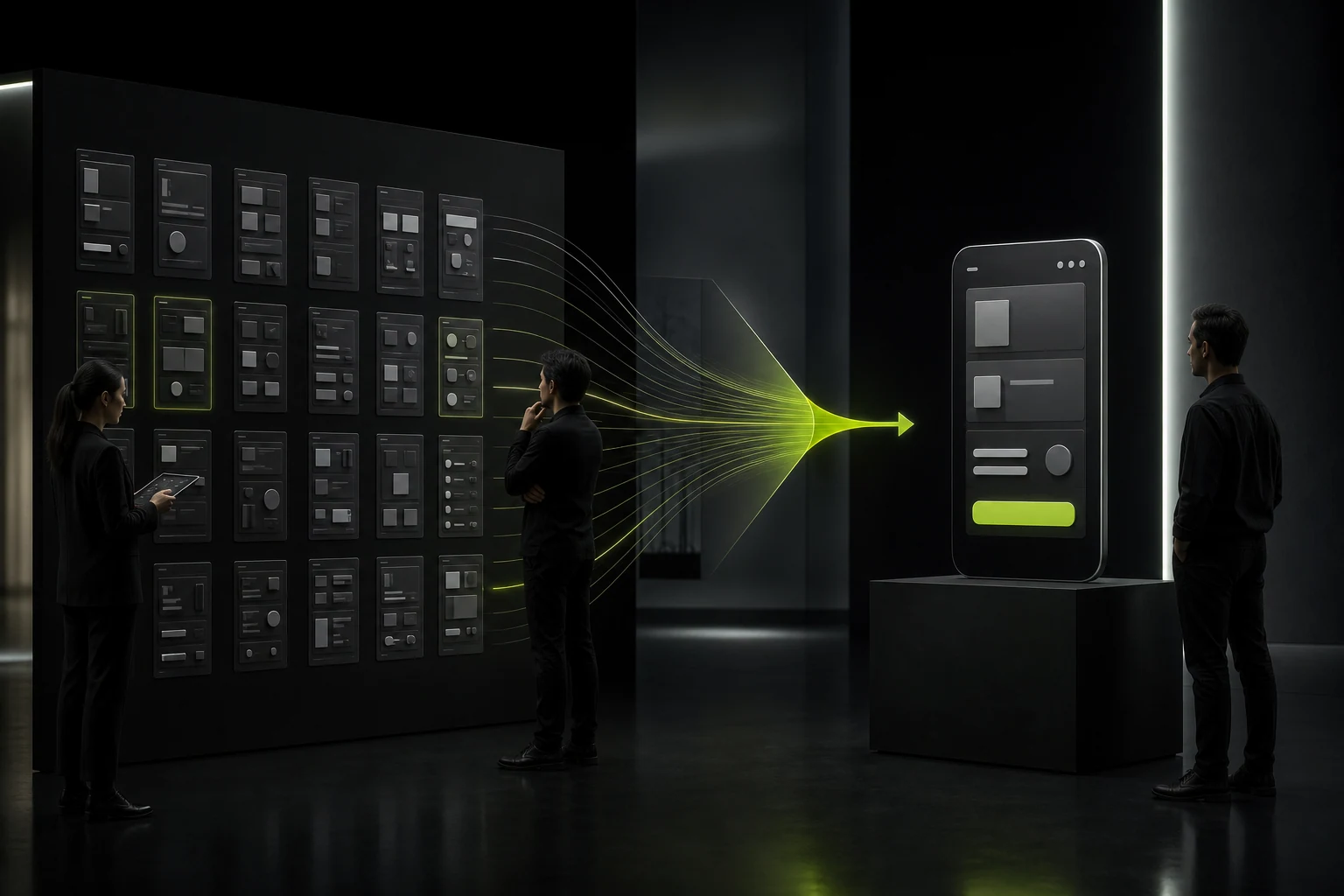
03 Why the Same Component Looks Different in Each Product Type
| Scenario | B2B Design Focus | B2C Design Focus |
|---|---|---|
| Search | Field filters, saved conditions, combined queries, and traceable results | Error tolerance, suggestions, popular entries, and quick results |
| List or Table | Comparison, sorting, bulk actions, column configuration, states, and permissions | Emphasize core information and reduce horizontal comparison burden |
| Form | Complex rules, drafts, dependent fields, review, and history | Reduce input and improve immediate feedback, device capabilities, and conversion |
| Notification | Task ownership, priority, read state, escalation, and audit | Timing, frequency, personalization, and interruption control |
| Home | Tasks, exceptions, business overview, and shortcuts | Value proposition, discovery, continued use, and personalized content |
| Error | Explain affected objects, repair steps, and accountability boundaries | Use clear language, recover quickly, and reduce frustration |
04 Model Before Designing Screens in B2B
Pages in B2B systems are often only one view of a business object. Before design, understand objects, states, roles, actions, and relationships: how a contract moves, which roles can change amounts, how exceptions escalate, and how history is traced. Copying a competitor page first often produces an empty shell that merely looks like an admin interface.
- Diagram core business objects and relationships so one concept does not receive different names across modules.
- List roles, data scopes, and critical actions so permissions are not added at the end of development.
- Build a state model and allowed transitions; state and permission jointly determine page actions.
- Identify frequent and bulk tasks, optimizing keyboard use, defaults, saved views, and cross-record actions.
- Preserve paths for error recovery, undo, audit, and handoff instead of treating "Operation Successful" as the end.
B2B experience does not require showing all information at once. Professional users still need hierarchy, but they care more about comparison, context, and control. Hiding critical fields reduces efficiency, and dumping everything onto one screen does too.
05 Lower Entry Cost in B2C Without Manipulating Conversion
B2C users leave more easily and receive less training, so value, action, and feedback need rapid comprehension. Design focuses more on initial experience, emotion, and brand, but "simple" does not mean hiding prices, preselecting options, or blocking exit. Short-term conversion and long-term trust are both design metrics.
- Before users understand value, reduce unnecessary registration, authorization, and data collection.
- Focus the interface around one current task and progressively reveal secondary information.
- Use real user language instead of exposing internal business terms.
- Clearly confirm payment, privacy, automatic renewal, and irreversible actions.
- Make failure recoverable rather than turning every exception into "Try Again Later."
06 Hybrid Products Need Two Scales, Not Two Brands
Many products serve ordinary members and administrators. The member side may optimize quick collaboration, while the admin side needs permissions, billing, auditing, and configuration. Both should share the brand, object names, and foundational components while allowing different information density, navigation, and action depth.
| Shared | May Differ |
|---|---|
| Brand colors, typography, icon language, and state semantics | Page density, navigation depth, and default views |
| Names and core states of the same business objects | Administrators see more fields; members see task-relevant fields |
| Foundational account, security, and notification rules | Permission configuration, audit, and billing appear only for administrators |
| Component design tokens and interaction principles | Bulk actions, keyboard shortcuts, onboarding, and depth of help |
07 Evaluation Criteria Must Also Differ
| Product Focus | More Valuable Metrics |
|---|---|
| Frequent B2B Operations | Task time, error rate, rework, bulk efficiency, and training cost |
| B2B Governance | Permission errors, approval duration, audit completeness, and configuration success |
| B2C First Experience | Understanding, activation, time to first value, and critical-step abandonment |
| Long-Term B2C Use | Retention, repurchase, satisfaction, complaints, cancellation, and recovery |
| Hybrid Product | Member adoption, administrator configuration success, and organization-level retention and expansion |
B2B should also measure satisfaction, and B2C should also measure efficiency. The distinction is which failures most affect the business. Three extra clicks for a finance employee may create enormous annual cost; one consumer who cannot understand fees at first payment may leave immediately.
08 What Teams Need Most When Moving Between Domains
Moving from B2C to B2B
Do not rush to add more tables. Learn business modeling, permissions, states, data relationships, and real work environments. Observing frontline users for a full day usually teaches more than reviewing ten admin competitors.
Moving from B2B to B2C
Do not assume users will learn. Improve first value, brand expression, growth paths, and large-scale variation testing while avoiding dark patterns that trade trust for short-term metrics.
What Design Leaders Should Do
Ensure the team does not assign components by a "B2B style" or "B2C style," but documents users, tasks, risk, and commercial relationships in requirements. The interface character should grow from these conditions.
Frequently Asked Questions
Does a Denser B2B Interface Look More Professional?
No. Density should serve comparison and action. Professionals need sufficient information, clear groups, stable locations, and configurable views. Filling every space with fields only increases scanning cost.
Can B2C Products Use a B2B Design System Directly?
They can share design tokens, foundational components, and accessibility guidelines, but navigation, forms, feedback, and content rhythm need reorganization around tasks. Do not sacrifice real contexts for component uniformity.
Do B2B Products Need Brand Presence?
Yes, but brand is expressed more through reliability, clarity, consistency, and professional language than large visual gestures. Every state, error, and help message in a complex system forms part of the brand experience.
How Do We Decide Whether a Product Is B2B or B2C?
Do not classify it only by customer type. Analyze users and buyers, organizational relationships, task frequency, expertise, error cost, permissions, and success metrics. Many products are hybrid and should be designed separately by role and task.
09 Start from the Use Relationship, Not an Interface Label
The ultimate B2B-B2C difference is not a visual style but different responsibilities, tasks, and decision environments. Understand who uses the product, why, and what failure means before deciding density, interaction depth, and brand expression.
| Service | View |
|---|---|
| UI/UX Design Services | View Service Details |
| Project Inquiry | Contact JVDS Design Studio |
| Design and Website Development Articles | Read More Articles |
 Link copied