Can high-fidelity prototypes be directly handed over to the development team? What looks like a finished product doesn't mean it's already achievable
The high-fidelity prototype looks close to the finished product: colors, fonts, buttons, and motion effects can all be demonstrated. Once the development actually starts, problems will immediately arise: what to display when the interface fails, what to do if the field is too long, can it be viewed without permission, how to rearrange on the phone, and can it be undone after submission. The prototype addressing "how the experience seems to go" does not naturally answer "how the system operates under all conditions".
01 First, distinguish the four types of deliverables
| Deliverable | The main questions answered | Cannot replace anything |
|---|---|---|
| High-fidelity prototype | What does the main page look like and how are the key processes operated | Complete business rules, interfaces and abnormal states |
| UI Design Specification | How can colors, fonts, spacings, components and resources be reused | Product logic and data contracts |
| Interaction and status description | Trigger, feedback, verification, error and state transition | Back-end implementation plan and interface documentation |
| Development requirements and acceptance criteria | Functional scope, data, permissions, performance and pass conditions | The design decision itself |
A simple marketing page may only require high-fidelity manuscripts, responsive descriptions and content assets to develop. For products involving accounts, permissions, payments, approvals, data imports or complex forms, more rules must be supplemented. Complexity cannot be judged by "a small number of pages".
02 Check at least these ten types of gaps before development
| Inspection items | The content that needs to be explained | The typical result after the absence |
|---|---|---|
| Component status | Default, hover, focus, disable, load and error | The development only restores static screenshots |
| Data boundary | Null value, long text, extreme value, unit, time zone and format | The real data breaks the version as soon as it is connected |
| Permission | Visible, operable, exportable and field-level restrictions | Only the menu is hidden, but the interface is still accessible |
| Verification rule | When to verify, incorrect copy, can it continue and how to restore | The prompts on the front and back ends are inconsistent |
| State transition | Who triggers it, where to allow it, and whether it is revocable | An unexplainable intermediate state occurs |
| Reactive | Reordering, folding, hiding, priority and breakpoint principles | The mobile phone is only scaled down proportionally |
| Accessibility | Keyboard sequence, focus, labels, contrast and dynamic control | The cost of remediation is high after going online |
| Component mapping | Which design system component and variant correspond to | The same control is implemented multiple times |
| Copywriting and Localization | The final copy, length, plurals, language and line breaks | Placeholder copy turns into online content |
| Acceptance criteria | Which performances are considered complete and which are defects | Both sides can only accept based on their feelings |

03 Conduct a "destructive test" with real data
Before delivery, do not just display neat names, three-digit amounts and standard-length titles. Put overly long company names, zero data entries, 100,000 data entries, interface timeouts, duplicate submissions, insufficient permissions, multiple languages, and 200% scaling into key pages. A design is close to being ready for development only when it remains understandable under these conditions.
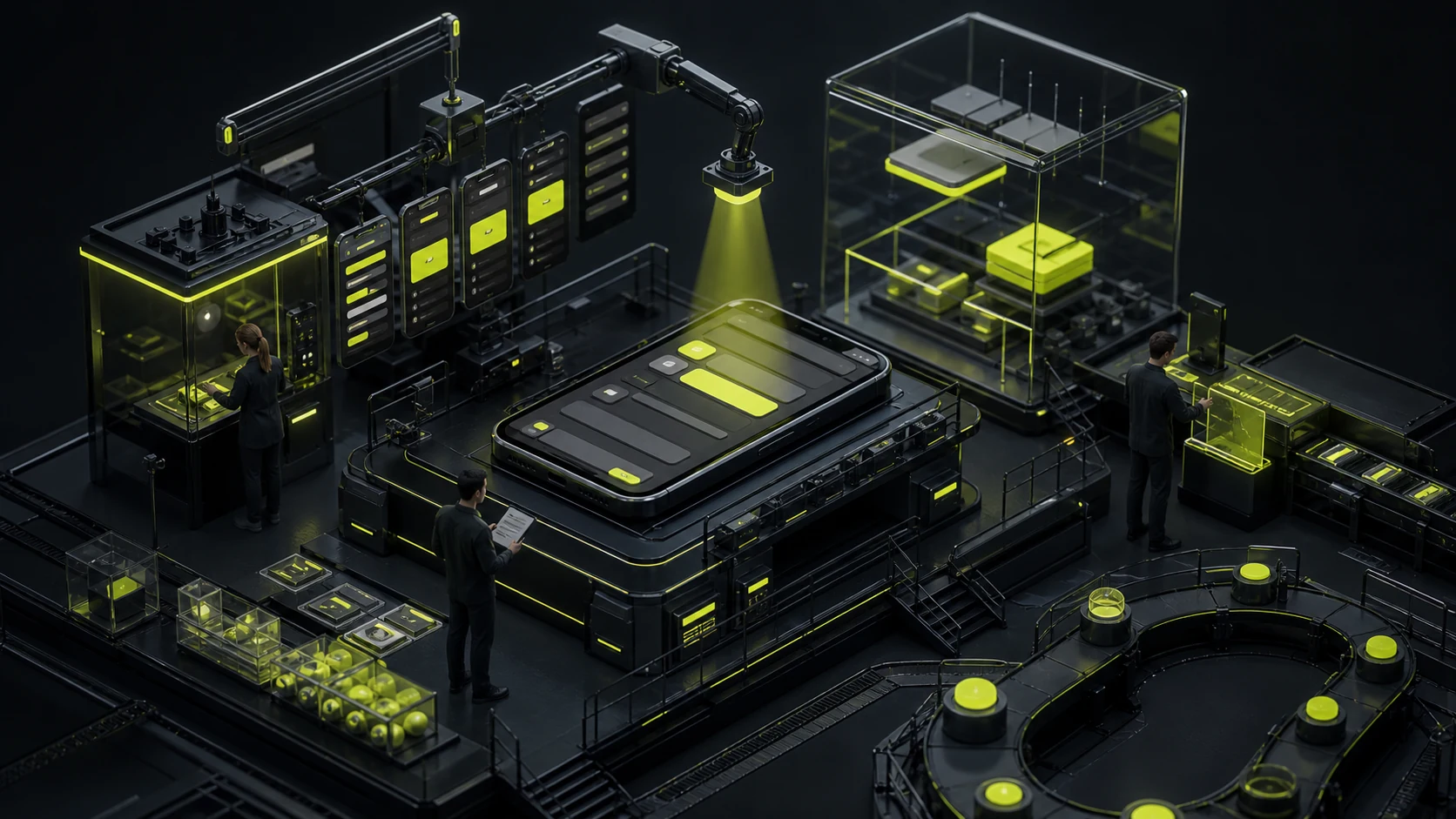
Ideal path for high-fidelity prototype display; Development delivery must cover the real world.
04 Establish state matrices for key components
| Component | Input status | System status | Users can perform actions | Feedback and Recovery |
|---|---|---|---|---|
| "Submit button | The form is left blank/filled in | Verification in progress/Submission in progress/Success/Failure | Modify, submit, cancel, retry | Field error, global error, success destination |
| Data table | With filter/Without filter | Loading/Empty/partial failure | Sort, filter, export, refresh | Skeleton, empty state, failure cause |
| File upload | Not selected/Selected | Upload in progress/Scan in progress/Failed | Remove, retry, continue | Progress, format, size and security tips |
| Approval operation | Approvable/No authority | Pending processing/Processed/withdrawn | Agree, reject, return, view records | Secondary confirmation, results and audit logs |

05 The design system is not a one-page color table
Development requires knowing which component each interface element corresponds to, what variants there are, which attributes are configurable, which styles come from tokens, and when new requirements should extend components. If each page is an independent layer, even if the visual effect is very unified, the code may still be implemented repeatedly.
06 The development delivery package should have a directory instead of being scattered in the chat records
| Delivery module | At least what does it contain? | Main person in charge |
|---|---|---|
| Pages and Processes | Final page, process entry, return and interrupt paths | Design + Product |
| Components and Tokens | Component variants, states, spacings, colors, fonts, and resources | Design + Front-End |
| Business Rules | Permission, verification, status transition, data caliber and exception handling | Product + Business |
| Responsive and platform differences | Breakpoints, reordering, hiding, system controls and device capabilities | Design + Development |
| Content assets | Final copy, images, ICONS, empty states and multilingual text | Content + Design |
| Acceptance and pending projects | Through conditions, known limitations, responsible person and deadline | Project leader |
Delivering a package does not mean making another very long instruction manual. Its function is to make clear "where to find the final version" and "who is responsible for completing which rule". All key documents should have versions and update times to prevent development from implementing based on old screenshots, old links or last-minute decisions in group chats.

07 The delivery will go through it with "Implementation Issues" instead of presenting the design draft
- First, let's talk about the business scope, roles and key states, without starting from the visual aspect of the homepage.
- Select an end-to-end process from entry, input, submission, result to the restoration of the complete presentation.
- The developer raises data, permission, interface and component issues item by item and records the pending matters.
- Clearly define what the design, product and technology are respectively responsible for supplementing, and provide a deadline.
- Determine the nodes for the first round of design review and do not wait until all pages are completed.
08 Under what circumstances can one directly enter development
When the project is a content-based page with simple interaction, has a mature component library, the copy and resources have been confirmed, and the responsiveness and acceptance criteria are clear, high-fidelity drafts can be used as the main input. Even so, a technical review and delivery list are still required. Complex products should not take "looking complete" as "rule completeness".
Frequently Asked Questions
Is the Prototype link in Figma the development documentation?
No. It is suitable for demonstrating the main processes, but it is difficult to cover all states, business rules, data boundaries and interfaces. Development still requires design files, components, specifications and requirement documents.
Can the design annotation plugin solve the delivery problem?
Annotation tools can provide dimensions, colors and resources, but they cannot automatically complete logic, permissions and exceptions. The specifications must come from the joint confirmation of the team, not from the numbers exported by the plugin.
What are the differences between the delivery of high-fidelity manuscripts for mini-programs and apps?
The platform capabilities, system controls, review rules, screen sizes and interaction habits are different and need to be explained separately. One cannot simply change the same set of pages to different canvas sizes.
What should I do if I find that the status is not designed when the development has already started?
First, sort by business risk, and prioritize the critical status such as payment, permission, submission, error and recovery. Establish a list of designs to be made and advance the subsequent review process to prevent developers from continuing to make their own guesses.
| Related Service | Learn More |
|---|---|
| UI/UX Design Services | View Service Details |
| Project Consultation | Contact JVDS Design Studio |
| Design and Website Development Articles | Read More Related Articles |
 Link copied