
“A corporate website needs strong branding” and “the website must generate leads” are often treated as opposing requirements. This leads some people to see a corporate website as a quiet company brochure and a marketing website as a sales page packed with buttons and countdowns. That classification is too crude: it underestimates branding’s role in conversion and overlooks long-term content and search traffic.
The more accurate distinction is the primary task. A corporate website provides a stable identity, complete information, and long-term trust. A marketing website drives a defined action around a particular market, product, or campaign. A company may build one or combine multiple marketing paths within its corporate website.
01 Start with Why Users Visit
Visitors to a corporate website may include customers, candidates, media, partners, suppliers, and investment stakeholders. They need to confirm who the company is, whether it is credible, and what it offers. Marketing-site visitors usually arrive from advertising, campaigns, or specific searches with a narrower question: “Is this solution right for me, and what should I do next?”
Different entry points naturally require different structures. Someone who searches the company name and enters its corporate website may browse several pages. Someone who clicks a targeted ad and enters a landing page has less patience and does not need the full company history.
Dimension | Corporate Website | Marketing Website / Landing Page |
|---|---|---|
Core task | Build long-term identity and trust | Drive one defined action |
Primary traffic | Branded search, organic search, and direct visits | Advertising, campaigns, and specific keywords |
Information scope | Company, services, case studies, content, and contact | One product or scenario |
CTA | Contact, case-study views, document downloads, and other layered actions | Booking, trial, purchase, or form submission |
Maintenance focus | Complete content, long-term updates, and SEO structure | Rapid testing, conversion data, and version iteration |
02 A Corporate Website Prioritizes Complete, Credible Information
A corporate website must help each audience find relevant evidence: business leaders review solutions and case studies, procurement reviews the company and delivery, technical teams review capabilities and documentation, and candidates review the team and roles. Its value often emerges across repeated visits and offline sales conversations, not necessarily through a single form.
A corporate website therefore needs more than one large headline and contact details. Service boundaries, industry experience, case-study process, legal corporate identity, privacy, and contact channels all form part of its trust structure.

03 A Marketing Website Prioritizes Message Match and Low Action Friction
A marketing page usually serves one audience and one primary goal. The hero section must fulfill the promise made by an ad or search result, then present the problem, solution, evidence, risk information, and action. Extra navigation, unrelated services, and generic company introductions dilute attention.
More marketing does not mean exaggerated promises. Especially in B2B, high-value purchases, and professional services, users care more about a specific solution, credible case studies, and a reasonable form. Artificial urgency may reduce trust.
04 One Website Can Serve Both Tasks
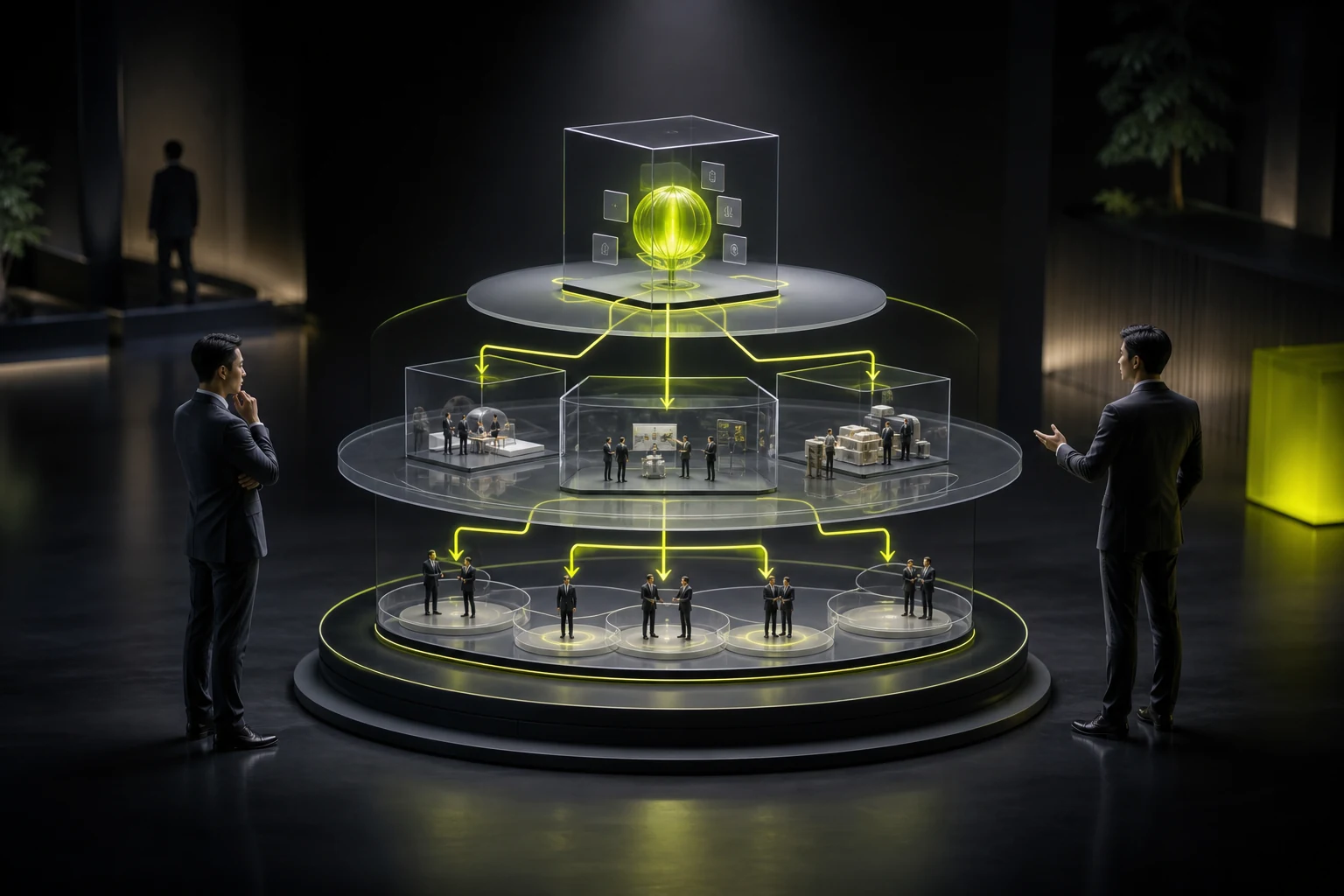
A mature approach is to use the corporate website as the foundation and marketing pages as focused campaigns. The home page and core service pages establish a stable brand and search structure. More focused landing pages support industries, events, product launches, and advertising. Both share the brand system, case studies, and technical foundation, but use different content sequences and CTAs.
For example, a corporate service page may explain the company’s complete website design capabilities, while a campaign page focuses on “international corporate website redesign for manufacturers” and presents only relevant problems, case studies, and an inquiry path. This preserves brand completeness while improving traffic match.
05 Choose by Business Stage, Not by Label
A newly established company first needs a credible foundational corporate website. A company with stable traffic but few leads can optimize service pages and conversion paths. A company preparing an ad campaign or product launch should add dedicated landing pages. A diversified business with distinct markets needs an architecture that separates audiences.
Business Stage | Priority Build |
|---|---|
Newly established or lacking an online identity | Foundational corporate website: company, services, case studies, and contact |
Existing corporate website but low-quality inquiries | Rebuild service pages, case studies, and tiered CTAs |
Preparing advertising or an event | Build a single-topic marketing landing page |
Many product lines across diverse industries | Use the corporate website as a hub with industry and product topic entry points |
Content and SEO are the primary lead source | Build topic clusters, a content center, and service-page conversion paths |
06 Do Not Use “Marketing Website” to Hide Structural and Content Problems
Some redesigns merely add more buttons, pop-ups, floating panels, and forms to the home page without explaining why customers should choose the company, how the solution works, or who it is for. More buttons do not automatically create more qualified inquiries.
Conversion comes from alignment: whether the traffic is right, the information responds to the need, the evidence is sufficient, and the cost of action is reasonable. Design should address those questions rather than copy a supposedly high-converting template.

07 Evaluate the Two Page Types with Different Metrics
For a corporate website, observe branded visits, service-page views, case-study paths, document downloads, qualified inquiries, and sales enablement use. For marketing pages, observe landing-page arrivals, engagement with key sections, form starts and completions, booking quality, and version performance.
Both metric sets should ultimately connect to meaningful business outcomes. Chasing time on page or form volume alone can make the website appear to grow while sending sales more unqualified leads.
08 A Hybrid Website Must Prevent Competing CTAs
When a corporate website supports both brand and marketing, the home page may contain booking, trial, download, purchase, recruiting, and social-follow actions. Each may be valid, but placing them at the same level weakens the primary path.
Set priorities by page and user stage. The home page should first help unfamiliar users understand the company and enter a service. Case-study pages should guide them to similar projects. Pricing or solution pages can increase inquiry intensity. Keep a general contact option in the footer without repeating the same button in every module.
Marketing landing pages should also inherit the corporate website’s real evidence and brand rules. Exaggerated promises, fake countdowns, or pricing that contradicts the corporate website may increase clicks in the short term but damage trust over time.
Frequently Asked Questions
Can a corporate website pursue strong conversion?
Certainly. A corporate website also needs clear CTAs, but it usually serves multiple visitor types and long-term trust, so conversion paths are more layered.
Is a marketing website always a single-page website?
No. It may be a single landing page or several focused pages. The key is a defined audience and action goal.
Does advertising always require a separate landing page?
Not always. An existing service page can work when it closely matches the ad promise. A separate landing page is more suitable when the content is too broad or the CTA is unclear.
Can a corporate website and landing page create duplicate SEO content?
If both answer the same search intent with highly similar content, they may compete. Define each page’s role, and set an indexing strategy for advertising landing pages when needed.
Which should a small company build first?
Usually a credible, maintainable foundational corporate website, followed by topic or landing pages for specific acquisition channels.
Service | View |
|---|---|
Corporate Website Design and Development | |
Corporate Website Conversion Optimization | |
Project Consultation |
 Link copied