Some companies hear WordPress and think of templates and plugin overload; they hear custom development and assume better performance and a more premium brand. In reality, a carefully designed and developed WordPress corporate website can be highly customized, while a poorly structured custom project can be difficult to maintain and too risky for anyone to change.
Technology selection should answer four questions: who will maintain content, which real features the website needs, what level of technical maintenance the company can support, and whether future migration and expansion remain controllable. Answer these before discussing frameworks and platforms.
01 WordPress Provides Mature Content Management and an Ecosystem
WordPress suits content-led corporate websites, blogs, case studies, product catalogs, and multilingual sites. It provides mature administration for roles, media, articles, and pages and can expand through themes and plugins. For marketing teams without developers, the editing experience and broad availability of talent are practical advantages.
Its problem is not that plugins are inevitably numerous, but how they are selected and governed. Plugins from unknown sources, overlapping functionality, and long periods without maintenance increase security, compatibility, and performance risk. The project must control dependencies rather than install a plugin for every request.
02 Custom Development Supports Unique Boundaries and Deep Integration
When a website needs specialized content models, complex interactions, membership permissions, business-system integrations, extremely high performance, or strict technical standards, custom development offers more precise architectural control. It need not inherit every capability of a general-purpose system and can align more closely with the existing engineering organization.
The tradeoff is that routine capabilities such as administration, permissions, previews, versions, search, and media processing may need to be built or connected to another CMS. The company needs long-term development capacity, or even a small post-launch change must return to the original team.
Dimension | WordPress | Custom Development |
|---|---|---|
Content admin | Mature, with a shorter learning curve for editors | Must be built or connected to a CMS |
Visual freedom | Highly customizable, with controlled themes and plugins | Front-end presentation can follow the project design completely |
Specialized features | Common needs can use the ecosystem | More flexible for complex rules and deep integrations |
Maintenance model | Core, themes, and plugins require continuous updates | Depends on proprietary code, frameworks, and team maintenance |
Talent and handover | Broad market availability | Depends on the technology stack and documentation quality |
Cost structure | More predictable upfront, with plugins and maintenance included | Usually higher upfront; long-term cost depends on the team |
03 Design Freedom Is Not Determined by the Technology Platform Alone
Using WordPress does not require buying a template. A complete UI/UX design can be created first and then developed as a custom theme or blocks. Custom development may also use off-the-shelf components to meet a deadline. Requirements, design, development, and content collectively determine the result.
If a brand requires complex motion and unusual layouts, also evaluate stability after content editing. A “free-form page” that only developers can maintain may be harder to use after launch than component-based WordPress.
04 Evaluate Performance by Implementation, Not Claims
A WordPress website can slow down because of a heavy theme, excessive plugins, unoptimized images, and poor hosting. It can also perform well with a lean theme, caching, a CDN, and resource optimization. A custom project can be equally slow because of large scripts, unsuitable rendering, and missing caching.
Before selection, require the vendor to explain the performance budget, image strategy, caching, third-party scripts, and monitoring instead of promising, “The latest technology makes it fast.”

05 Security Depends on Governance and Update Ownership
Because WordPress is widely used, its core, themes, and plugins require timely updates, while account permissions, backups, login protection, and plugin sources must be controlled. Custom development may reduce some common attack surfaces, but vulnerabilities in proprietary code, outdated dependencies, and configuration errors still exist.
Under either option, define ownership of security updates, backup recovery, vulnerability response, and logging. A technology name does not replace operational responsibility.
06 Work Backward from the Content Team’s Daily Tasks
Have future editors perform real exercises: create a product, duplicate a case study, preview pages, arrange multiple languages, withdraw content, restore a version, and manage media. Admin usability cannot be judged only by seeing “publish an article” in a demonstration.
If content changes rarely, building a complex CMS from scratch may be wasteful. If marketing publishes every day, any solution that requires a developer for copy changes creates long-term cost.
07 A Practical Selection Framework
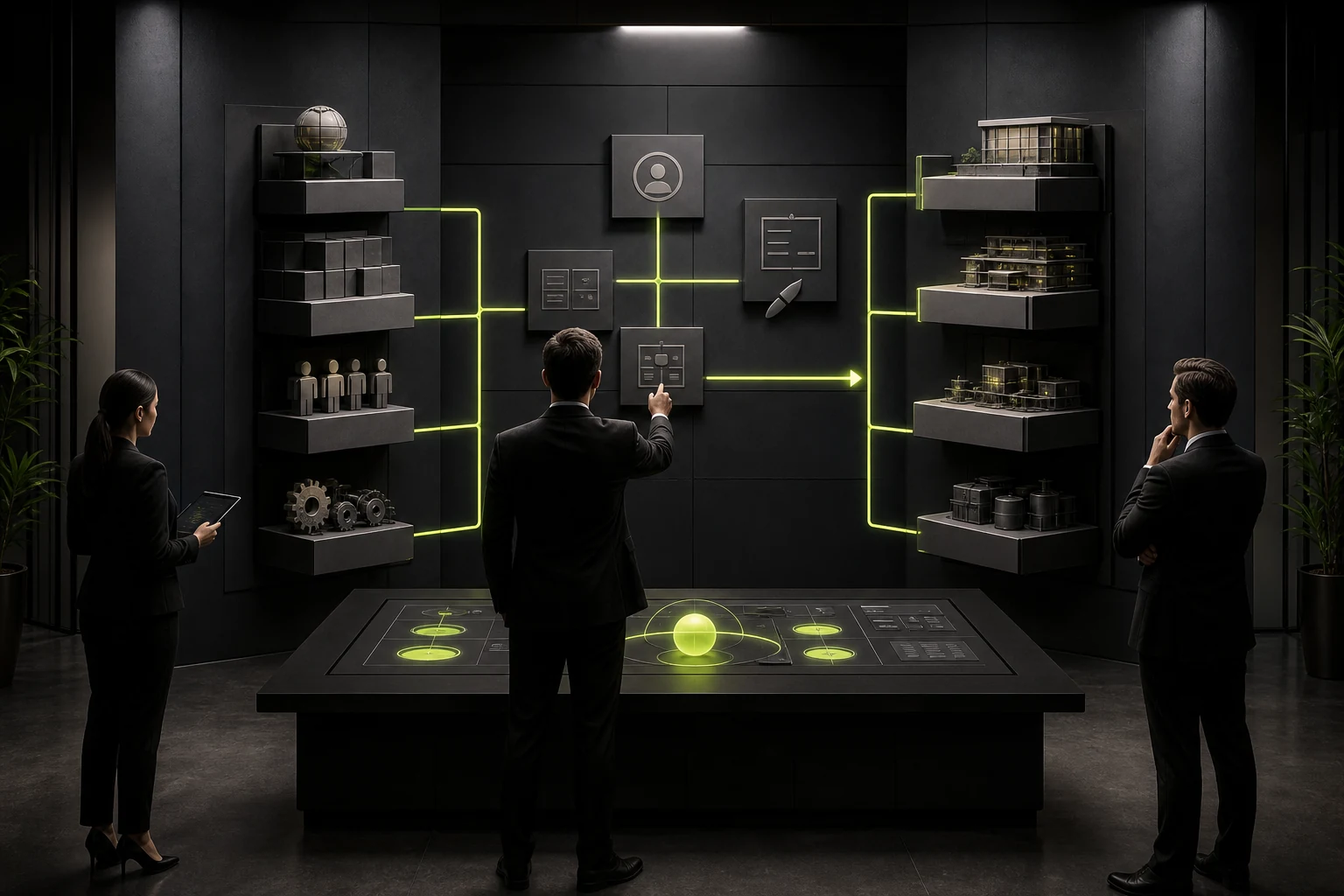
When a website has no complex business functionality, focuses on content and SEO, and lacks an internal development team, WordPress or another mature CMS is usually more practical. Custom development is better for deep product functionality, strong integrations, or an existing engineering organization. A custom front end with a Headless CMS can provide both tailored presentation and mature editing.
Typical Situation | Prioritize |
|---|---|
Corporate presentation, blog, case studies, or product catalog | WordPress or a mature CMS |
Complex memberships, permissions, transactions, or business processes | Custom development |
Strong branded front end plus multichannel publishing | Custom front end plus Headless CMS |
Existing unified technology platform and engineering team | Continue using the enterprise technology ecosystem |
Limited budget and very few content updates | A mature, tightly scoped solution that avoids overbuilding |
08 Normalize Scope Before Comparing Quotes
For a WordPress quote, confirm whether custom design, theme development, plugin licenses, content migration, and maintenance are included. For a custom quote, confirm whether the admin system, permissions, search, preview, deployment, and documentation are included. Comparing total prices is meaningless when scope differs.
Include the next two to three years of server, license, upgrade, content maintenance, development support, and migration costs so technology selection is not based only on the launch budget.
Frequently Asked Questions
Is WordPress suitable for a large corporate website?
Yes, provided the architecture, permissions, security, performance, and operations meet enterprise requirements. Suitability cannot be judged by company size alone.
Are all WordPress websites slow?
No. Speed depends on themes, plugins, images, hosting, caching, and development quality. A custom website can also be implemented poorly.
Is custom development always more secure?
No. Security depends on code quality, dependencies, configuration, permissions, updates, and monitoring. Every option requires continuous governance.
Can WordPress support a completely custom visual design?
Yes, through a custom theme or blocks, but it requires professional design and development. “Using WordPress” should not be understood as “buying a ready-made template.”
What if the company wants to migrate later?
Before the project, confirm content export, source code, database, media, domain, and account ownership, and require deployment and data-structure documentation.
Service | View |
|---|---|
Corporate Website Design and Development | |
Website CMS and Technology Selection | |
Project Consultation |
 Link copied