
Photography, 3D, Illustration, or Stock? A Corporate Website Image Strategy
Image selection is often reduced to "we like a technology look" or "we want it to feel premium." The result is a website filled with abstract gradients, stock handshakes, or expensive 3D that does not help users understand the product or company.
First decide what the image must prove, then select the format, production cost, copyright approach, and performance strategy.
01 Photography Proves Real People, Places, and Processes
Photography makes teams, factories, equipment, services, and customer settings more credible. Before shooting, prepare a script, shot list, and brand direction so the deliverables are more than a set of staged group photos.
Authentic does not mean unpolished. Postproduction should establish consistent color and cropping rules.

02 3D Explains Structures and Mechanisms That Cannot Be Photographed Directly
3D can explain product interiors, complex assemblies, microscopic processes, and future concepts. Creating many floating objects merely to look "high-tech" is expensive and quickly becomes dated.
Prepare static fallbacks and lightweight versions as well.
03 Illustration Communicates Abstract Processes and Intangible Services
Illustrations or infographics can express data flows, service journeys, platform relationships, and sensitive scenarios. The illustration language should form a system instead of changing styles on every page.
Accuracy is the priority; decorative graphics should not replace a workflow explanation.
04 Stock Imagery Is Useful, but It Should Not Pretend to Be Your Company
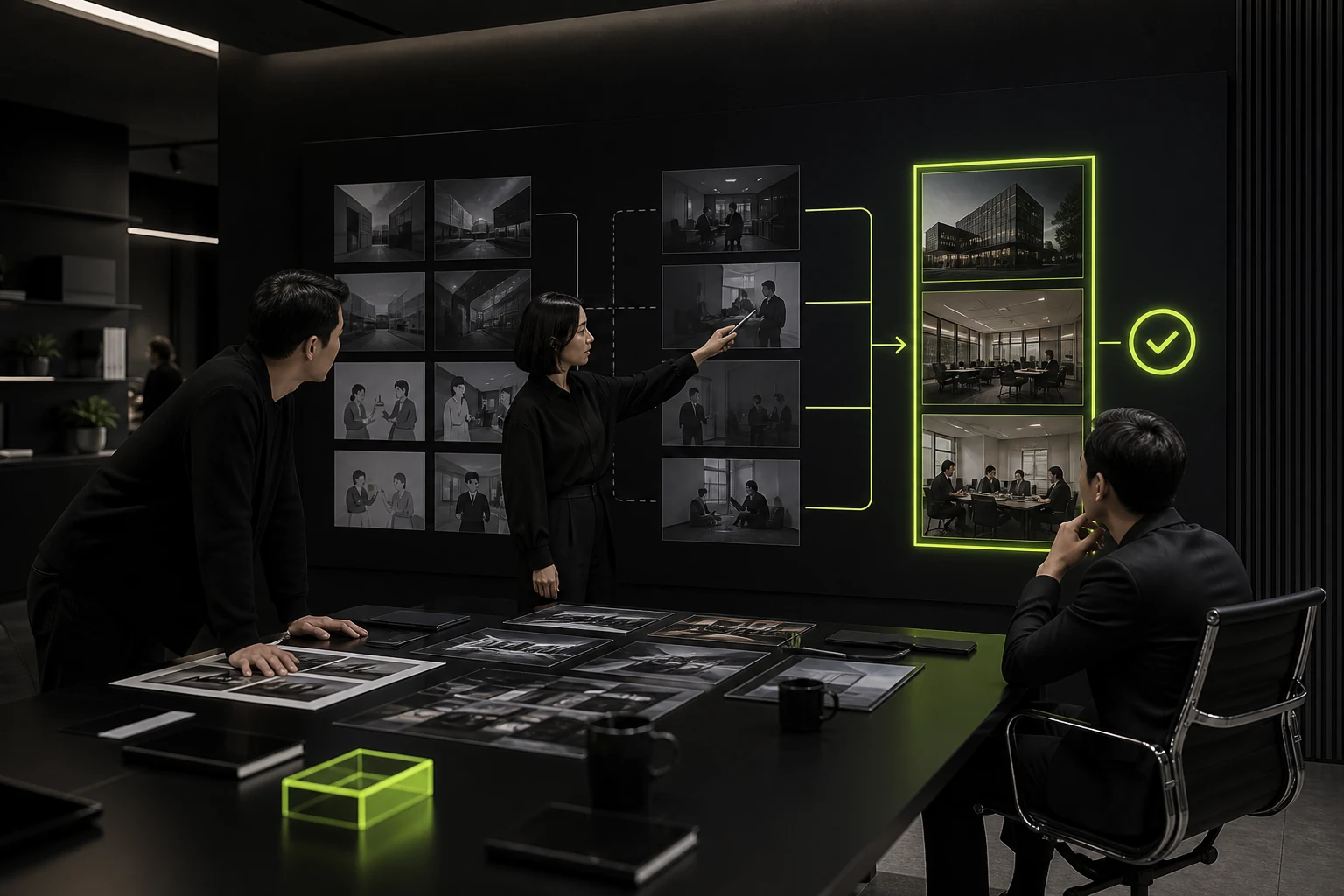
Stock imagery can control costs when used for general backgrounds and supporting contexts. Do not present another company's factory, team, or customers as your own.
Before selecting an image, review copyright, region, clothing, equipment, and cultural context.
05 Product Images, Screenshots, and Charts Need Their Own Standards
Product images explain form and detail, screenshots prove the real interface, and charts explain data. Screenshots should use lawful, de-identified, and realistic data.
Every image needs a defined aspect ratio, cropping rule, and owner responsible for updates.
06 Visual Effects Must Respect Performance and Accessibility Constraints
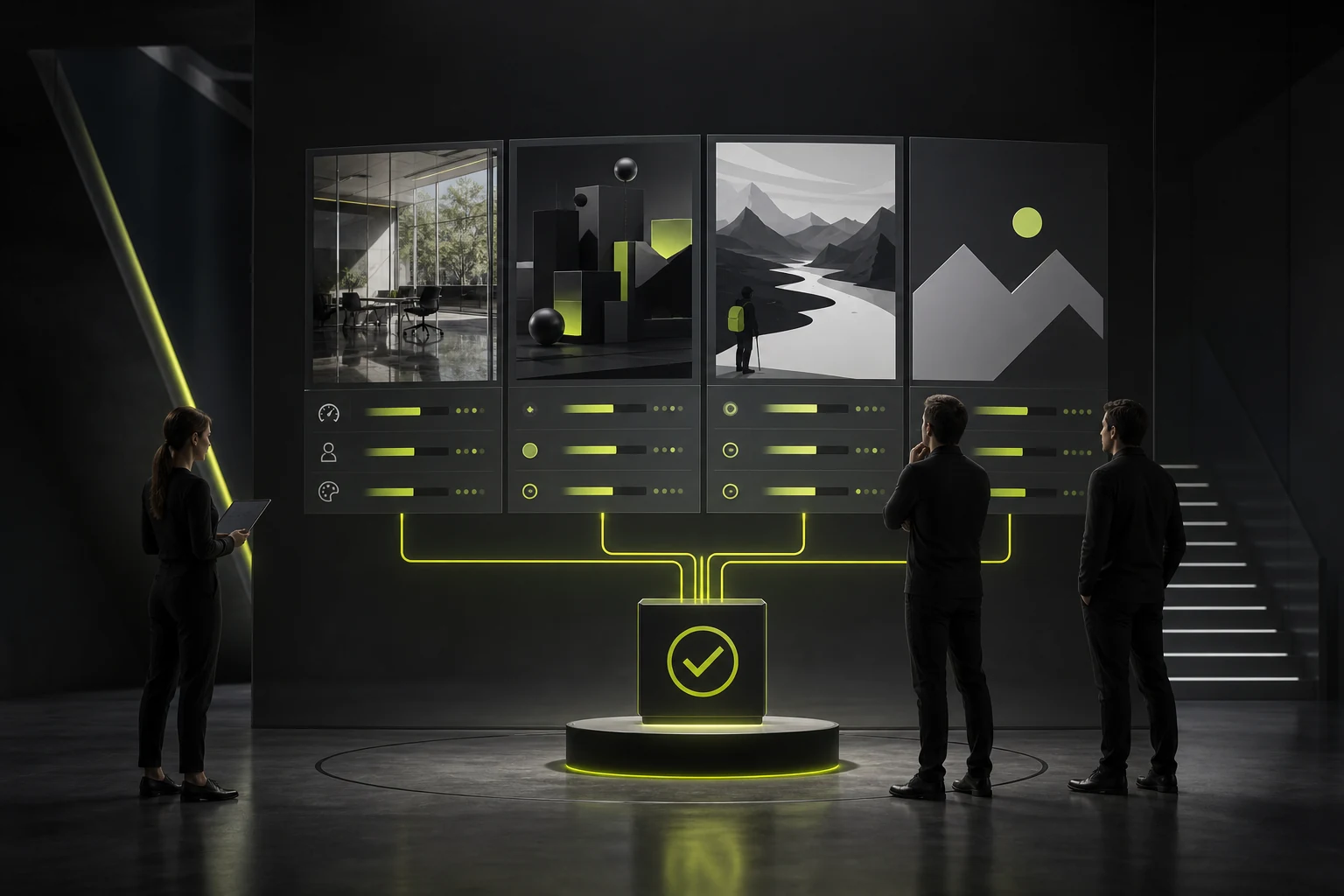
Optimize dimensions and formats and use responsive resources and lazy loading, while giving critical above-the-fold images appropriate priority. Important information must not exist only inside images; provide alternative text or a written explanation.
Animated images and video should offer controls and avoid unnecessary distraction.
Image Format Selection Matrix
Objective | Preferred Format | Main Risk |
|---|---|---|
Prove the Company Is Real | Photography | Cost, production quality, and updates |
Explain Product Structure | 3D or technical illustration | File size, accuracy, and overstatement |
Explain an Intangible Process | Illustration or infographic | Abstraction and inconsistent style |
Support a General Context | Licensed stock imagery | Generic appearance and misleading authenticity |
Demonstrate Software Capabilities | Screenshots or motion | Sensitive data and outdated versions |
Present Outcome Data | Charts | Definitions, readability, and sources |
Frequently Asked Questions
Must a Corporate Website Use Original Photography?
No, but photography is usually more valuable when the authenticity of teams, facilities, equipment, and services matters.
Will 3D Visuals Slow Down a Website?
They may. Choose prerendered imagery, video, or real-time 3D based on the context, and define a performance budget and fallback.
Can AI-Generated Images Be Used?
They can support concepts and secondary materials, but review authenticity, copyright, brand consistency, and the potential to mislead.
Does Stock Imagery Look Cheap?
Not necessarily. The problem is generic, repetitive imagery or content presented as authentic. Consistent art direction and cropping can improve quality.
Is Alt Text All That Matters for Image SEO?
Image SEO also includes file size, dimensions, context, relationship to body content, file names, and crawlability. Alt text should be accurate rather than stuffed with keywords.
Service | View |
|---|---|
Related Services | |
Design Case Studies | |
Project Inquiry |
 Link copied