How to Design an Industrial Solutions Page: Shift from Equipment Specifications to Business Outcomes
On many manufacturing corporate websites, the "Solutions" page is actually a list of product models and technical specifications. Engineers may understand it, but business leaders and procurement teams cannot determine whether the solution fits their production line.
A solutions page should connect business problems with technical capabilities: first help customers recognize their scenario, then progressively explain architecture, products, and implementation details.
01 Open with Customer Scenarios, Not Company Slogans
Explain applicable industries, production stages, common bottlenecks, and objectives such as reducing downtime, improving inspection consistency, enabling traceability, or reducing manual labor.
Avoid relying on phrases such as "digital empowerment" and "intelligent upgrade," which do not help customers decide.
02 Show Solution Logic Instead of Stacking Products
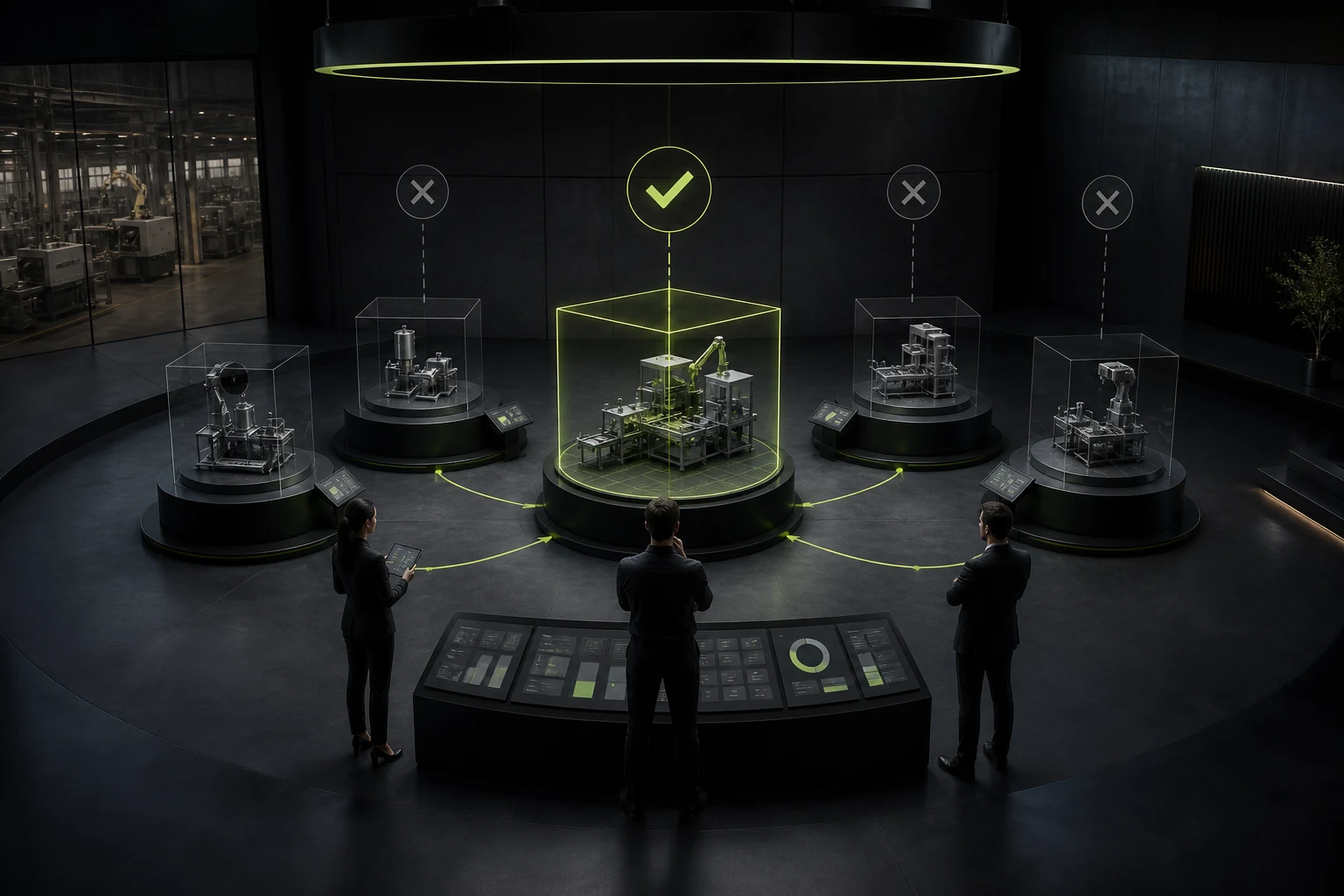
Use a process or architecture diagram to explain how data, equipment, controls, software, and people work together. Connect each layer to a customer problem.
Present product models as components of the solution with links to detailed product pages; do not turn the solutions page into a duplicated catalog.
Recommended Structure for an Industrial Solutions Page
| Module | Question to Answer | Evidence Format |
|---|---|---|
| Applicable Scenario | Who needs it, and under what conditions? | Industry, process, and production-line description |
| Current Pain Points | What losses and limitations exist today? | Failures, labor, quality, and compliance |
| Solution Overview | How does the whole system solve the problem? | Architecture diagram, process, and modules |
| Key Capabilities | Why can it deliver the result? | Technical principles, specifications, and interfaces |
| Implementation Requirements | What must change? | Equipment, network, data, and schedule |
| Case Results | Has it been implemented in reality? | Project scope, before-and-after metrics, and site images |
| Procurement Support | What is needed next? | Downloads, selection support, and technical consultation |

03 Give Specifications Context
Do not list only accuracy, speed, and power. Explain test conditions, applicable ranges, relationships to business outcomes, and situations where the specification does not apply.
Engineers need complete specifications; managers need impact. Use layered information instead of choosing one audience over the other.
04 Explain Case Boundaries and Process
State the customer type, site problem, solution scope, implementation constraints, and basis for results. A customer Logo and one line saying "efficiency improved" provide limited credibility.
When a name cannot be disclosed, describe the case anonymously without inventing data.
05 Give Different Decision Roles Different Entry Points
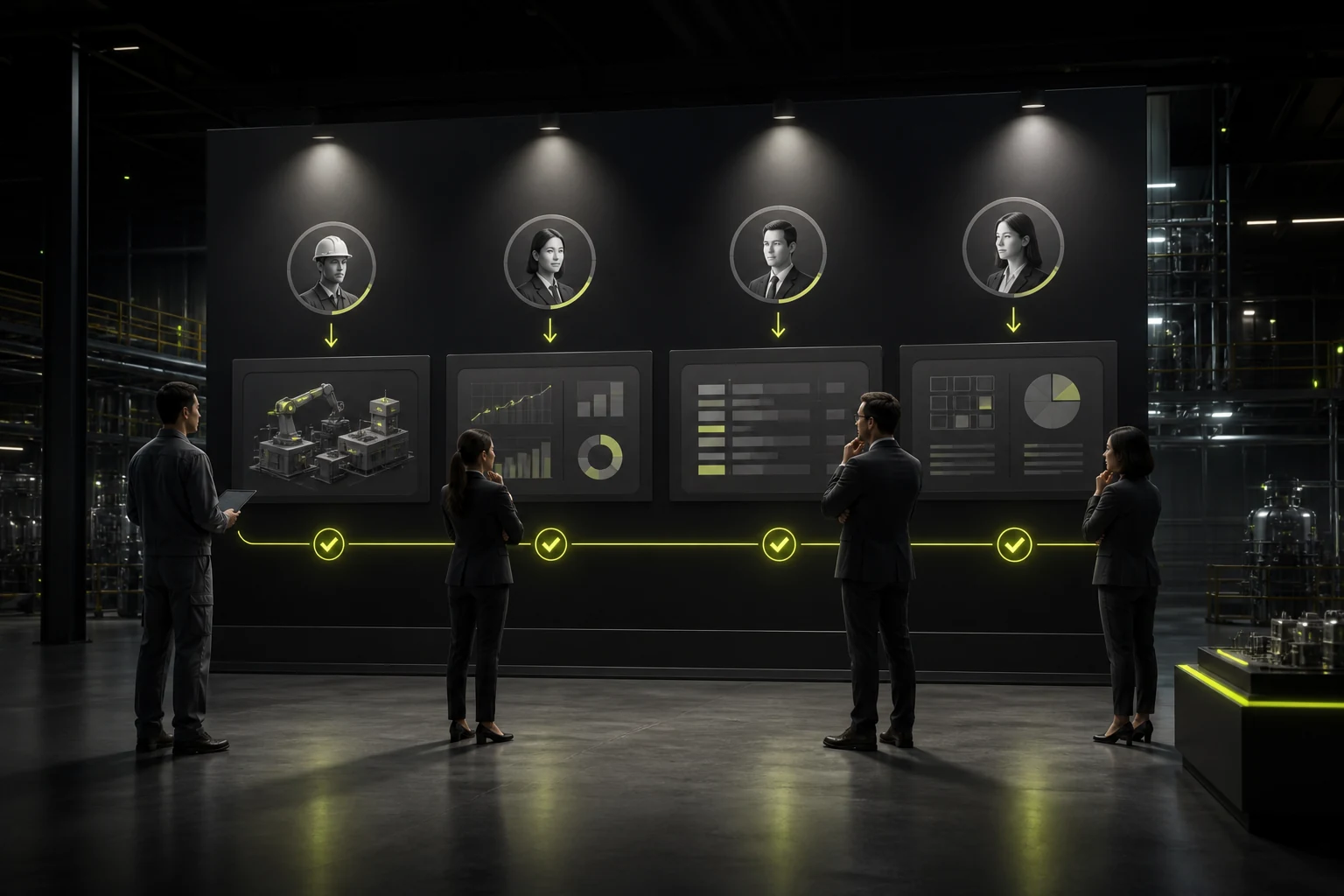
Technical teams need specifications, drawings, interfaces, and white papers; business leaders care about investment, risk, and implementation; procurement focuses on delivery, certifications, and service.
Provide layered CTAs through downloads, consultations, and selection forms.
06 Build Content for Both Sales and SEO
Organize the page around specific industry problems and process language instead of internal product names alone.
Sales teams can use the page before meetings and continually add customers' frequent questions, building a long-term content asset.
Frequently Asked Questions
How Does a Solutions Page Differ from a Product Page?
A product page explains one product's capabilities; a solutions page shows how multiple capabilities solve a complete scenario.
Can We Create a Page Without Public Case Studies?
Yes. Describe scenarios and methods anonymously, but do not fabricate customers or results; prioritize verifiable technical evidence.
Do More Specifications Make the Page More Professional?
Not necessarily. Specifications need structure, test conditions, and scenario context, or they become an information burden.
Do Industrial Pages Need Animation?
Architecture and process animation can aid understanding, but control performance and provide a readable static version.
Should the CTA Say "Contact Us"?
It can be more specific, such as "Get Selection Guidance," "Submit Site Requirements," or "Download Technical Materials."
| Service | View |
|---|---|
| Related Services | View Service Details |
| Project Inquiry | Contact JVDS Design Studio |
| Design and Website Development Articles | View Service Details |
 Link copied