
With more and more pages on an corporate website, why does SEO need to redo the information architecture first? Search engines also need to understand "which pages are the most important"
Just because a website has 3,000 pages doesn't mean that a search will know which 30 are the most important. If the core product can only be found from the Sitemap, there is no thematic relationship between the articles, and a large number of pages become isolated islands, the SEO issue is primarily an information architecture problem rather than adding a few more keywords.
01 Search engines understand a site through links just as users understand a site through navigation
Google's current best practices for linking emphasize the ability to crawl <a href> and descriptive anchor text. Internal links not only help discover URLs but also convey semantic relationships between pages.
If the main content can only be accessed through site search, JS buttons or Sitemaps, the site structure is not clear enough for both people and search.
02 Determine the first-level hierarchy based on business and user tasks instead of replicating departments according to the organizational structure
Just because a company has an internal R&D department, a channel department and a Marketing Department doesn't mean its corporate website should be navigated by these departments. Users are more concerned about products, solutions, industries, resources and support.
A stable first-level structure enables subsequent products and content to be naturally classified, and also reduces frequent changes to URLs and navigation.

03 The click depth of the core page should not be too deep
If important products require six clicks from "Home Page → Product → Product Line → Sub-series → Category → Model" to reach, both discovery and user browsing will be affected.
Reasonable shortcuts can be added through popular entry points, industry solutions, comparison pages and related products. There is no need to force all visits to drill down step by step for the sake of a formal tree structure.
04 The theme Hub can organize scattered articles into a knowledge structure
For example, the "corporate website development" Hub links to planning, design, development, SEO, case studies and quotation articles; These sub-pages also link back to the Hub.
This structure helps users delve deeper by topic and is more effective in expressing content relationships than flipping through an article list infinitely by date.
05 Descriptive anchor text is more informative than "Click Here" or "Learn More"
The link text "View Core Web Vitals Optimization Guide" simultaneously informs users and searches for what the target page is.
Don't mechanically repeat the same precise keyword throughout the entire site for SEO purposes. Anchor text should first naturally describe the purpose.

06 After discovering an isolated page, first determine whether it is truly worth connecting
Pages without internal links in the crawler report may be missing links, or they could be old activities, test pages, or content that should not have been indexed in the first place.
Don't randomly add links to all isolated pages just to reset the metrics to zero. First, decide whether to retain, merge, redirect, not index or re-incorporate into the structure.
07 Footer, Breadcrumb and related recommendations are all structural supplements, not substitutes for the main navigation
Footer can provide high-value secondary entry points, Breadcrumb expression hierarchy, and establish horizontal relationships with related content.
However, if the core page only has one link at the footer, it still indicates that the main information architecture may be unreasonable.
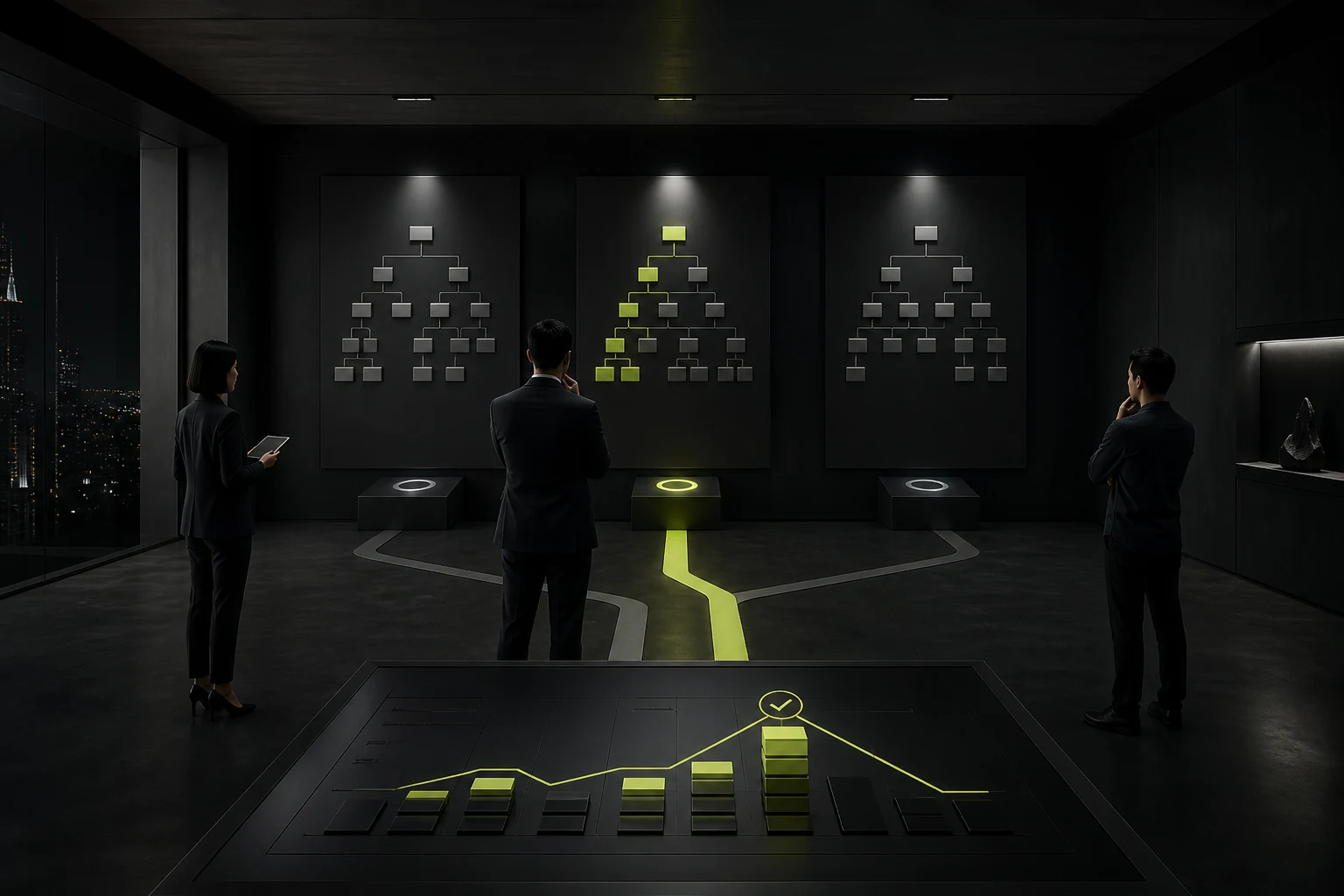
08 The website architecture needs to be governed regularly as the business grows
New product additions, brand acquisitions, internationalization and content expansion will all disrupt the original structure. It is less costly to check columns, isolated islands, overly deep pages and duplicate categories every quarter or half a year than to start all over again a few years later.
The essence of an SEO architecture is to make a site understandable and maintainable in the long term, rather than a one-off "keyword tree".
09 The site architecture should serve both new users and the discovery paths of search crawlers simultaneously
The "three-click rule" is not a hard and fast rule, but if important content can only be found through site search, filters or JavaScript interaction, both users and web crawlers will increase the discovery cost. Stable category pages, topic pages and contextual internal links are more reliable.
Especially for enterprise websites with a large number of products, the navigation should express the most important business categories, and then connect related industries, cases and content through internal links, rather than stuffing all pages into the top menu.
10 After the architecture adjustment, log and Search Console should be used to verify the crawling behavior
The tree-like structure on the design drawing is just a plan. After going live, it is necessary to confirm whether Googlebot is largely stuck on parameter pages, whether isolated pages still exist, and whether important new pages have been internally linked and crawled.
Information architecture, internal links and technical SEO should form a closed loop: the structural design determines the discovery method, and the real capture and search data in turn help the team adjust the hierarchy.
Frequently Asked Questions
Is a shallower URL directory always better?
It's not the case that the shallower, the better. The key lies in a clear and stable structure. Important pages should not become difficult to discover due to unnecessary levels.
Must all pages be accessible from the main navigation?
Not necessary, but important indexable pages should have natural internal link paths.
Is Topic Cluster an official ranking factor of Google?
It is not an official independent ranking tag, but clear topic organization and internal links help users discover and understand the content through search.
Must a link be added to an isolated island page?
First, determine whether the page should be retained and indexed. Do not mechanically add links.
Can Sitemap replace internal links?
No. Sitemap helps discover internal links that serve both user navigation and page relationships.
| Related Service | Learn More |
|---|---|
| Corporate Website Design Services | View Service Details |
| Project Consultation | Contact JVDS Design Studio |
| Design and Website Development Articles | Read More Related Articles |
 Link copied