Developing everything before adding design often hardens early assumptions into code. Requiring every page to be designed before technical work begins can also delay architecture validation.
The right sequence depends on product stage and risk: address the most expensive and uncertain issues first, then progressively increase certainty for design and development.
01 Validate the Problem and Core Path During the Concept Stage
First define the users, scenarios, value, and minimum task, then discuss them quickly with sketches or low-fidelity prototypes. Complete visuals are unnecessary at this point, but code should not replace product judgment.
The priority is determining whether the product is worth building.
02 Use an Early Spike for Technical Uncertainty
Real-time audio and video, algorithms, hardware, third-party APIs, and high-performance graphics may shape the solution. The technical team can run a one-time validation and use the result to adjust the experience.
A Spike is not production code and does not mean the interface structure is settled.
03 Define Core Flows and States Before Development
Core navigation, primary tasks, data structures, permissions, and exceptions should be reviewable. The visual system also needs a basic direction and shared components.
Otherwise, developers will fill gaps with temporary decisions.
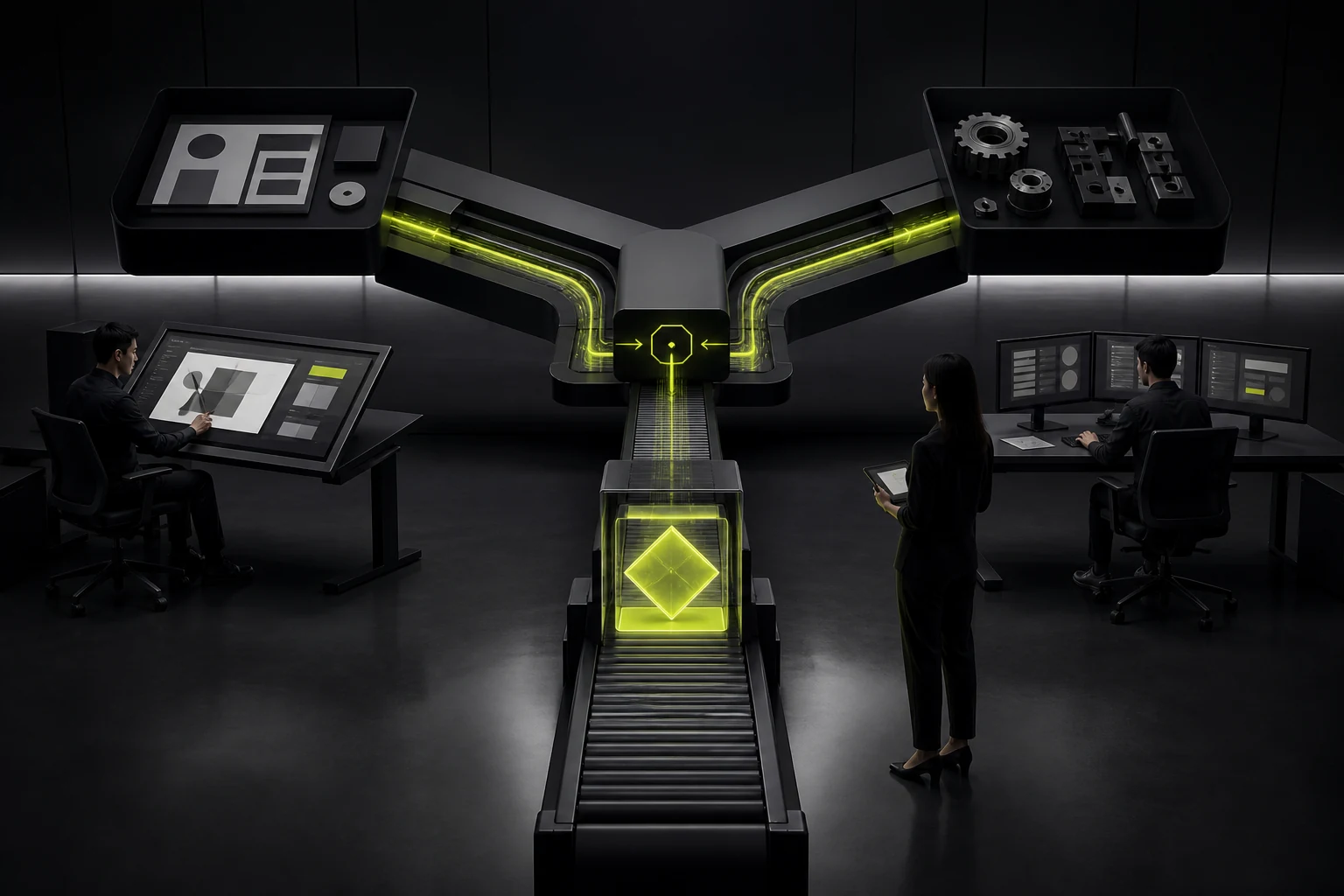
04 Stagger Design and Development in Parallel
Development can begin after one group of flows is designed, reviewed, and delivered while design continues with the next group. Dependencies, components, and change mechanisms must remain transparent.
Do not make development continually chase a design that is still changing dramatically.
05 An MVP Still Needs Sufficient Experience Design
An MVP validates a core assumption; it does not justify unusable critical flows. Features and visual polish can be reduced, but essential experiences such as login, data, errors, and payment still need to be complete.
Record first-release technical debt instead of hiding it.
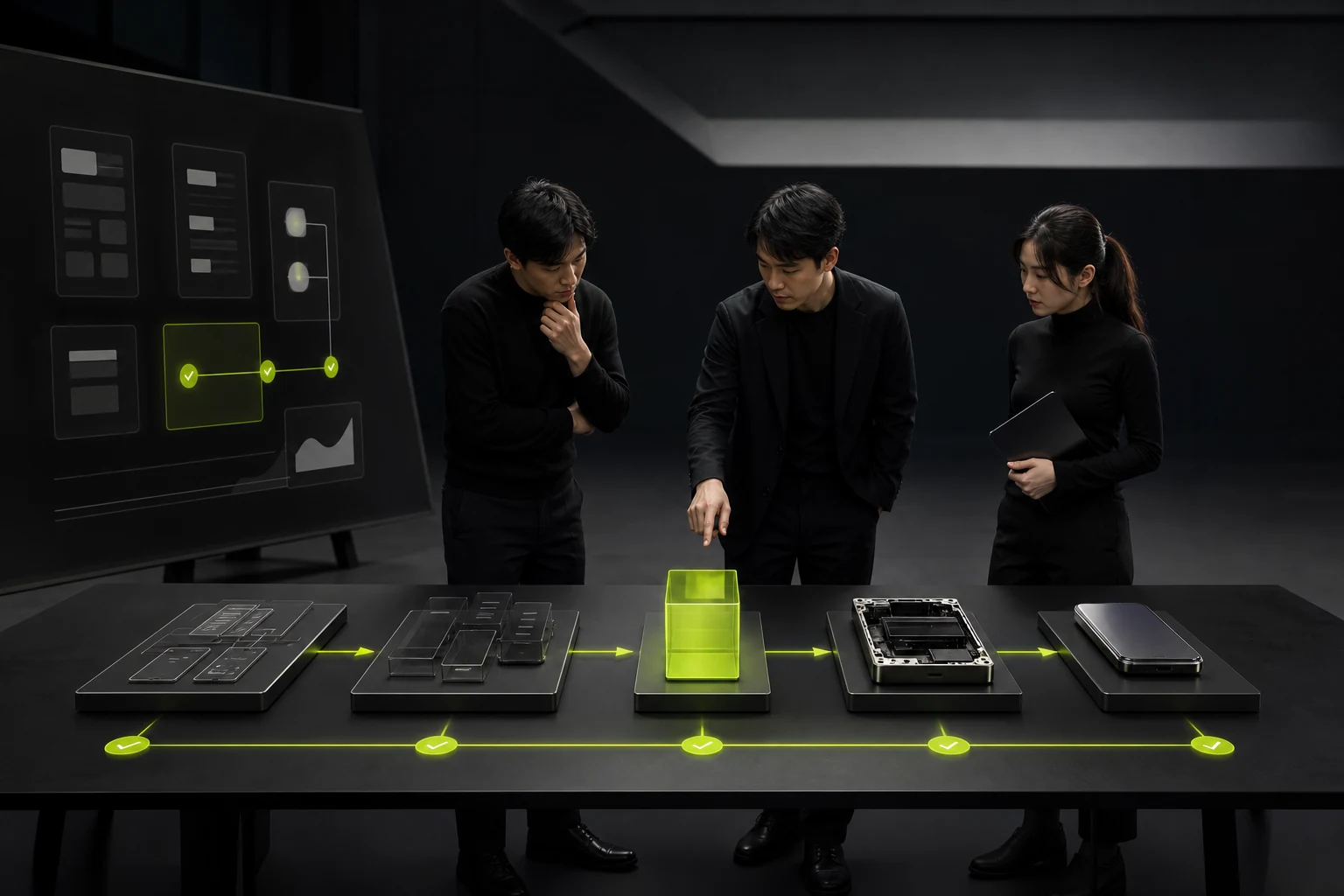
06 Let Change Cost Determine Design Depth
Validate irreversible, high-risk, and cross-team features earlier; lower-risk content can evolve during development. Match design depth to risk rather than applying one level to every page.
Continue adjusting after launch through data and research.
Recommended Sequence by Project Stage
Project Situation | Design–Development Relationship | Primary Deliverables |
|---|---|---|
Early concept | Research and prototypes first | Problem definition and core flows |
High technical risk | Prototype and technical Spike in parallel | Feasibility conclusions and constraints |
Standard product | Design leads by 1–2 iterations | Flows, components, and acceptance |
Mature iteration | Continuous dual-track collaboration | Experiments, releases, and data |
Urgent fix | Develop after minimum design confirmation | Risk note and regression check |
Frequently Asked Questions
Can a small project move directly into development?
Documentation can be reduced, but confirm tasks, structure, and key states first instead of guessing during implementation.
Must all UI be complete before development begins?
No. Deliver in batches, but align shared rules and dependencies in advance.
Can a technical prototype become the production product directly?
Usually not, unless it undergoes code-quality, experience, and security review followed by planned refactoring.
Does an MVP need a design system?
It needs lightweight, extensible foundational rules, not necessarily a large component library from the start.
How can design changes avoid disrupting development?
Set versions, reviews, change logs, and impact assessments, and synchronize them on a fixed cadence.
Service | View |
|---|---|
Related service | |
Design work | |
Project inquiry |
 Link copied