
What Does WeChat Mini Program Development Include? Design, Front End, Back End, and Launch
When a client asks to "build a Mini Program," they may mean an informational page, a booking tool, a membership system, or a complete business platform with payments, orders, an admin system, and marketing campaigns. The name is the same, but the workload can differ severalfold.
Before estimating cost and schedule, divide the Mini Program into four parts: the user experience, business services, operations admin system, and platform integration. A page list without business states and back-end rules cannot support an accurate estimate.
01 Product Scoping Determines What the First Release Actually Includes
Before development, define the users, entry points, tasks, and needs for login, payment, sharing, and notifications. The first version should not contain every idea; it should complete one core path end to end.
A booking service, for example, must consider time slots, availability, cancellation, refunds, and administrator handling—not just four user-facing pages.
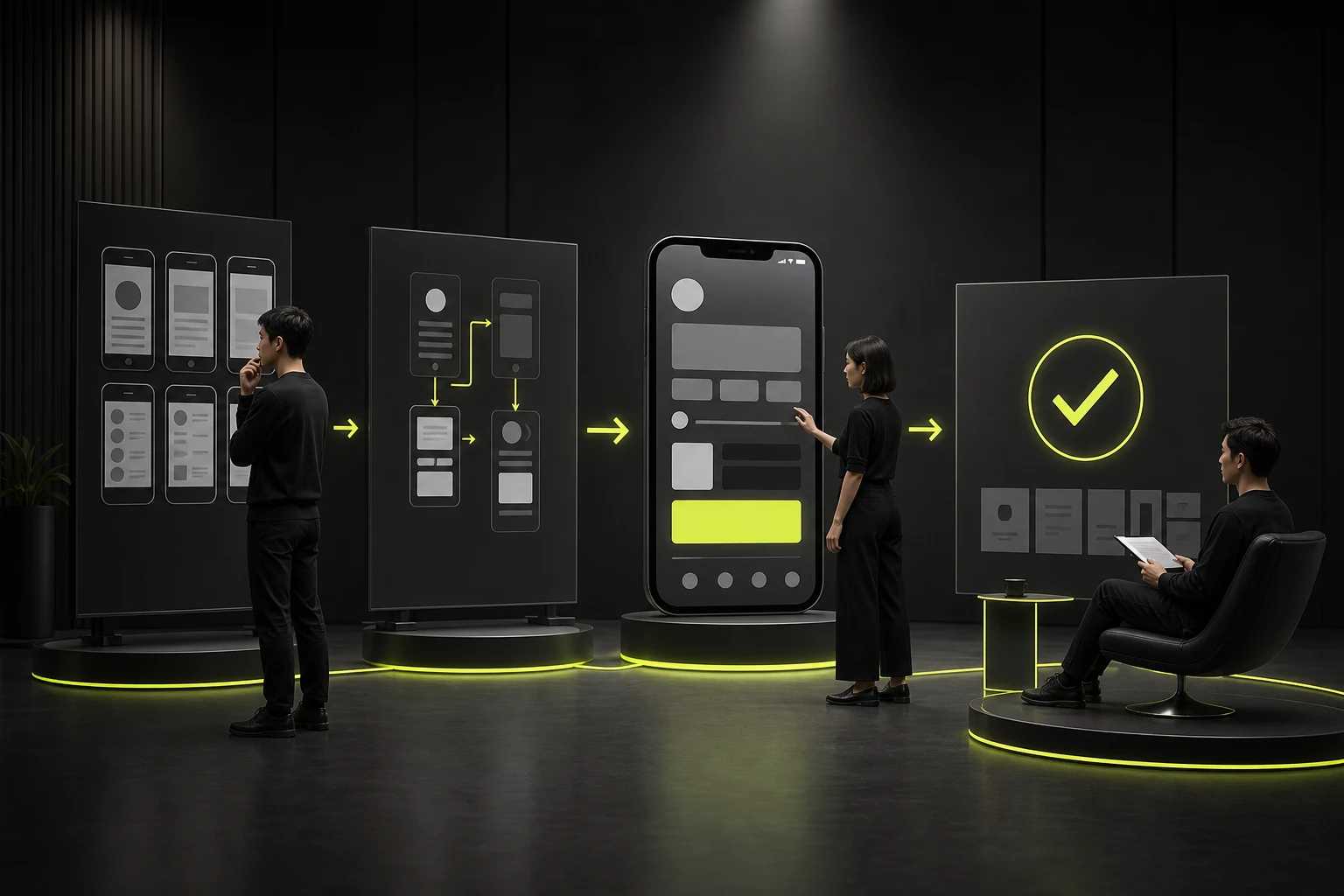
02 Interaction and Visual Design Must Fit the WeChat Context
Mini Program entry points are fragmented. Users may arrive directly on an internal page from a QR code, a friend's share, an Official Account, or search. Navigation and back behavior must support entry points other than the home page.
Visually, the experience should preserve brand recognition while respecting platform controls, touch-target sizes, and loading constraints. Do not pile on complex motion merely to make it look like an APP.
03 Front-End Development Handles Pages, States, and Device Capabilities
User-facing development includes page structure, components, network requests, caching, session state, authorization, camera, location, files, sharing, and related capabilities. Beyond normal states, cover no data, loading, failures, denied permissions, and poor networks.
Reproducing static pages from design comps does not create a usable Mini Program.

04 The Back End and Admin System Often Require More Work
Orders, memberships, content, inventory, bookings, promotions, and permissions all require server-side rules. Operations teams also need to view, edit, export, and handle exceptions in the admin system.
If the project reuses an existing system, confirm API quality, fields, authentication, and responsibility boundaries early. If it is built from scratch, include the data model and administrative workflows in the scope.
05 WeChat Capabilities Have Their Own Review and Configuration Requirements
Login, payment, subscription messages, customer support, content safety, and privacy notices all require corresponding configuration. Some capabilities also have entity qualification and category requirements.
The schedule should allow time for account applications, qualification materials, review feedback, and remediation. "Code complete" is not the same as "ready to publish."

06 Operations, Monitoring, and Version Management Continue After Launch
After release, monitor errors, payments, key funnels, and user feedback and maintain certificates, APIs, content, and campaigns. Changes to WeChat platform rules or its base library can also affect existing features.
Whether a Mini Program warrants continued investment should be judged by return visits, task completion, and business conversion—not cumulative visits alone.
Mini Program Project Scope Breakdown
| Module | Common Content | Often Overlooked |
|---|---|---|
| User Experience | Home page, lists, details, forms, orders, and membership | Error states, shared-entry pages, and denied permissions |
| Business Back End | Users, orders, inventory, rules, and messages | Refunds, concurrency, audits, and data recovery |
| Admin System | Content, products, orders, staff, and reports | Role permissions, bulk actions, and export |
| Platform Integration | Login, payment, support, and subscription messages | Qualifications, privacy, review, and account ownership |
| Launch and Operations | Monitoring, analytics, campaigns, and version maintenance | Error alerts, renewals, and handoff documentation |
Frequently Asked Questions
Can We Develop Only the Mini Program Front End?
Yes, but stable back-end APIs must already exist, with clear owners for login, payment, data, and exceptions. Otherwise, the front end cannot complete the business independently.
Does Every Mini Program Need an Admin System?
Not necessarily for a purely informational project. An admin system is usually necessary whenever content updates, orders, membership, bookings, or operations-team handling are involved.
Does Mini Program Development Include UI Design?
Not necessarily. The quote should state whether requirements, prototypes, UI, motion, exported assets, and implementation reviews are included.
How Long Does Review Take?
Timing depends on the category, qualifications, features, and remediation. Allow time for review and changes in the plan rather than promising a fixed number of days.
Can It Be Upgraded to an APP Later?
Business logic and the back end may be reusable, but the front-end interface and device capabilities usually need new planning. It cannot be converted with one click.
| Service | View |
|---|---|
| Related Services | View Service Details |
| Further Reading | View Service Details |
| Design Case Studies | View Service Details |
| Project Inquiry | Contact JVDS Design Studio |
 Link copied