
How to Write a Brand Design Brief: Positioning, Audience, Competition, and Use-Case Template
Many company Briefs say only, "We want to feel younger, more premium, and international." The words are valid, but people interpret them oppositely.
A good Brief does not predetermine style. It explains why change is needed, whom the brand serves, where it appears, what must remain, and how decisions will be made.
01 Begin with Business Change
Explain what is happening: a new brand or market, product upgrade, merger, international expansion, disorganized old visuals, or mismatch between perception and business.
Without a clear change, branding easily becomes a cosmetic update.

02 Express Objectives as Assessable Outcomes
"Improve brand image" is too broad. Try: "Help buyers understand on the corporate website and in sales materials that we have moved from equipment vendor to solutions provider."
Not every objective needs immediate sales data, but perception, consistency, asset completeness, or internal adoption can show progress.
Core Brand Design Brief Sections
| Section | Provide | Avoid |
|---|---|---|
| Business Background | Products, market, stage, and change | The entire corporate brochure |
| Target Audience | Decision roles, needs, concerns, and contexts | Everyone is a user |
| Brand Positioning | Value offered and reason to believe | Premium, innovative, leading |
| Competitive Context | Direct competitors, alternatives, and conventions | Only websites you like |
| Touchpoints | Corporate website, product, packaging, retail, presentation, and more | Make the Logo first and decide later |
| Project Scope | Deliverables, languages, formats, and copyright | "Complete VI" without a checklist |
| Constraints | Required assets plus legal, production, and technical limits | "Designer has total freedom" |
| Decision Process | Owner, feedback, and approval milestones | Anyone may comment at any time |
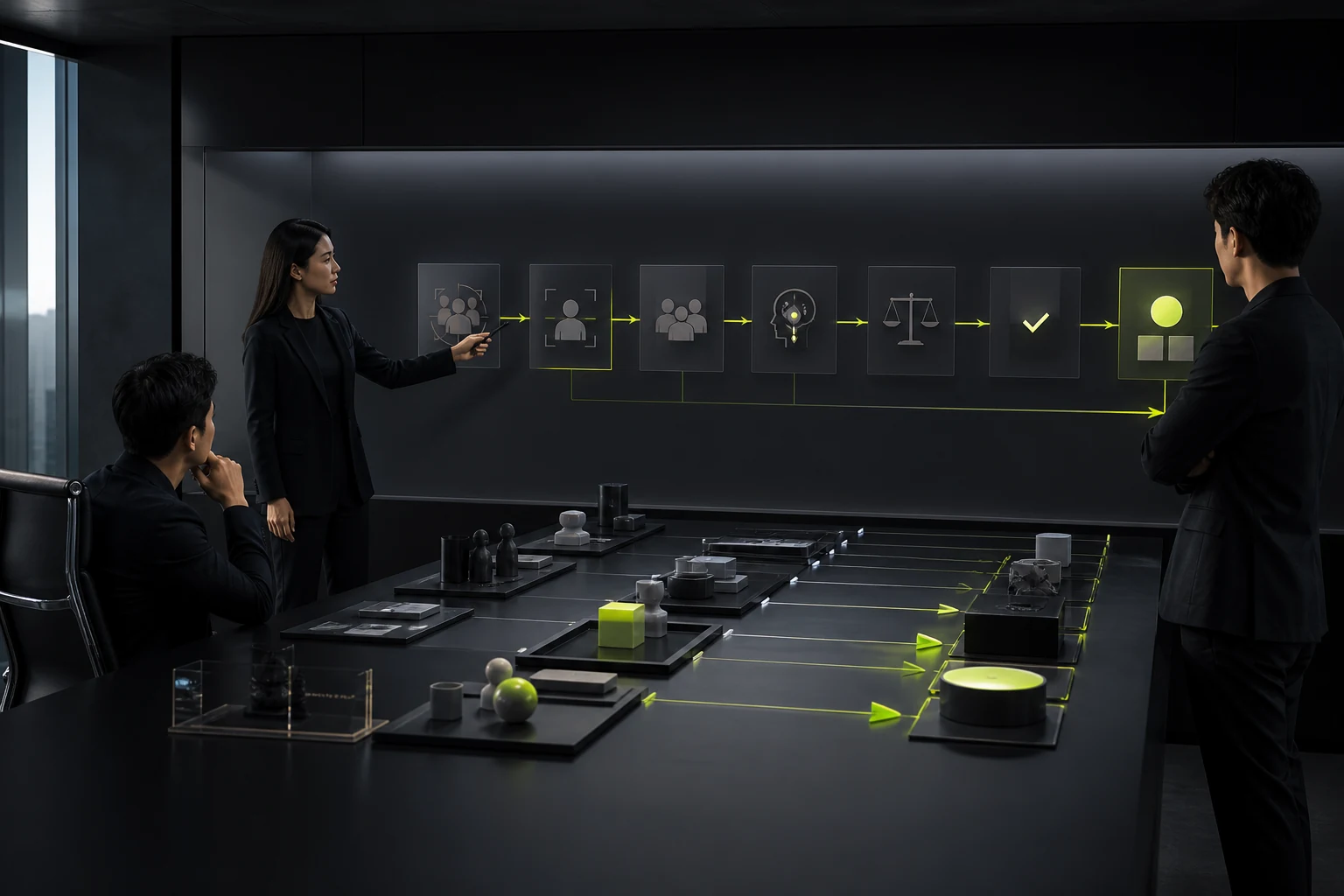
03 Describe Audiences in Decision Context
B2B brands may distinguish technical users, business leaders, and procurement; consumer brands may separate buyer, user, and influencer.
Where they encounter the brand, what they compare, and what concerns them guides design better than demographics alone.
04 Explain What You Like in Example Work
Do not paste ten screenshots without notes. Identify information order, photography, color, voice, or application consistency, and state what does not fit.
Examples support communication, not copying. Design must find differentiation through competition and the brand itself.

05 Keep Scope and Application Priorities Realistic
List touchpoints certain to be used in phase one and distinguish core delivery from later expansion. Requesting dozens of applications without content or owners creates formalistic outputs.
Give budget and timing ranges and identify immovable commercial dates.
06 State Unknowns Explicitly
If positioning, naming, or audiences remain uncertain, list them for research and joint decision. Pretending they are settled postpones conflict until proposals.
Update the Brief at kickoff and have core decision-makers approve it as the baseline.
Frequently Asked Questions
Is More Detail Always Better?
No. Facts, constraints, and decisions need detail; the design solution need not be predetermined.
Can Logo Design Start Without Brand Positioning?
Exploration can start, but risk is higher. At least define the business, audience, and core value.
Should the Brief Include a Budget?
A range helps providers match research depth and delivery scope.
Who Writes the Brand Brief?
Brand or business leaders usually lead it, with product, sales, management, and design contributing.
Can the Design Studio Help Improve the Brief?
Yes. Brand diagnosis and kickoff workshops are valuable services.
| Service | View |
|---|---|
| Related Services | View Service Details |
| Project Inquiry | Contact JVDS Design Studio |
| Design and Website Development Articles | View Service Details |
 Link copied