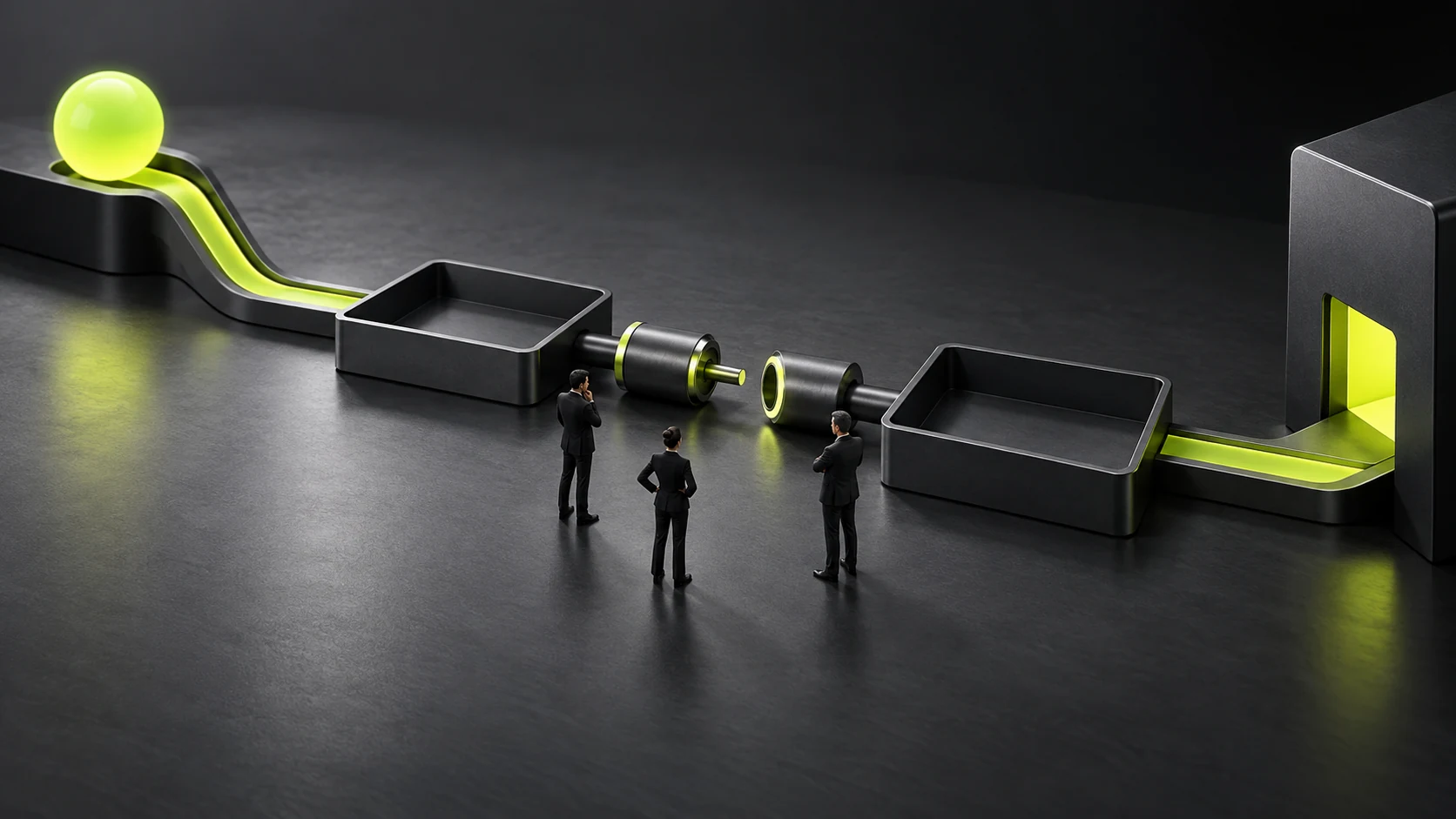
Over the past ten years, many Chinese export companies have expanded overseas through supply-chain cost advantages. Today, whether attending Hannover Messe in Germany, CES in the United States, or running paid traffic campaigns for an overseas independent website, companies increasingly agree on one point: with an awkward string of Chinese pinyin initials as your name and brochures and web pages that look like a domestic wholesale stall from ten years ago, even products of better quality than European and American competitors will struggle to command a brand premium. You will simply be treated as a contract manufacturer and squeezed on price.
Turning a Chinese company into an international brand respected in mainstream overseas markets does not require pretending to be a foreign company. It requires communicating in ways the local market understands and finds visually appealing across three touchpoints: brand naming, visual language, and the value narrative.

1. English brand naming: Avoid the pronunciation dead end of “forcing four consonants together”
Many Chinese companies create their English names by stringing together the pinyin initials of four Chinese characters—for example, calling “Hongda Ruixin” HDRX or “Huatai Jinggong” HTJG.
To native speakers of English, German, and Spanish, four consonants without vowels between them cannot be read aloud smoothly, and customers forget the name as soon as they look away. If you plan to build a lasting presence overseas, there are usually three more reliable naming approaches:
- A short coined word with vowels (Coined Word): Keep it to 2 syllables and within 5–7 letters, as in projects we have worked on such as
HOMIVA,LUMIKO,VARENA,NEXIVA, andAVENOR. These are not only effortless to pronounce worldwide, but also make it extremely easy to register a globally consistent.comdomain and an international trademark through the Madrid System. - A combination of real English words (Compound Word): For example, the Canadian retail brand NeighborBuy combines two basic words, making the name memorable and immediately conveying the nature of its business.
- Mandatory screening for negative slang associations (Linguistic Check): Before finalizing the name, ask a native speaker from the target country to check that the name as pronounced has no negative, comical, or indecent sound-alikes in local slang, religion, or culture.
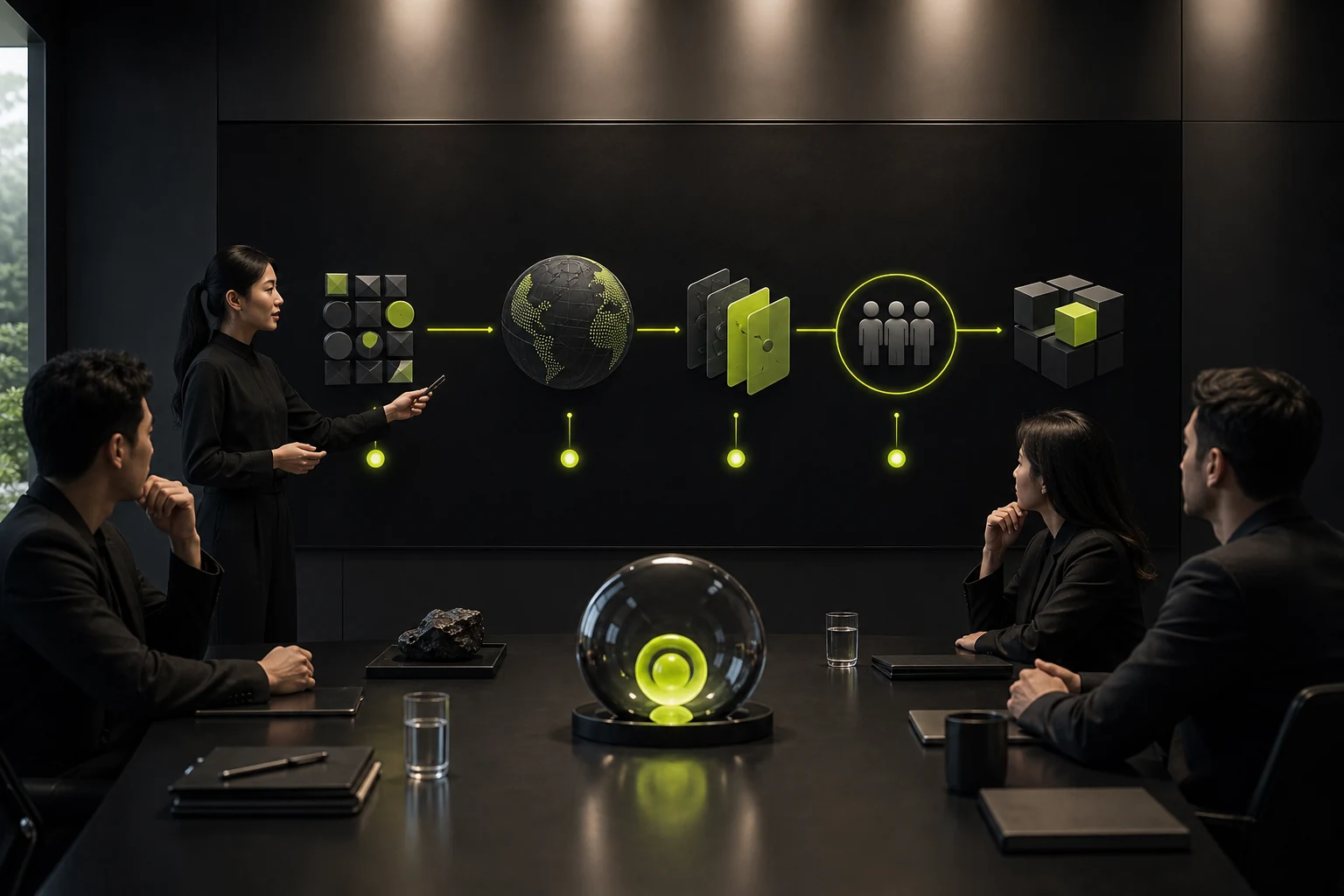
2. Visual system: Eliminate the “multicolored promotion” look and the “composited stock image” feel
Overseas B2B buyers and middle- to high-income consumers are extremely sensitive to a brand looking cheap. When helping companies expanding overseas rebuild their brand visuals and multilingual corporate websites, the first things we remove are gradient-gold three-dimensional lettering, multicolored starburst promotional stickers, and composited images found at random on Baidu of “a white model giving a thumbs-up in front of a fake server room.”
We replace these with the internationally familiar approach of “restrained whitespace + precise geometric grids + authentic industrial/lifestyle photography”:

- Reduce the palette to 1 composed, distinctive primary color + a refined neutral gray-and-white base;
- Use a modern design system with consistent stroke widths and corner curvature for graphics and icons;
- For photography, we would rather spend two days shooting authentic work scenes with clean lighting and macro close-ups in the company’s own clean production line or R&D laboratory than use a single hollow, artificial image from the web.
3. Value narrative: Move from “boasting about our size” to “how we put ESG, compliance, and customer success into practice”
European and American companies and consumers pay close attention to a brand’s values and sense of long-term responsibility when making purchasing decisions. Beyond thoroughly explaining product performance specifications, include in your brand story and corporate website specific stories about using energy-efficient, environmentally friendly materials (Sustainability), employee safety and quality control systems, data privacy protection, and helping local overseas customers reduce costs and improve efficiency. This communication, based on equal footing, professionalism, and responsibility, is what truly earns a Chinese brand lasting respect abroad.
Need design or website development services?
JVDS Design Studio is a professional design studio focused on digital product experiences and brand identity. We work with businesses in China and overseas that want to strengthen their brand image, improve user experience and grow their business, providing clear, usable UI/UX design, high-quality website design and development, app and mini-program development, and cohesive, distinctive brand identity design.
Updating your brand identity or website? Tell us where the design will be used and which materials you need.
 Link copied