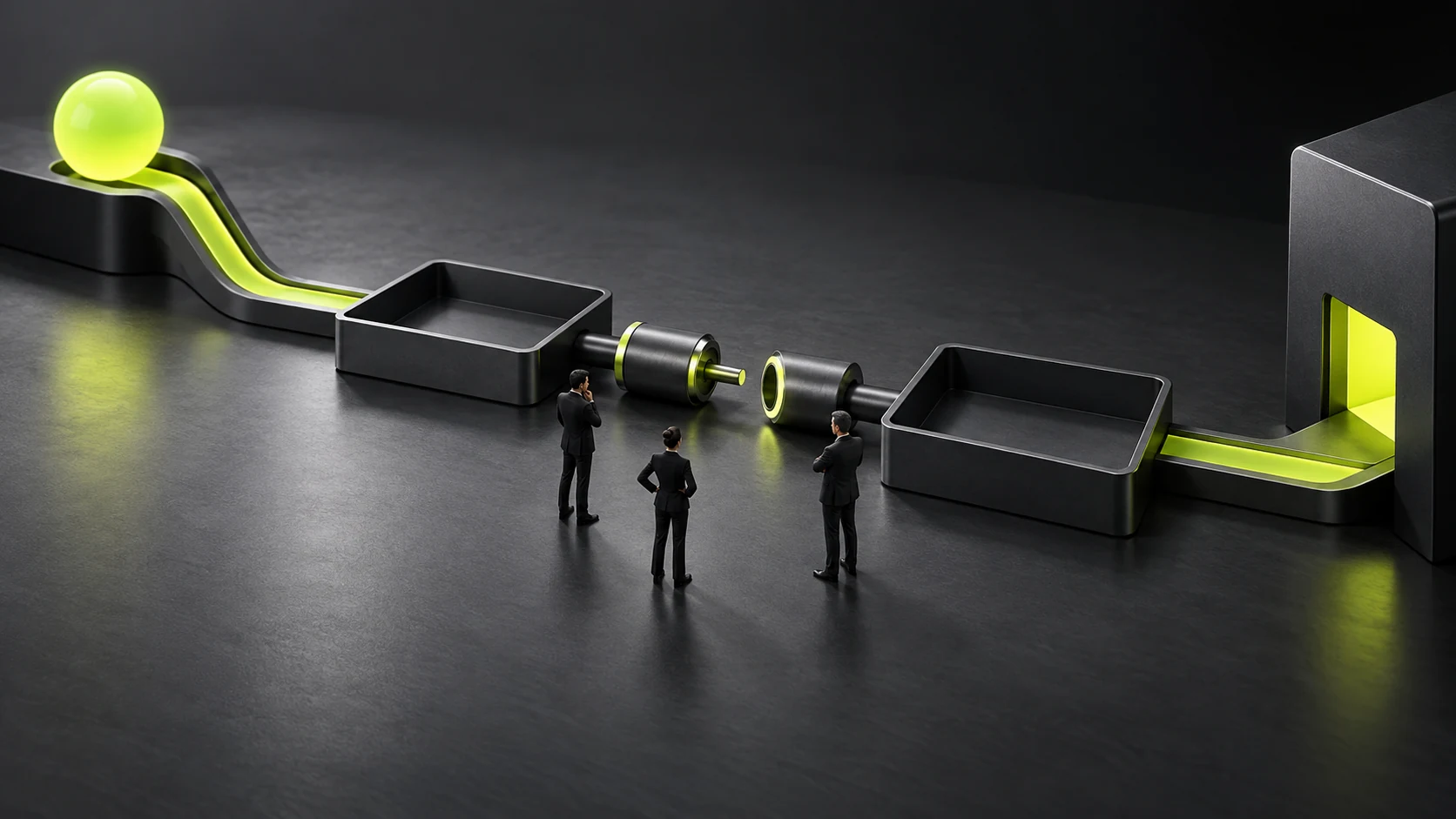
"Why does one Logo cost RMB 500 and another RMB 50,000?" The final image alone cannot answer. A low-cost project may provide a usable graphic quickly; a midrange project may establish brand recognition and basic applications; a high-budget project may also address positioning, brand architecture, originality validation, a cross-touchpoint system, and long-term internal use. These are not the same deliverables.
This article uses RMB 500, RMB 5,000, and RMB 50,000 as typical budget scenarios to explain service differences, not uniform market prices. Actual pricing depends on designer experience, region, research scope, number of directions, applications, rights, project management, and delivery standards.
01 What Do the Three Budget Tiers Actually Buy?
Comparison Item | Approx. RMB 500 Scenario | Approx. RMB 5,000 Scenario | Approx. RMB 50,000 Scenario |
|---|---|---|---|
Primary Goal | Obtain a basic graphic quickly | Create a more complete Logo and basic guidelines | Resolve brand direction and build a complete identity system |
Requirements Research | Brief discussion or form | Basic understanding of business, audience, and competitors | Brand diagnosis, research, interviews, and strategy definition |
Creative Process | Few directions or template-led execution | Original directions, sketches, and selection | Multiple concept rounds, evidence, and decision mechanisms |
Delivery Scope | Common images or a basic vector | Standard/reversed/black-and-white versions, colors, and basic guidelines | Logo system, typography, graphics, layouts, and cross-touchpoint rules |
Application Validation | Limited or none | Basic scenarios such as business cards, social avatars, and websites | Digital, spatial, packaging, communications, and multilingual systems |
Project Management | Fast individual communication | Defined milestones and revision rounds | Research, proposals, co-creation, reviews, and brand governance |
Best Fit | Temporary campaigns, early validation, and limited use | Small businesses or clearly scoped brand upgrades | Multiple businesses, channels, and long-term brand-asset development |
02 The RMB 500 Tier Can Be Usable, but Its Boundaries Must Be Clear
A low budget best suits clear, low-risk, limited-use needs such as short-term campaigns, internal projects, early validation, or a small personal business. Its reasonable value is speed and low cost—not simultaneous brand strategy, trademark-risk control, and a complete visual system.
- Confirm originality and any templates, stock icons, or generative assets;
- Confirm whether delivery includes PNG, JPG, or editable vectors;
- Confirm commercial rights for fonts, icons, and images;
- Confirm the number of directions, revision rounds, and overage fees;
- Do not assume a low-cost option includes trademark searches or registration guarantees;
- Do not use it for large advertising, fundraising, or national distribution without rights documentation.
03 The RMB 5,000 Tier Usually Begins to Support Sustainable Use
Midrange value typically means the designer understands the basic business and audience, explores original directions, delivers standard, reversed, black-and-white, and basic-color versions, and validates common scenarios such as social avatars, corporate websites, and business cards. It may not include complete brand strategy or many applications, but should be more systematic than one graphic.
Minimum Deliverable | Key Check |
|---|---|
Standard Logo and Lockups | Are horizontal, vertical, symbol, and word relationships clear? |
Black-and-White, Reversed, and Single-Color Versions | Do they work in print, engraving, and on dark backgrounds? |
Primary Colors and Basic Typography | Are color values, font names, and licensing responsibilities clear? |
Clear Space and Minimum Size | Is it recognizable on small screens, avatars, print, and at a distance? |
Basic Application Examples | Are real scenarios validated rather than only attractive Mockups? |
Source and Export Files | Are AI/SVG/PDF/PNG/JPG and other formats complete? |
Rights and Asset Inventory | Are copyright-transfer conditions, fonts, and third-party elements clear? |
04 Why the RMB 50,000 Tier May Still Be Reasonable
When a Logo must serve several products, markets, languages, and touchpoints, the work is no longer one image but an identity system and decision rules. A higher budget may cover management interviews, brand architecture, competitive context, naming relationships, concept validation, dynamic identity, digital-product adaptation, complete VI, and internal training.
A high price does not guarantee quality. Require the vendor to explain each phase's outputs, actual participants, research methods, proposal logic, delivered assets, and acceptance. A large budget makes sense only when scope and evidence align.

05 Ten Variables That Truly Affect Logo Pricing
Variable | Why It Adds Work or Risk |
|---|---|
Business and Brand Complexity | Multiple products, brands, and regions require hierarchy |
Research Depth | Interviews and competitor, user, and market research require time and expertise |
Number of Decision-Makers | Multiple reviewers require consensus mechanisms and more communication |
Number of Creative Directions | Every viable direction needs independent logic, sketches, and validation |
Revision Scope | Refinement and restarting a direction require different workloads |
Language and Naming | Chinese, English, multilingual text, and different scripts affect lockups |
Applications | Digital, print, space, packaging, and video have different requirements |
Originality and Rights Risk | Searches, licensing, and evidence retention increase responsibility |
Delivery Depth | One Logo and a complete VI manual require very different workloads |
Timeline and Priority | Compressed schedules generally need parallel resources and faster decisions |
06 Hidden Costs Commonly Omitted from Quotes
- □ Are commercial font licenses included?
- □ Who purchases stock, template, icon, and plugin licenses?
- □ Are trademark agents, formal searches, and registration fees separate?
- □ Are applications such as business cards, packaging, corporate websites, and PPT included?
- □ Are printing proofs, production, photography, and physical materials included?
- □ How are extra revisions, added decision-makers, or direction changes billed?
- □ Are source files, editable templates, and brand guidelines delivered?
- □ Are international, multilingual, subbrand, and animated Logo needs quoted separately?
07 Understand Copyright, Source Files, and Trademarks Separately
Receiving a Logo image does not automatically convey all copyright. Receiving source files does not automatically transfer third-party font and asset licenses. Original work does not guarantee trademark registration. Contracts should separately define rights in design outcomes, third-party licenses, source-file delivery, and trademark-service boundaries.
Companies should retain requirements, proposals, approvals, source files, and license inventories. Formal trademark registration involves legal judgment and should be handled by a qualified agent or legal professional. Designers can assist with initial similarity-risk checks but should not promise 100% approval.

08 Do Not Measure Value by the Number of Concepts
Ten shallow concepts may be weaker than two directions with clear strategy and validation. Ask whether each addresses the same problem, how they differ, why they fit the target audience, and how they adapt to real scenarios. If a vendor explains only color and shape but not business logic, concept count has no value.
09 Use This Table to Compare Logo Quotes
Comparison Dimension | Vendor A | Vendor B | Vendor C |
|---|---|---|---|
Requirements and Research Scope | Complete | Complete | Complete |
Creative Directions and Proposal Method | Complete | Complete | Complete |
Revision Rounds and Direction Restarts | Complete | Complete | Complete |
Logo Versions and Visual Guidelines | Complete | Complete | Complete |
Number of Applications | Complete | Complete | Complete |
Font / Asset Licensing | Complete | Complete | Complete |
Source Files and Copyright | Complete | Complete | Complete |
Timeline, Team, and Payment | Complete | Complete | Complete |
Total Price and Exclusions | Complete | Complete | Complete |
10 Choosing a Budget by Company Stage
Company Status | Better Choice |
|---|---|
Quickly Validating a Project | Control scope and solve baseline recognition and usable-file needs first |
Stable Business with Inconsistent Brand Image | Upgrade the Logo, basic guidelines, and core applications |
Preparing to Raise Funds, Expand, or Enter a New Market | Evaluate positioning, system extension, and rights risk together |
Confused Product or Subbrand Portfolio | Resolve brand architecture and naming relationships before visual design |
National or International Multichannel Operations | Build a complete visual system, digital guidelines, and governance |
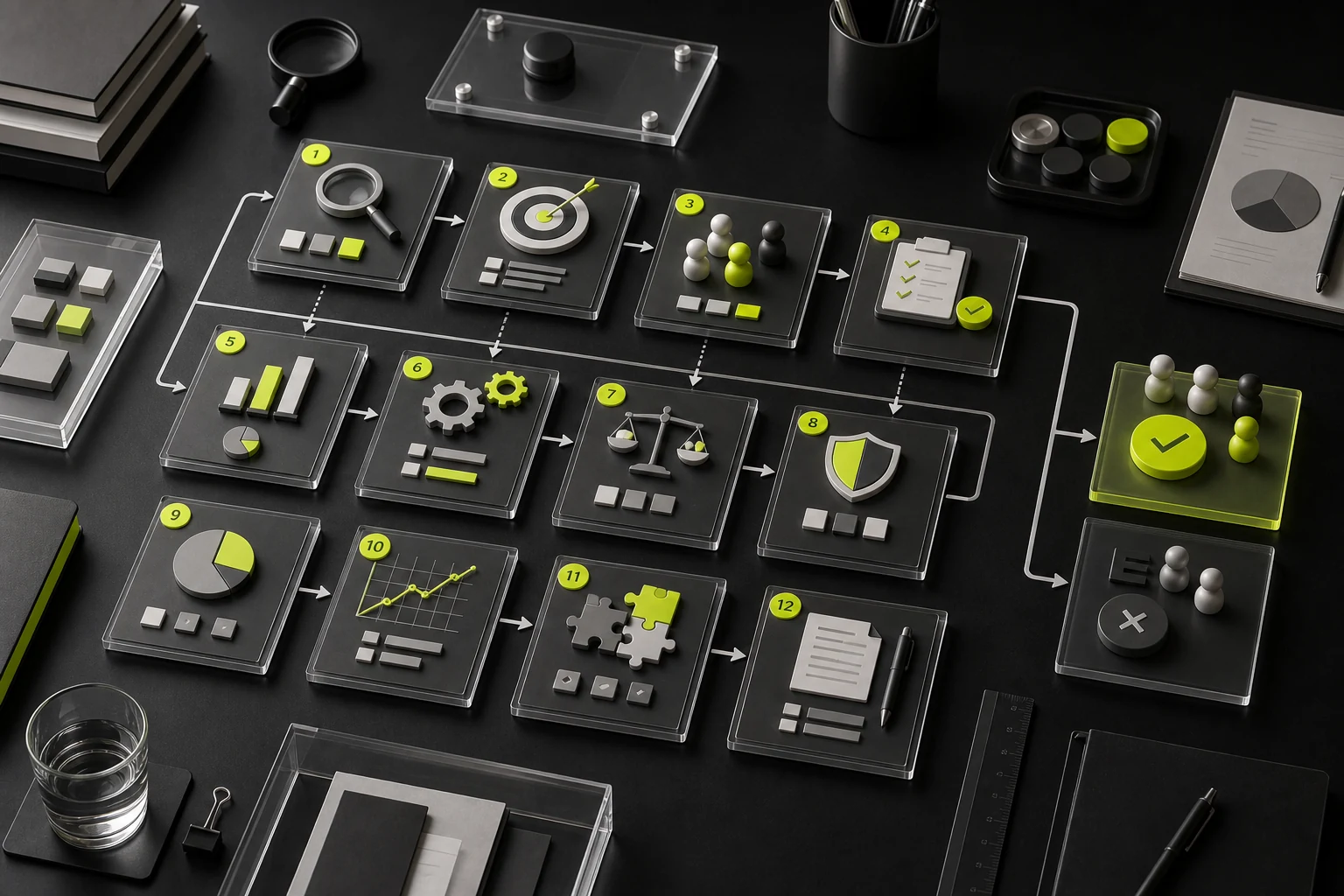
11 Twelve Questions Before Signing
- □ What primary business problem must this Logo solve?
- □ Who will actually participate, and did the same team complete the cases?
- □ What do research, strategy, creative work, and applications each include?
- □ How many directions are provided, and how are they compared?
- □ How are revision rounds defined, and how should consolidated feedback be submitted?
- □ What happens if the approved direction must be restarted?
- □ Can fonts, icons, templates, and other assets be used commercially?
- □ How far do trademark-search and registration services extend?
- □ When and within which scope does copyright transfer?
- □ Which source files and export formats are delivered?
- □ Does the vendor retain portfolio-display rights, and how are confidential projects handled?
- □ How are pauses, termination, and delays settled?
12 Final Decision: Match Budget to Usage Risk
How long the Logo will be used, where it will appear, and how much it will influence determines appropriate investment. A short-term test does not need full brand consulting. For products, corporate websites, packaging, stores, international markets, and trademark registration, choosing the lowest price may defer cost into rework, licensing, and brand inconsistency.
Frequently Asked Questions
How much does Logo design usually cost?
There is no uniform price. Compare research, creative work, concepts, applications, guidelines, rights, team, and timing. The tiers here only explain scope differences.
Can a Logo costing several hundred RMB be used commercially?
It depends on originality, contract, and third-party licenses, not price alone. Confirm rights and source files before use.
Does Logo design include VI?
Not necessarily. A Logo is one core identity element; VI may also include color, typography, graphics, layouts, and many application guidelines. Define each item in the contract.
Can a design company guarantee trademark registration?
It should not promise absolute success. Design can reduce obvious risk, but formal search and registration still require professional legal or agent services.
Must source files be delivered?
Agree before signing. Long-term corporate use generally requires editable or vector files such as AI, SVG, and PDF plus common exports.
Service | View |
|---|---|
Brand Visual Design Services | |
Logo Design and Brand Upgrade | |
Project Inquiry |
Need design or website development services?
JVDS Design Studio is a professional design studio focused on digital product experiences and brand identity. We work with businesses in China and overseas that want to strengthen their brand image, improve user experience and grow their business, providing clear, usable UI/UX design, high-quality website design and development, app and mini-program development, and cohesive, distinctive brand identity design.
Updating your brand identity or website? Tell us where the design will be used and which materials you need.
 Link copied