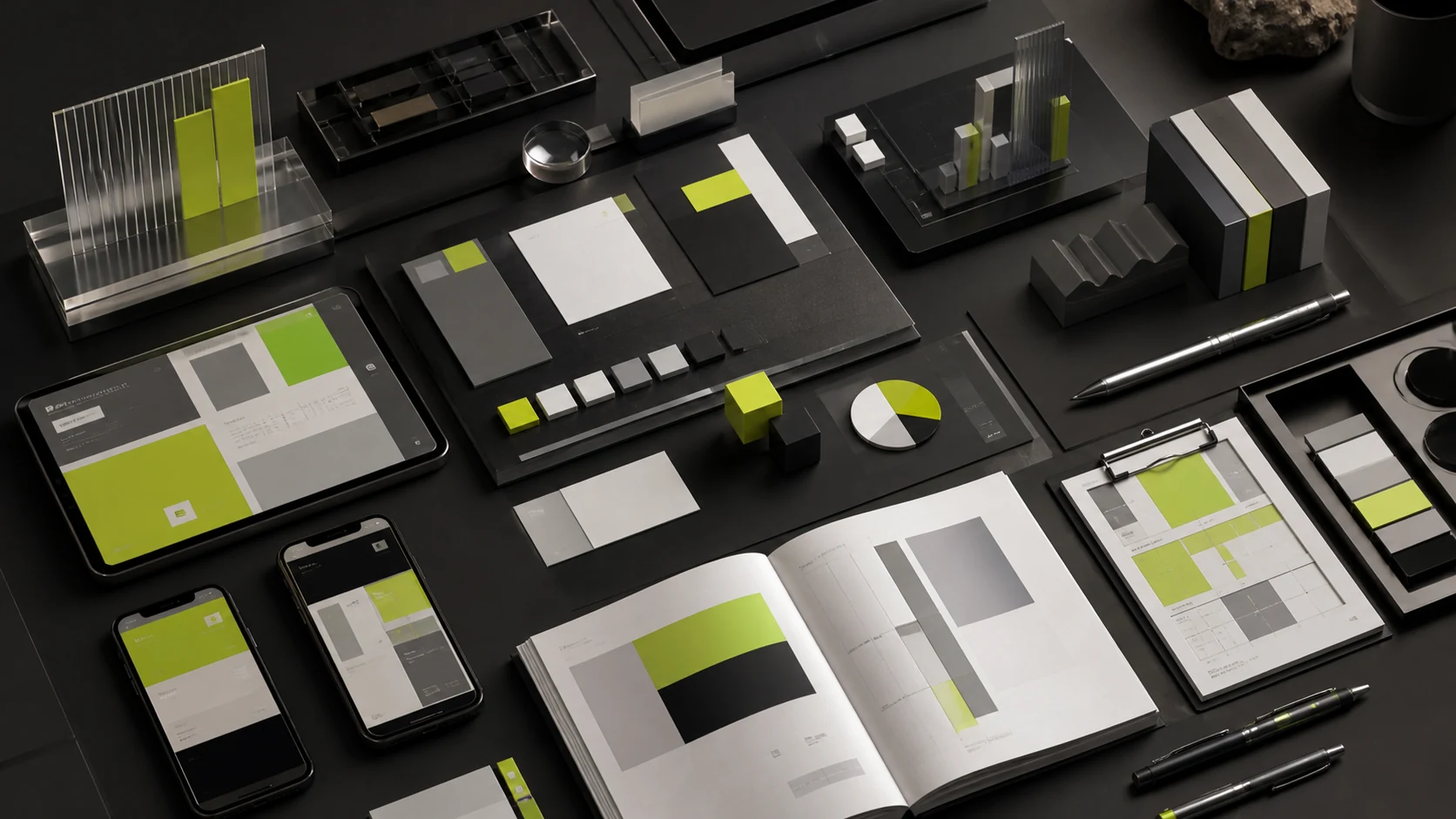
When a client asks for "a brand visual system," a design firm may interpret that as a Logo, color palette, and business card—or as brand positioning, a complete identity system, corporate website, APP, sales templates, social media, and brand guidelines. Neither interpretation is inherently wrong, but without itemized scope, quotes for the same project can differ severalfold or even dozens of times.
Brand visual design can be divided into four layers. The first defines brand direction; the second establishes core identity; the third creates reusable rules; and the fourth applies the system to real touchpoints and establishes long-term governance. A company need not purchase all four at once, but it must know which layer is currently missing.
01 The Difference Between Logo Design, VI Design, and Brand Visual Design
Service Name | Core Scope |
|---|---|
Logo Design | Establish the core visual mark for a brand name and its basic lockups |
Basic VI | Add color, typography, supporting graphics, and common applications to the Logo |
Brand Visual System | Create a scalable visual language across channels and media |
Brand Strategy and Visual Design | Define positioning, audience, architecture, and expression before creating the visual system |
Brand Implementation and Governance | Templates, training, asset libraries, review, and ongoing update rules |
Many "complete VI packages" contain only predetermined application pages and may exclude brand strategy, digital-product guidelines, real templates, or ongoing governance. Evaluate deliverables and usage rights during procurement, not just the package name.
02 Layer One: Brand Direction and Visual Strategy
Visual design must answer who should remember the brand, why they should remember it, how it differs from competitors, and how it remains consistent across products and markets. The strategy layer does not need to produce a lengthy report, but its key judgments should be documented.
- Current Brand Audit: issues across the existing Logo, corporate website, products, communications, channels, and internal use.
- Target Users and Key Touchpoints: where users first encounter the brand and where trust is established.
- Competitive and Category Language: industry conventions, useful familiarity, and commoditized patterns to avoid.
- Brand Positioning and Core Attributes: what the brand wants to communicate and how it should not be misunderstood.
- Brand Architecture: how the master brand, subbrands, products, services, and regional variants are organized.
- Visual Principles: three to five rules that guide all subsequent design decisions.
03 Layer Two: Core Brand Identity
Asset | Typical Deliverables |
|---|---|
Logo System | Primary mark, horizontal and vertical lockups, symbol, wordmark, black-and-white, reversed, and single-color versions |
Clear Space and Minimum Size | Protection areas, minimum usable size, and prohibited uses for different media |
Primary and Supporting Colors | Primary, secondary, neutral, and functional colors with output values |
Brand Typography | Chinese and English typefaces, numerals, hierarchy, weights, fallback fonts, and licenses |
Supporting Graphics | Patterns, shapes, lines, textures, or brand-identification elements |
Icons and Symbols | Style rules for functional, brand, or product icons |
A core identity must remain clear across sizes, backgrounds, languages, and production methods, not merely look good in a large proposal Mockup. Design completion also does not guarantee trademark registration; distinguish a basic similarity check, a formal search, and an application through a trademark agent.
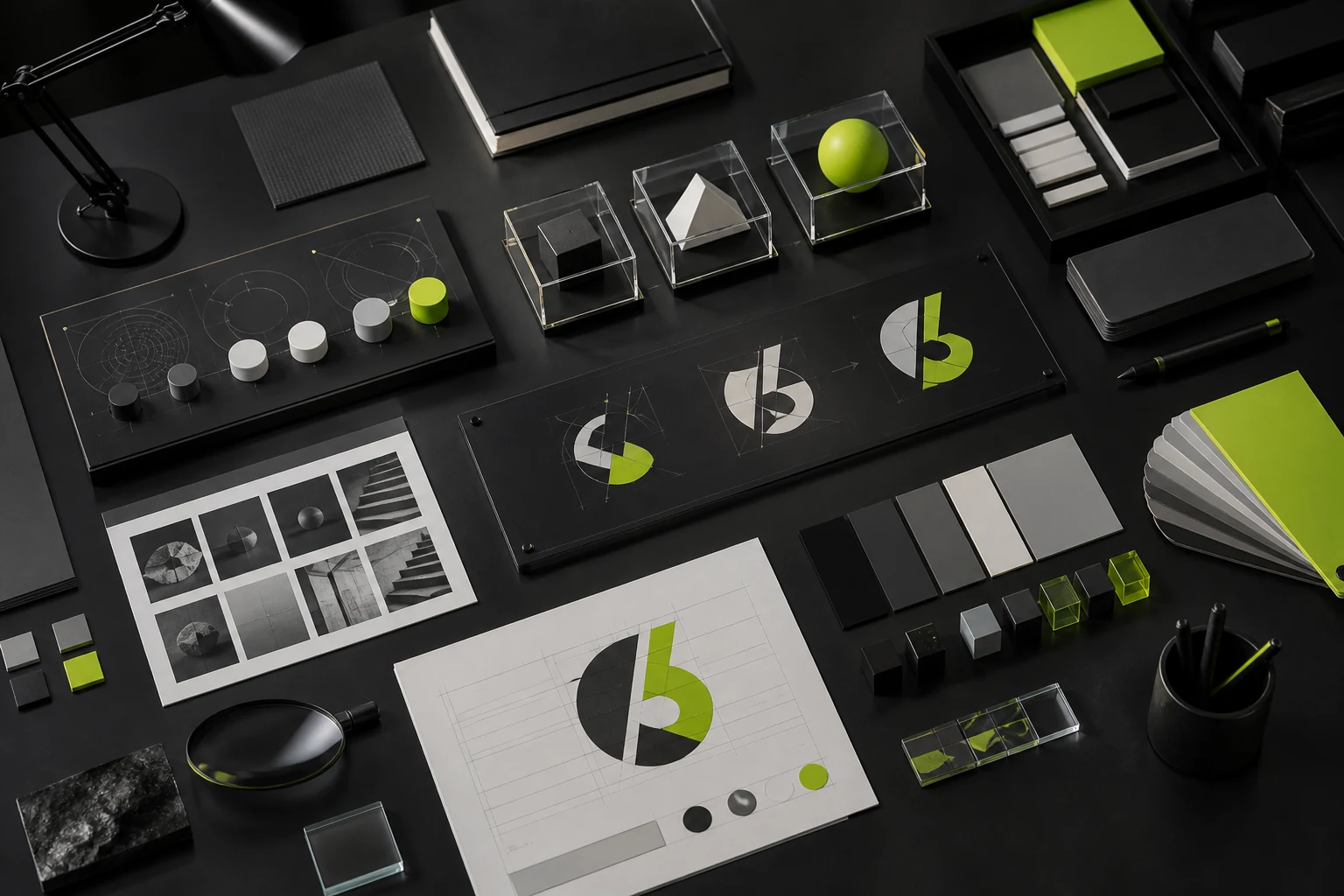
04 Layer Three: A Reusable Visual Language
A complete system must answer this question: when designers encounter a new page or campaign that has never existed before, how can they still create something that looks like the brand? Logo and color rules alone cannot support complex content.
System Area | Required Definition |
|---|---|
Layout System | Grids, whitespace, alignment, heading hierarchy, information density, and visual rhythm |
Image Style | Photographic subjects, composition, lighting, people, postproduction, and prohibited directions |
Illustration and 3D | Form, line, material, color, perspective, and use cases |
Data Visualization | Chart colors, labels, emphasis, accessibility, and brand expression |
Motion Principles | Rhythm, entrances, feedback, brand openers, Logo motion, and graceful degradation |
Voice and Copy Style | Heading tone, CTA language, professional terminology, and how users are addressed |
05 Layer Four: Application Design and Brand Governance
Applications are not a way to place the Logo on more objects. They validate whether the system solves real situations. Prioritize frequent, important, and easily fragmented touchpoints instead of inflating the page count of a VI manual.
Touchpoint Category | Typical Applications |
|---|---|
Office and Sales | Business cards, letterhead, PPT, quotes, proposals, white papers, and email signatures |
Marketing Communications | Posters, social graphics, advertising, events, trade shows, and press-release templates |
Digital Channels | Corporate website, APP, social avatars, covers, favicon, and application icons |
Products and Packaging | Packaging, labels, manuals, product interfaces, splash screens, and notifications |
Space and Wayfinding | Stores, offices, showrooms, wayfinding systems, and environmental graphics |
Governance Tools | Template libraries, asset libraries, approval rules, training, and update mechanisms |
06 Digital Adaptation Requires More Than One Logo PNG
A modern brand must work in mobile icons, browser tabs, social avatars, mobile navigation, dark mode, complex image backgrounds, and extremely small sizes. It must also address font loading, text contrast, functional colors, and interaction states.
- Does the symbol remain recognizable at 16, 24, and 32 pixels?
- Is there enough clear space when an avatar is cropped into a circle?
- Are usable variants available for dark and light backgrounds?
- Does the primary brand color provide sufficient contrast in body copy, buttons, and charts?
- Do Chinese, English, numeric, and multilingual typefaces work together and have valid licenses?
- If an animated Logo cannot play, is a clear static version available?
07 What Should Brand Guidelines Include?
Effective guidelines are not a collection of Mockups. They must help teams other than the original designers understand rules, find files, and make correct choices. JVDS Design Studio's brand-visual contract template identifies Logo variants, colors, typography, guidelines, applications, and source files as baseline deliverables; complex projects also require digital and content rules.
Guidelines Section | Questions It Should Answer |
|---|---|
Identity Rules | Logo lockups, clear space, minimum size, backgrounds, and incorrect uses |
Style Rules | Color, typography, graphics, imagery, icons, layout, and motion |
Application Examples | Dimensions, templates, and production instructions for real high-frequency scenarios |
Digital Rules | Responsive behavior, light and dark modes, accessibility, icons, and social cropping |
Asset Index | Folder structure, naming, formats, licensing, and intended users |
Governance Rules | Who can modify assets, how approvals work, when updates occur, and how exceptions are handled |
08 Licensing Boundaries for Fonts, Images, and Third-Party Assets
Client ownership of the final brand copyright does not automatically permit unlimited use of every component. Fonts, stock media, templates, plugins, icons, audio, and third-party assets may have separate licenses. Contracts and handoff checklists should record the source, license holder, usage scope, term, renewal, and alternatives for each item.
Resource Type | Required Confirmation |
|---|---|
Fonts | Whether desktop, Web, APP, server, embedding, and multiuser licenses are included |
Images / Video | Advertising, corporate website, social, print, regions, term, and derivative editing |
Templates / Plugins | Whether they can be used for a client project, whether accounts can be transferred, and whether editable files can be delivered |
Open-Source Resources | License, attribution, modification, redistribution, and commercial-use terms |
Generative Content | Provenance records, third-party rights, and internal review |
09 Four Common Procurement Tiers
Tier | Best Fit | Primary Deliverables |
|---|---|---|
Standalone Logo | The business is still being validated and has few use cases | Logo system, basic colors, and commonly used files |
Basic VI | Consistent external use is required | Logo, colors, typography, supporting graphics, basic applications, and concise guidelines |
Complete Visual System | Multiple channels, products, or teams use the brand | Strategy, complete system, digital adaptation, templates, and guidelines |
Brand Implementation and Governance | The brand is live and needs long-term consistency | Asset library, training, review, updates, and ongoing support |
10 Final Source-File and Asset Handoff Checklist
- Logo Vector Source Files: AI, SVG, and PDF, plus common formats such as transparent PNG and JPG.
- Color Data: RGB, HEX, and CMYK, plus spot colors and screen adaptations when needed.
- Font Inventory: names, weights, sources, licenses, purchasing accounts, and alternatives.
- Components and Templates: editable Figma, PPT, Keynote, document, or social templates.
- Images, Icons, Illustrations, and Motion: original files, exports, licenses, and usage instructions.
- Brand Guidelines: a readable PDF and maintainable source file with version and update date.
- File Index: folder structure, naming, contacts, accounts, and excluded items.
11 How to Accept a Brand Visual Project
Acceptance Dimension | Review Question |
|---|---|
Recognition | Is the core identity clear and aligned with brand goals? |
Adaptation | Does it work at small sizes, in black and white, on light and dark backgrounds, in Chinese and English, and across key media? |
System | Can new scenarios be extended from the rules? |
Use | Can internal teams find templates, understand rules, and complete common tasks? |
Rights | Are copyright, trademark-service boundaries, third-party licenses, and source files clear? |
12 A Typical Scenario: The Company Needs More Than a "More Premium Logo"
A manufacturing company wants its Logo to look "more international." Further definition reveals that product-line names, Chinese and English lockups, sales presentations, trade-show materials, and corporate website visuals are inconsistent. Redrawing the Logo alone will not resolve internal fragmentation. A better scope preserves the core identity, organizes brand and product hierarchy, establishes Chinese and English typography and layouts, and standardizes sales and digital templates. This composite scenario shows that brand upgrades often succeed by completing the system.
13 Frequently Asked Questions
Does brand visual design always include brand positioning?
No. Some projects cover visual execution only. If strategy is included, specify the research methods, deliverables, and how they affect design.
Is a thicker VI manual better?
No. High-frequency scenarios, clear rules, and editable templates matter more than numerous low-value Mockups.
Does designing a Logo guarantee trademark registration?
No. Design similarity assessment, formal search, and trademark examination are separate steps that professional organizations should handle under current rules.
Can brand font files be sent directly to the client?
It depends on the font license. Legal use in design files does not necessarily permit transfer of the font files or embedding in a Web product or APP.
Conclusion
Brand visual design is more than a Logo and several Mockups. It translates brand direction into identity rules teams can use continuously. The Logo enables recognition; color, typography, graphics, imagery, layouts, motion, and templates enable extension; and guidelines and governance maintain consistency.
Before procurement, confirm the company's most common touchpoints, actual production teams, and future expansion plans. Then choose a lightweight Logo, basic VI, or complete brand system. Deliverables closer to real use create more value; increasing the number of Mockups does not make a system more complete.
Next Step
To assess a Logo, brand upgrade, or complete visual system, provide JVDS Design Studio with the brand background, target users, main products, existing visuals, common scenarios, and target launch date. We will identify which layer of brand assets you need to build first.
Need design or website development services?
JVDS Design Studio is a professional design studio focused on digital product experiences and brand identity. We work with businesses in China and overseas that want to strengthen their brand image, improve user experience and grow their business, providing clear, usable UI/UX design, high-quality website design and development, app and mini-program development, and cohesive, distinctive brand identity design.
Updating your brand identity or website? Tell us where the design will be used and which materials you need.
 Link copied