VIKING KRAN’s industrial equipment website design establishes scale through a valley and tower crane, then aligns models and specifications in a quiet gray-white catalog. Scenes return equipment to its environment; the catalog supports item-by-item lookup. These viewing modes connect directly.
The valley shows equipment within a larger setting
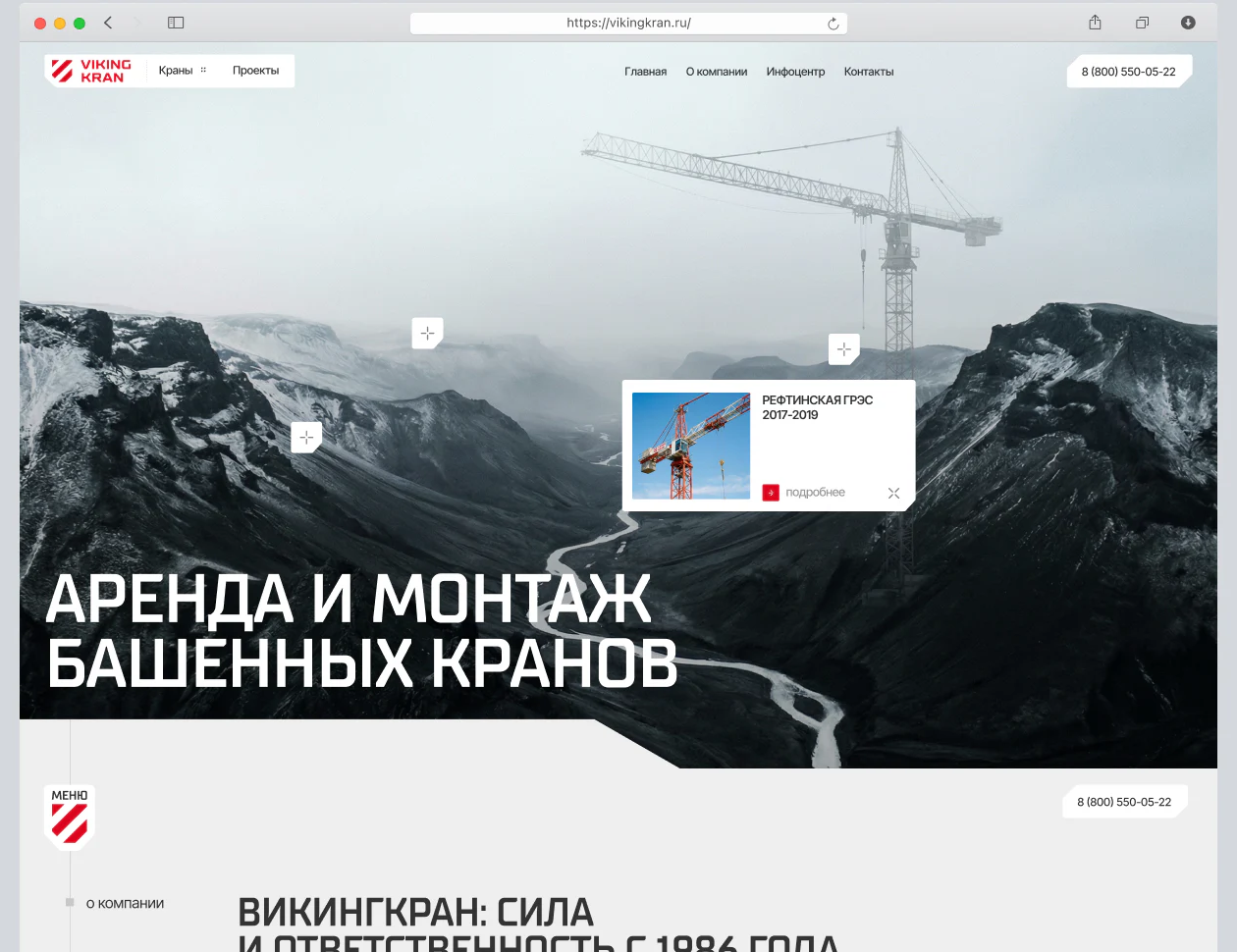
A tower crane reaches into mist, with mountains and river creating deep vertical space. A service heading uses large white type over the darker mountain at the lower left, while navigation sits near the bright sky. Text follows the photograph’s light and dark areas rather than clustering in one region.
A red-white logo appears upper left, with a phone number isolated in a white block on the right. Brand color is sparse and therefore prominent. Industrial imagery already contains many structural lines, so navigation does not need complex additional textures.
White plus signs across the scene accompany a project card with photograph, year, and arrow. Panorama and specific project share a view, offering a way to continue after appreciating the scene. An equipment entry also remains at the top, so readers with a model in mind need not rely on hotspots.
JVDS values this division between entries. A hero can convey mood and scale while the catalog route remains direct. Hotspot usability and keyboard access still require checking on the actual page.
Fewer colors make field positions important
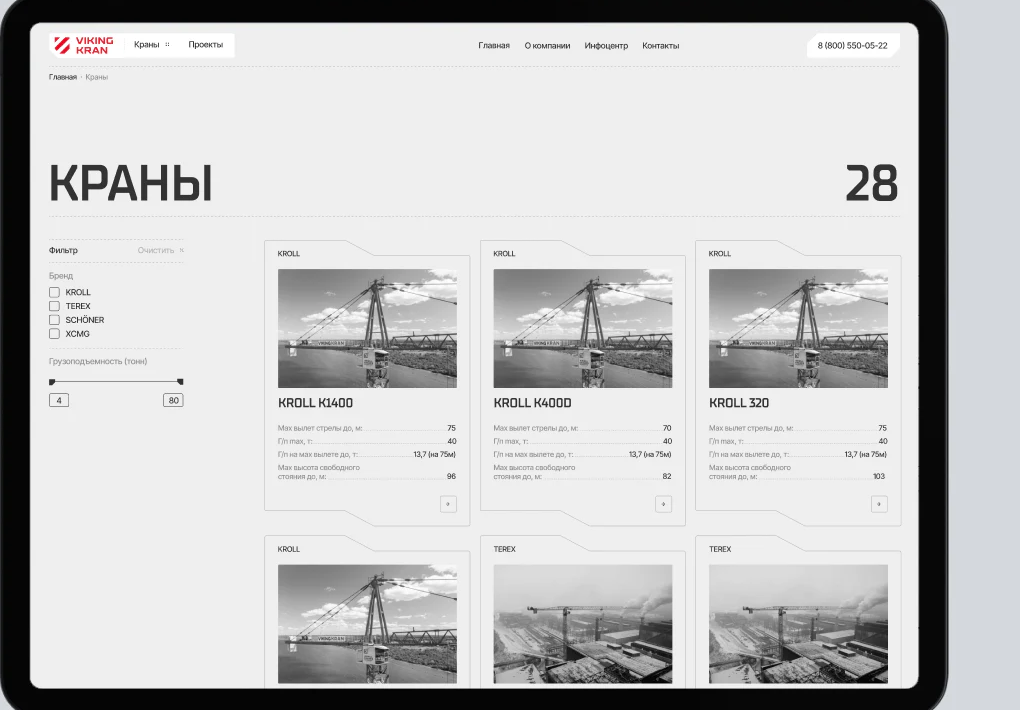
The model catalog places brand checkboxes and range choices left, with three columns of equipment cards right. Similar image styles precede model names and fixed specification rows. Fields occupy comparable positions across cards, reducing repeated searching during comparison.
Angled corners and fine borders continue an industrial character without heavy shadows. Red recedes to the logo while black and gray carry content. This clearly shifts from promotional imagery to selection information; specifications need not compete with the scene’s visual force.
Load, reach, and height need units and operating conditions. Displayed values are sample content, not equipment-selection guidance. Actual maintenance should check field order and conditions, avoiding figures from different operating states in one comparison row.
An isolated 28 beside the heading lacks a nearby noun. If it counts models, name that meaning; if it counts rentable units, relevant business information is needed. A large number emphasizes content but still requires words to explain it.
Projects share the equipment card framework
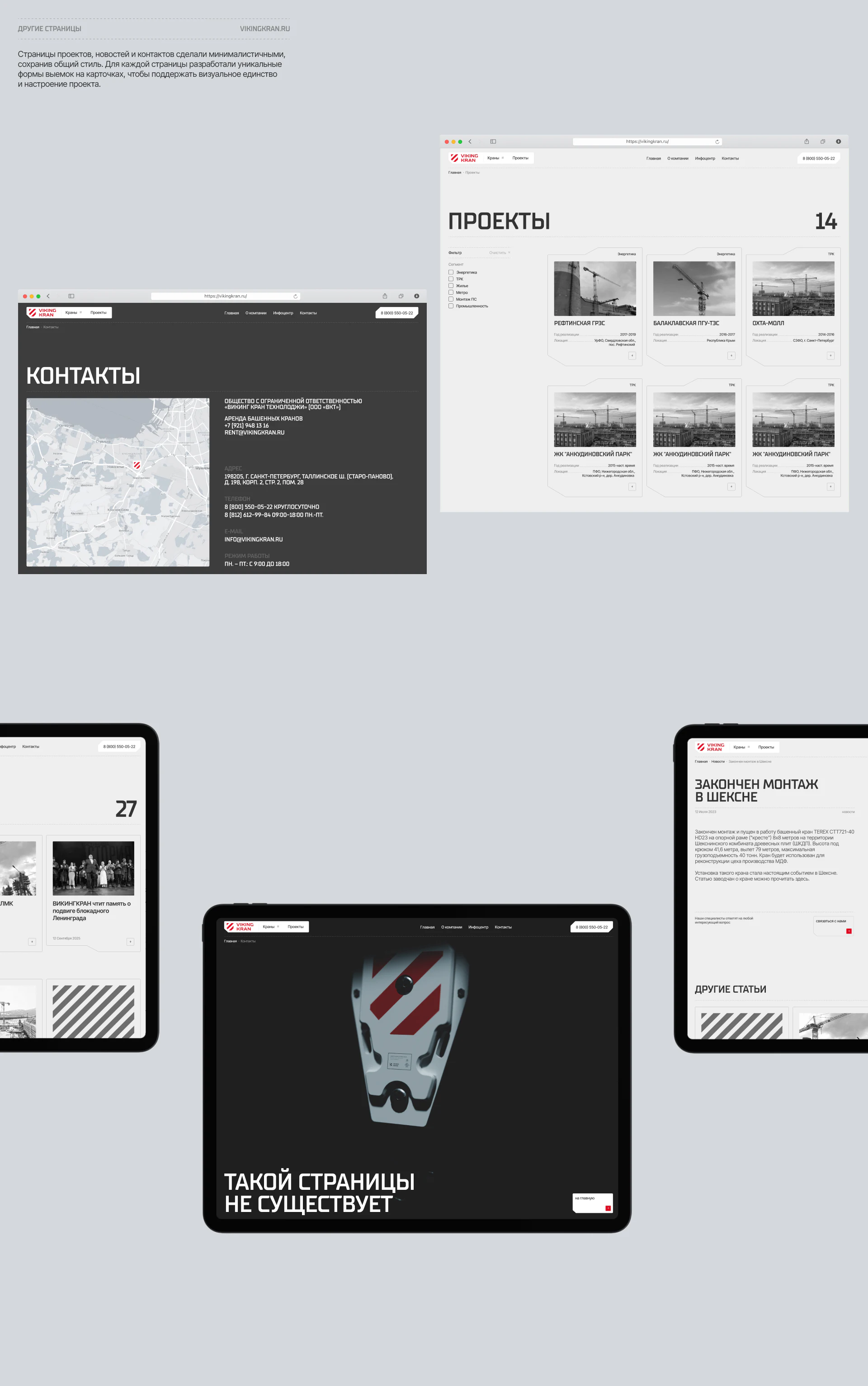
The project list also uses three photograph columns, with name, location, and year beneath images. Angled corners continue from equipment pages, preserving site recognition while headings and fields distinguish content types.
Some entries repeat photographs and names. Production content should explain different phases or provide distinguishable projects. A tidy card count should not depend on repeated placeholders; even a small real archive can be specific about location, time, and work.
The dark contact page pairs map and text, with address, phone, and email in separate blocks. The map provides location context, text supports checking channels, and red-white markers maintain recognition. This article discusses layout without turning displayed contact information into external body links.
Even the error page keeps the equipment theme
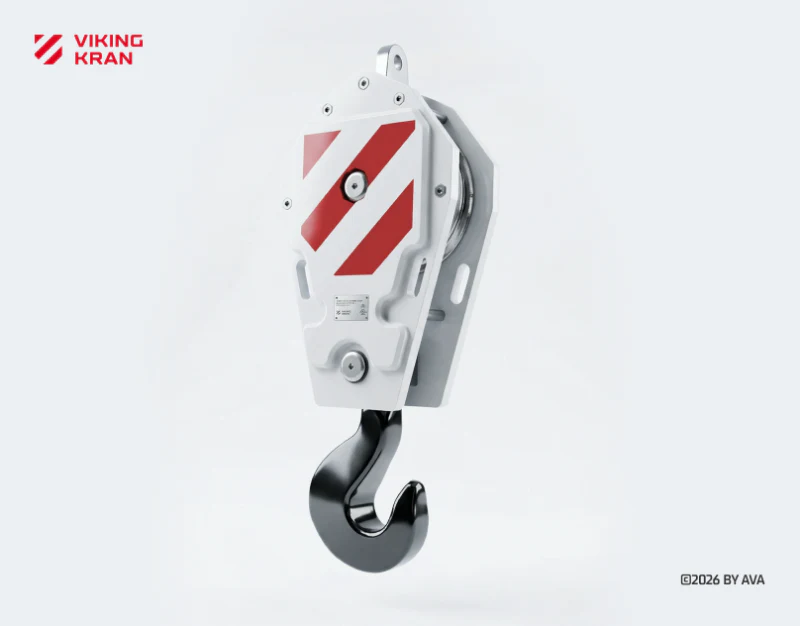
The collage’s error page uses a large hook and red-white stripes beside a return direction. It avoids an unrelated default error screen, with equipment imagery still supporting recognition.
An industrial service site can use images for context and identity, specifications for comparison, projects for concrete examples, and contact pages for communication. Organizing models, locations, and use periods before inquiry entries is more useful than enlarging a button alone.
Build a searchable equipment and service catalog
If your business has complex models, project archives, and inquiry needs, start with specification fields and information required at contact. JVDS Design Studio provides UI/UX design, website design, and development services, helping plan industrial catalogs and corporate websites.
 Link copied