Aside from the content itself, the title is a page's most important element. Search engines use it to determine what the page is about and assign relevant keyword rankings. Titles are therefore essential both to a website and to an article. How cankeyword optimizationmake a title more compelling to users and search engines? Consider what appears in search results: a page title and a short description of the content. A strong title earns clicks, attracts attention, and can increase website traffic substantially.
1. Relevance of the Title's Primary Keywords
Consider the original title of this article: “How Article-Title Writing Has a Major Impact on Keyword Optimization.” “Article title” is one central topic, and “keyword optimization” is another. Both the beginning and end express the article's core subject. Placing the most important keyword near the beginning follows a common title principle and may receive stronger weight distribution from an SEO perspective.
Title length: as a general rule, keep the title within 30 characters.
Title separators: use spaces or underscores.
2. Consider User Search Habits and Needs
Before writing a content title, consider who the target users are, how they search, and what they need. Ideally, the title should address their concerns directly and create interest in reading.
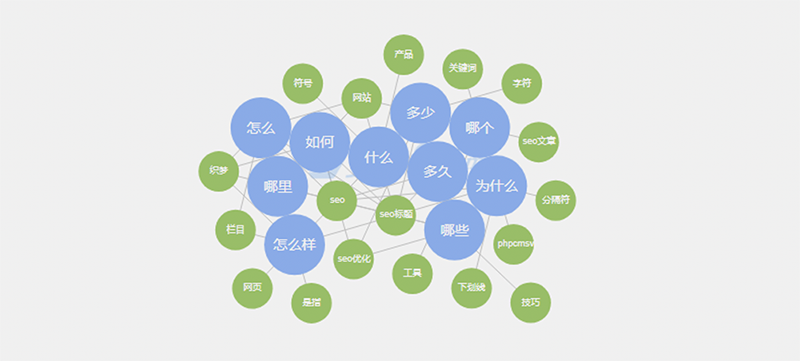
User search habits and needs can be analyzed with the mind-map feature in the 5118 keyword-combination tool. It can identify which related terms around a primary keyword are searched most often. Beyond word-frequency analysis, the tool also provides keyword relationship maps and associated questions that can offer data for title creation.
3. Common Considerations When Writing Article Titles
Capture the content's core point: every title should have one essential focus and one primary subject, arranged in a position that supports SEO.
Avoid clickbait: a clickbait title is not a good title and may frustrate users. Avoid exaggeration, vagueness, and wording that fails to communicate a clear meaning.
4. Keep the Content Focused on the Title's Primary Term
Careful readers may have noticed that the screenshot above shows a search for “SEO title” in a 5118 mind map, with several terms marked by red arrows. The red-highlighted terms in the opening paragraph came from this mind map, illustrating how the tool can be used.
When Baidu evaluates an article's value, it may calculate how closely the keywords in the full text relate to the title's primary term. If many terms in the article have a strong relationship with the central keyword, the probability of receiving a ranking may increase.
5. Define the Order of the Title and the Content's Primary Terms Before Writing
Search for the keyword in the 5118 mind map. This article uses “SEO title.”
Record all primary terms. For this article, they include “keyword optimization,” “content,” “article title,” “character count,” “length,” “writing method,” and “techniques.” For further expansion, the mind map also suggests content on optimizing titles in website platforms such as “DedeCMS,” “WordPress,” “Dede,” and “PHPCMS.”
Place the keyword you most want to rank for in the title, then incorporate other closely related terms naturally throughout the content.
Combine mind-map data with the three simple steps above to create articles more likely to interest Baidu. Baidu's artificial intelligence is now highly capable, and a crawler's assessment of article value is closely related to the relevant terms used in the text. Some editors write stronger articles because they understand users better. The source states that 5118 analyzes search keywords from one billion users to calculate related terms accurately and identify information users want. If the content helps users solve a problem, Baidu is more likely to view it as valuable.
Need design or website development services?
JVDS Design Studio is a professional design studio focused on digital product experiences and brand identity. We work with businesses in China and overseas that want to strengthen their brand image, improve user experience and grow their business, providing clear, usable UI/UX design, high-quality website design and development, app and mini-program development, and cohesive, distinctive brand identity design.
Planning a corporate website, a multilingual site or a redesign? Tell us about your audience, existing website and the work you need.
 Link copied