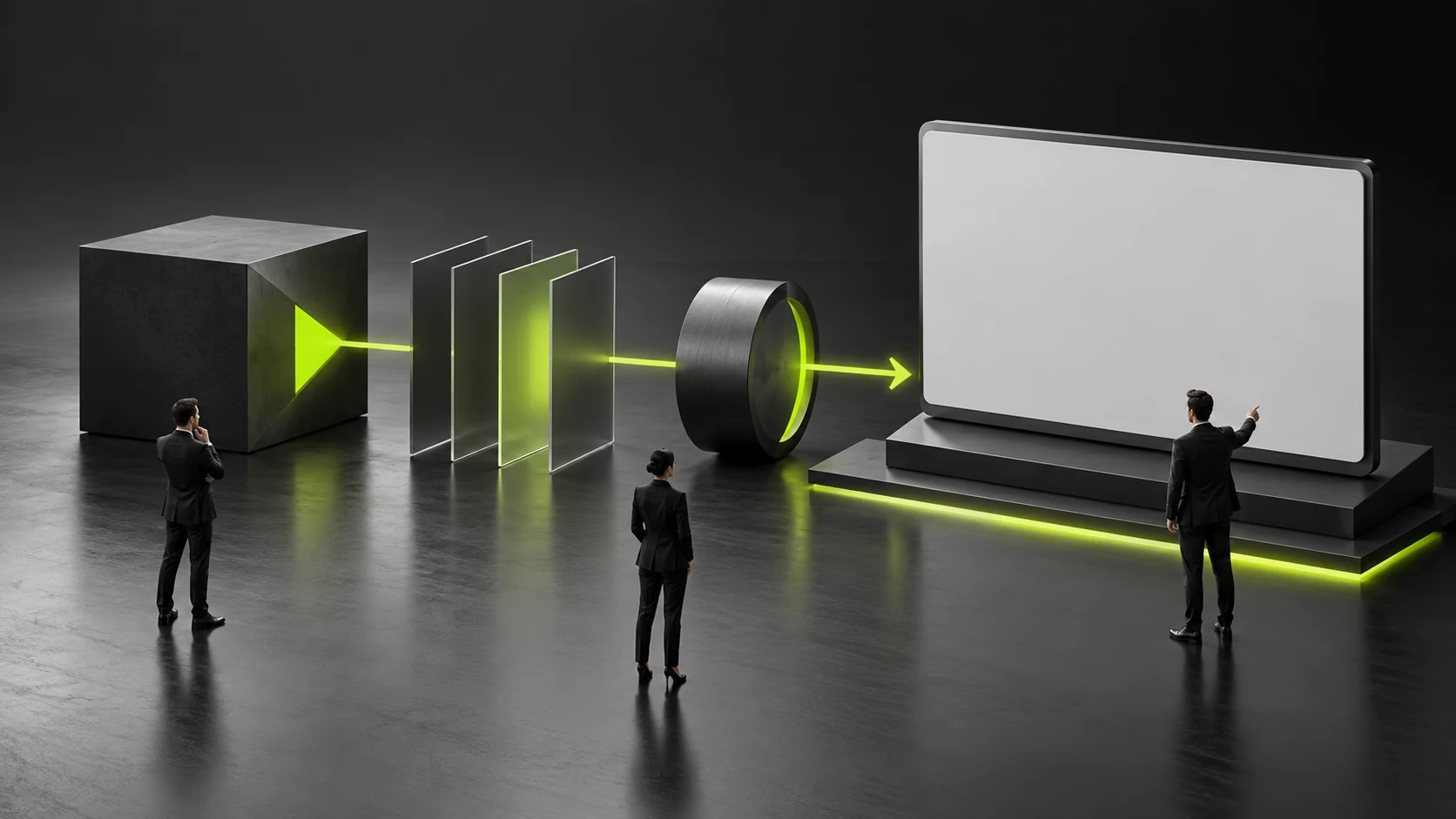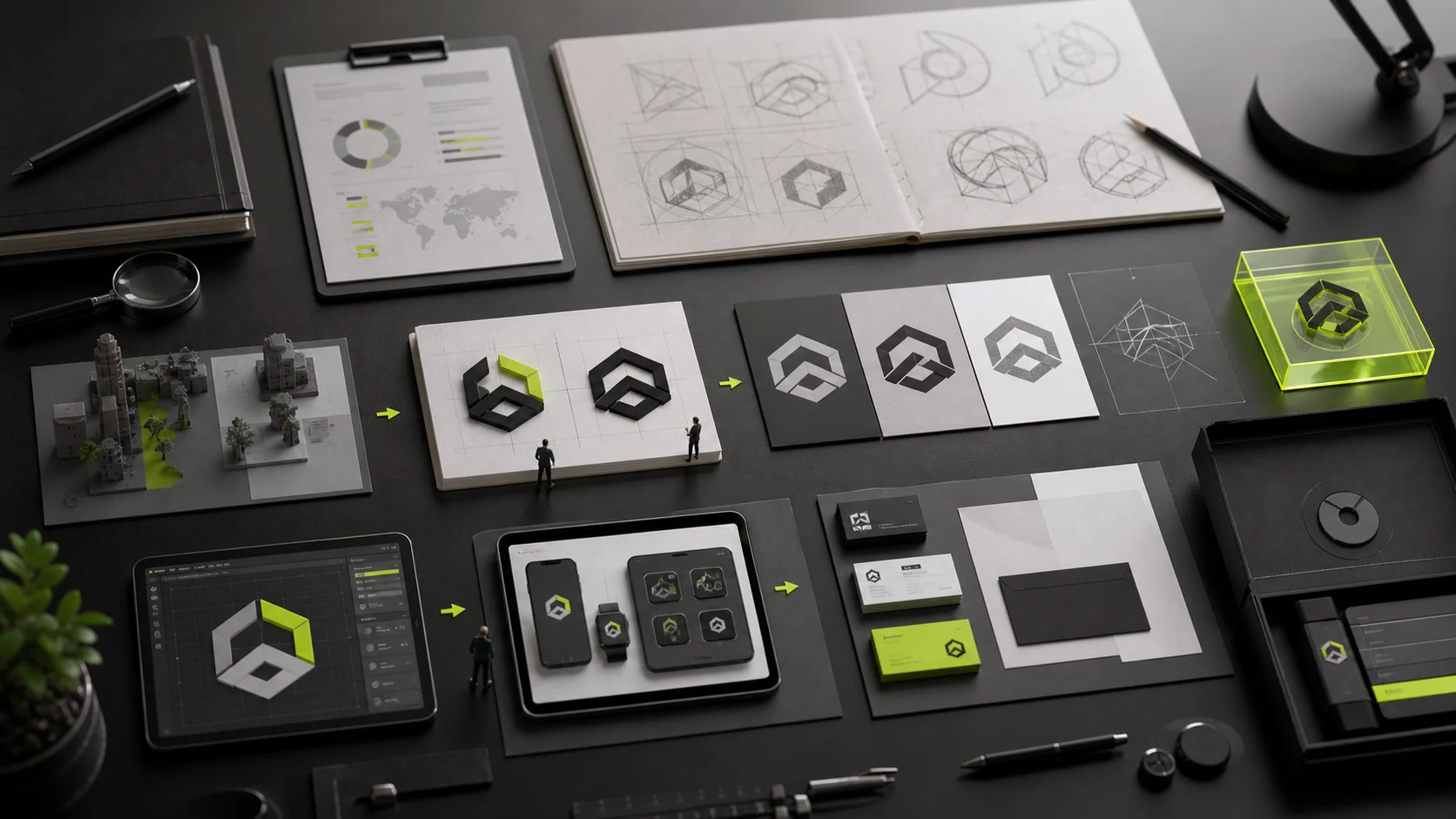
Professional logo design is not about presenting as many attractive concepts as possible. Research, judgment, and testing progressively eliminate directions that are irrelevant to the business, difficult to extend or recognize, or exposed to rights risk. The final mark must work on business cards, websites, mobile app icons, products, social profiles, and black-and-white print.
The process should therefore be more specific than “discovery, design, revisions, delivery.” Every stage needs a clear question, a visible output, and an approval point.
01 Before Kickoff: A Logo Brief Is More Than a Preferred Style
The design team needs to understand who the brand is, whom it serves, why customers choose it, and where the mark will appear. The clearer the client’s preparation, the less likely decisions are to collapse into personal taste.
Client Should Provide | Why It Matters |
|---|---|
Company and Business Information | Explains products, revenue model, channels, regions, and future direction |
Target Audience and Buying Scenarios | Defines recognition, tone, and touchpoint requirements |
Positioning and Competitive Context | Clarifies which perceptions to approach, avoid, or redefine |
Existing Logo and Brand Assets | Guides the decision to retain, refine, or replace and identifies migration risk |
Application Inventory | Confirms website, mobile app, packaging, stores, equipment, print, and international uses |
Existing or Planned Trademark Classes | Supports preliminary risk avoidance but does not replace formal legal search |
Decision-Makers and Feedback Process | Prevents fragmented comments and repeated reversals |
Timeline, Budget, and Launch Milestones | Determines research depth, concept count, and validation scope |
References such as Apple, Nike, or Stripe can be useful only when the client explains whether the appeal lies in simplicity, recognition, system consistency, or category disruption. Otherwise, reference boards become invitations to imitate appearance.
02 Nine Stages of a Professional Logo Design Process
Stage | Core Question | Primary Output | Approval Point |
|---|---|---|---|
1. Kickoff and Scope | Why are we changing, what is included, and what is excluded? | Brief, application scope, plan, and responsibilities | Goals, boundaries, and decision-makers |
2. Brand and Category Research | How is the brand understood, and where is the open space in the market? | Brand findings, competitive map, and visual risks | Design criteria rather than a specific shape |
3. Direction Definition | What should the logo communicate and avoid? | Keywords, design principles, and direction boards | Select two or three directions for exploration |
4. Concept Exploration | Which distinct recognition systems are possible? | Sketches, words, symbols, structures, and lockup experiments | Eliminate weak concepts internally |
5. Concept Development | Can the concept become a stable visual system? | A small set of mature concepts, rationale, and comparison | Select one direction for further development |
6. Recognition and Usability Testing | Is the mark clear and usable under different conditions? | Black-and-white, reversed, small-size, background, and proportion tests | Refine structure and detail |
7. Application Validation | Does the mark work in real brand touchpoints? | Website, mobile app, business card, product, or packaging mockups | Confirm that it works beyond the presentation page |
8. System Standards | How should the organization use it consistently over time? | Lockups, color, clear space, minimum size, and misuse examples | Approve rules and application scope |
9. Delivery and Rights | What does the client receive, and how may it be used? | Source files, exports, font and asset notes, and rights documentation | Final payment, handoff, and archive |
03 Research Must Produce Design Criteria, Not a Pile of Information
Useful research must become decision criteria. For example: the mark must remain clear as a software icon; it cannot depend on complex gradients; it must support Chinese and English lockups; it should feel professional without imitating traditional financial authority; and if it may appear on hardware nameplates, its lines cannot be too thin.
Input | Actionable Design Criterion |
|---|---|
The product serves technical professionals | Avoid an overly playful tone and use a structure that can be recognized quickly |
The brand will appear as a mobile app and browser icon | Create a standalone symbol and test it at 16–32 pixels |
The client plans international expansion | Plan English lockups, different character lengths, and potential cultural misreadings |
The mark will be printed on equipment and packaging | Support one-color use, engraving, screen printing, and small physical applications |
The company has several subproducts | Plan parent-child brand relationships and naming extensions |
04 A Concept Is an Explainable Recognition System, Not a Shape Association
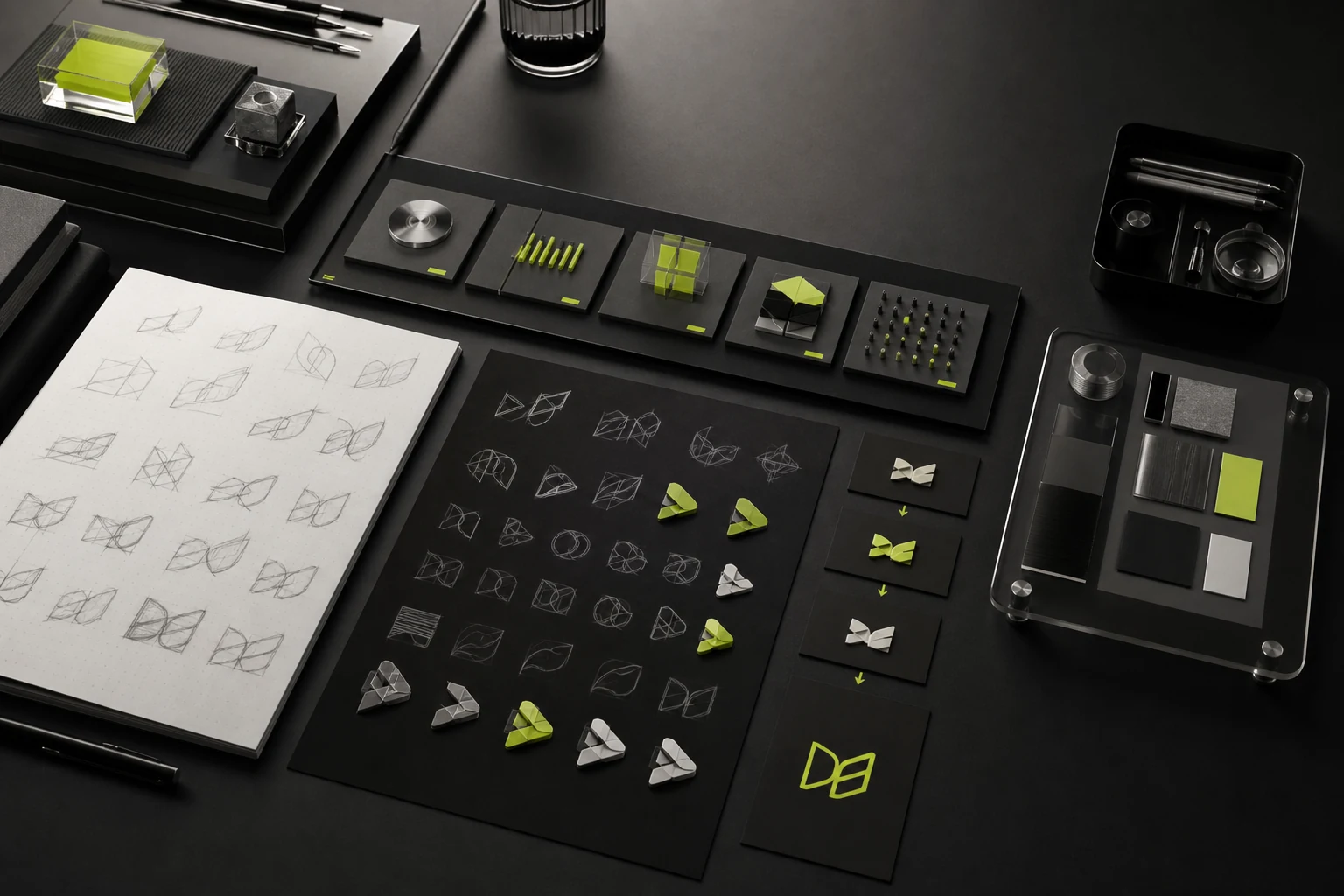
Concepts can come from the brand name, business mechanism, product value, user action, historical assets, regional culture, or a visual system. A strong concept does not need to be complicated, but it must explain why it belongs to the brand and how it can extend over time.
Concept Source | Examples | Risk |
|---|---|---|
Name and Letters | Initials, ligatures, and custom wordmarks | Can become a generic combination of letters |
Business Mechanism | Connection, cycles, collaboration, protection, acceleration | Literal translation can make it resemble competitors |
User Outcome | Clarity, control, growth, discovery | Can become abstract without an application system |
Brand History | Legacy marks, founding stories, regional or industry assets | Requires judgment about what is worth preserving |
Formal System | Geometry, grids, negative space, modules, and motion rules | Can be visually elegant without being distinctive to the brand |
Internal screening should evaluate relevance, originality, recognition, extensibility, and usability before deciding what to show the client. Treating every sketch as a “concept” only creates decision noise.
05 Essential Usability Tests for a Logo System
Test | Method | What It Reveals |
|---|---|---|
Black-and-White Test | Remove all color and use only solid black and white | Whether the structure depends on gradients or color |
Reversed Test | Place the mark on dark or photographic backgrounds | Whether negative space, detail, or edges disappear |
Small-Size Test | Test at 16, 24, and 32 pixels and common profile-image sizes | Whether recognition blurs or thin lines disappear |
Blur and Distance Test | Reduce, slightly blur, or view the mark from a distance | Whether the overall silhouette remains distinguishable |
Complex-Background Test | Use photographs, gradients, light, and multicolor environments | Whether a holding shape, outline, or alternate version is required |
Proportion Test | Use horizontal, vertical, square, and narrow spaces | Whether lockups adapt to different media |
Production Test | Simulate standard printing, one-color printing, engraving, or embroidery | Whether detail and color exceed production constraints |
Competitive Adjacency | Place the mark beside primary competitors | Whether it is too similar and whether it creates an independent memory |
For digital products, also test the favicon, mobile app icon, navigation bar, launch screen, dark mode, and social profile. A logo is not merely an infinitely scalable vector; it must remain usable under the worst realistic conditions.
06 Feedback Should Reference Criteria, Not “Make It More Premium”
Effective feedback identifies the problem, use case, and impact. For example: “The internal negative space disappears at 24 pixels,” “The English name makes the horizontal lockup too wide for mobile navigation,” or “This concept suggests logistics rather than software.”
Ineffective Feedback | Actionable Feedback |
|---|---|
“It does not feel premium enough.” | “For investor and enterprise-buyer use, reduce decorative detail and make the wordmark feel more stable.” |
“I do not like the color.” | “Contrast is insufficient on the dark website and in print; validate the primary and supporting palette.” |
“Show us several more options.” | “Identify which approved criterion the current direction fails and whether the problem needs to be reframed.” |
“The executive does not like it.” | “Ask the decision-maker to provide one consolidated explanation of the specific business or application concern.” |
“Make the logo larger.” | “Specify the layout, size, and legibility condition that requires adjustment.” |
The contract should define the number of concepts, revision rounds, consolidated feedback, direction approval, and change rules for reopening exploration. This does not restrict reasonable refinement; it protects decision quality and project momentum.
07 Boundaries Among Trademark Search, Originality, and Design Services
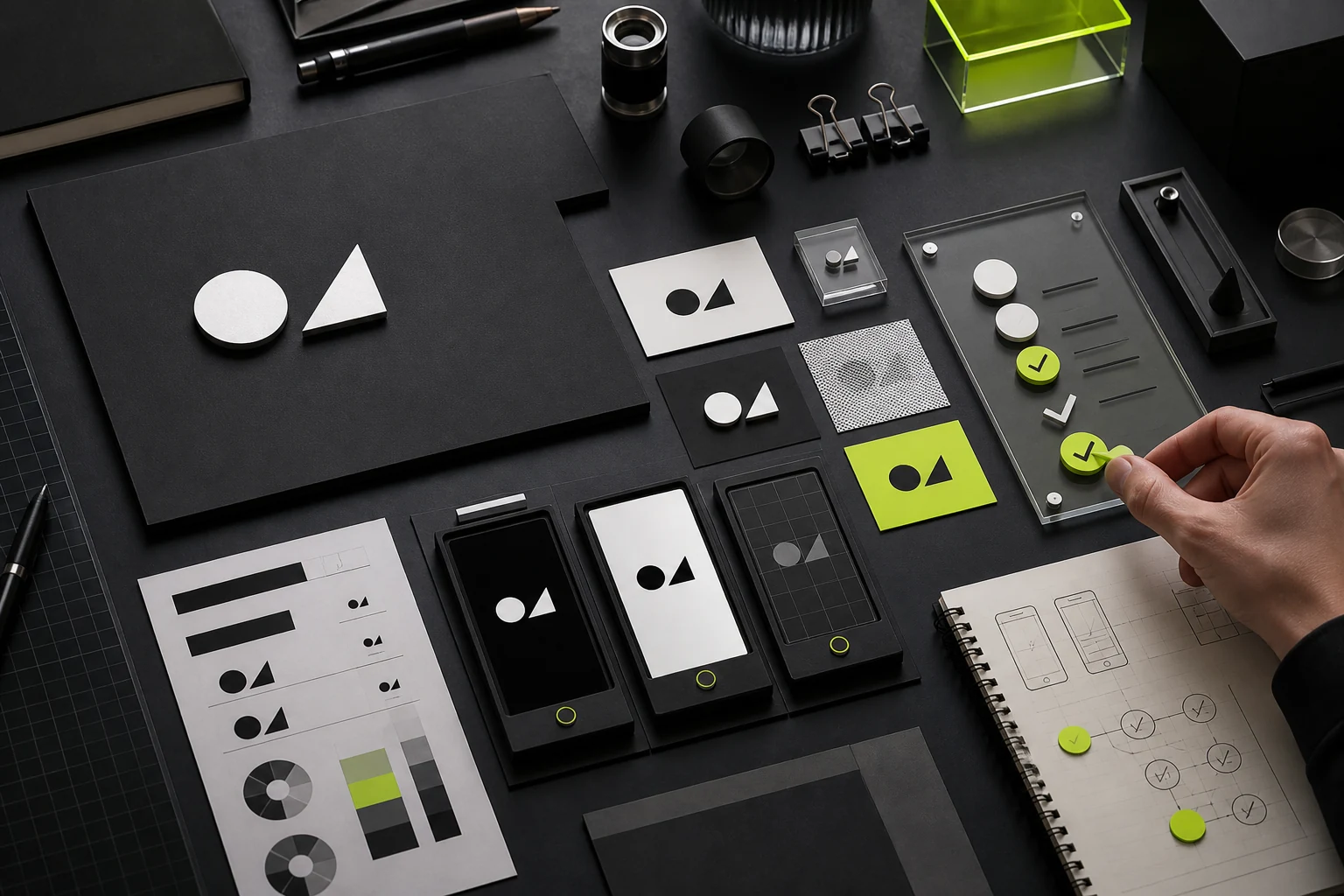
The design team can perform preliminary checks across public trademark databases, search engines, app stores, and industry examples to avoid obvious similarities. Formal similarity and registrability, however, depend on classes, goods and services, jurisdictions, and legal analysis; a visual designer cannot guarantee the outcome.
China adopted a revised Trademark Law on June 26, 2026, scheduled to take effect on January 1, 2027. Formal applications should follow the law, classification system, and China National Intellectual Property Administration requirements in force at the time of filing.
Work Area | Design Team Can Provide | Requires Legal or Trademark-Agent Support |
|---|---|---|
Public Screening | Preliminary search for similar names, graphics, and category usage | Formal similarity search, class strategy, and registrability assessment |
Original Design Process | Retain sketches, versions, sources, and design rationale | Infringement disputes, oppositions, invalidation, and litigation |
Asset Management | Document licensing for fonts, icons, templates, and third-party assets | License-contract review and cross-jurisdiction legal analysis |
Registration Support | Provide master artwork, monochrome versions, and color specifications | Applications, responses, reviews, and rights enforcement |
08 A Logo System Requires More Than One Master Lockup
Deliverable Category | Recommended Content |
|---|---|
Logo Versions | Master, horizontal, vertical, symbol, wordmark, black-and-white, reversed, and any necessary simplified versions |
Color System | Primary and supporting colors, RGB, HEX, and CMYK values, and usage proportions |
Lockup Rules | Proportions, positioning, and permitted combinations of the symbol and Chinese or English names |
Space and Size | Clear space, minimum size, and small-size alternatives |
Background Rules | Light, dark, photographic, and complex backgrounds and prohibited use |
Misuse Examples | Stretching, recoloring, type changes, added effects, rotation, and invalid lockups |
Application Examples | Corporate website, mobile app, business cards, products, or packaging included in project scope |
Files and Licensing | AI, SVG, PDF, PNG, and JPG files plus font and third-party asset notes |
09 Composite Scenario: Why a Manufacturer Preserves Recognition Instead of Replacing Its Mark
A manufacturer asks for a “more international” logo and initially favors replacing its existing symbol entirely. Research shows that the old mark has appeared for years on equipment nameplates, dealer materials, and service documents. Although dated, it has strong recognition. The real problems are excessive line detail, inconsistent English lockups, and poor performance in digital media.
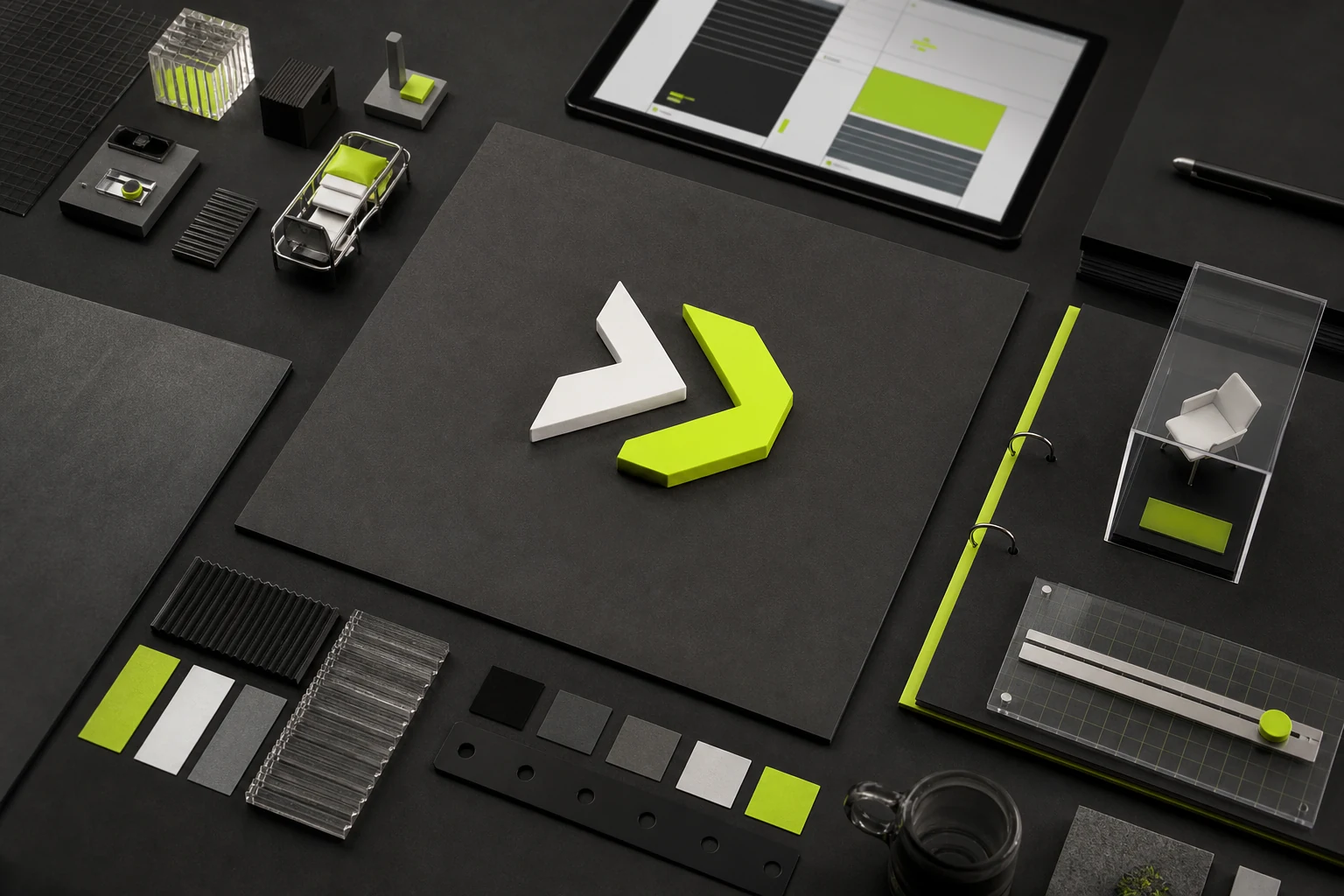
A better solution retains the core silhouette, simplifies the structure and wordmark, rebuilds Chinese and English lockups, monochrome versions, and product-category rules, and plans a staged transition from the old mark. A brand refresh does not require erasing every historical asset.
This composite scenario reflects common brand-refresh challenges. It does not represent one client or verified business results.
10 Timeline, Responsibilities, and Common Causes of Delay
Phase | Typical Duration | Client Responsibility | Design Team Responsibility |
|---|---|---|---|
Kickoff and Research | 3–7 business days | Provide materials, interview access, and available decision-makers | Frame questions, conduct research, and define direction criteria |
Concepts and Presentation | 5–15 business days | Provide consolidated feedback on schedule | Explore, screen, develop, and explain concepts |
Refinement and Validation | 3–10 business days | Confirm direction and provide application scenarios | Refine structure, test, and validate applications |
Standards and Delivery | 3–7 business days | Approve the checklist and complete final payment | Organize versions, standards, source files, and licensing notes |
Common delays result from incomplete materials, late involvement of decision-makers, fragmented feedback, reopening direction after approval, trademark or name changes, last-minute applications, and unresolved third-party rights. The contract should define how these events extend the timeline.
11 Final Acceptance Checklist
- The logo concept has a clear relationship to the approved brand goals;
- Master, black-and-white, reversed, and any necessary simplified versions are usable;
- The mark passes tests at 16–32 pixels, in ordinary print, and on complex backgrounds;
- Chinese and English, horizontal, vertical, and square lockups support primary touchpoints;
- Primary and supporting colors, typography, clear space, and minimum size are defined;
- Misuse examples and application rules are sufficient for internal teams;
- Source-file formats, naming, dimensions, and exports are complete;
- Licensing for fonts, images, icons, and third-party assets is documented;
- Copyright-transfer conditions, designer portfolio rights, and confidentiality boundaries are confirmed;
- The trademark-service scope is clear and contains no unrealistic registration guarantee.
Frequently Asked Questions
1. How Many Concepts Does a Professional Logo Project Usually Include?
Two or three screened and mature directions are common, but concept count should reflect the research and project scope. More concepts do not mean deeper work.
2. How Many Revision Rounds Are Reasonable?
Revision rounds can be defined separately for direction selection and refinement. The critical practice is consolidated feedback from the decision-makers; reopening the brief or changing direction should follow change control.
3. Should Trademark Screening Happen Before Logo Design?
Conduct a professional name search as early as possible after the name is confirmed, then perform preliminary graphic and lockup checks during visual concept development. The activities can run in parallel, but obvious conflicts should not wait until all design work is complete.
4. Can We Purchase a Logo Without a Full Visual Identity?
Yes, but deliver at least the required versions, color specifications, lockups, clear-space rules, minimum sizes, and basic usage guidance. Without them, teams will struggle to use the logo consistently.
5. Can Generative AI Be Used in Logo Design?
It can support exploration or research, but the final solution needs a documented original process, editable source files, clear third-party rights, and defined commercial-use boundaries. An output with unknown provenance should not be treated as a protectable brand asset.
6. Does Final Payment Automatically Transfer Every Right?
The contract governs. It should identify the specific deliverables, rights transferred, third-party assets, designer portfolio rights, and the conditions under which transfer takes effect, rather than using a vague “copyright ownership” clause.
Conclusion: A Strong Logo Is a System That Survives Testing
Professional logo design is not a performance of inspiration. It uses explicit criteria to select, from many possibilities, a solution that is relevant to the brand, recognizable, extensible, producible, and manageable over time. A transparent process helps the client understand what each part of the design fee purchases.
Logo and Brand Identity Consultation
Share the company background, brand goals, existing logo, primary applications, target timeline, and trademark status. JVDS can help determine whether the right scope is a logo refinement, full redesign, or complete brand identity system.
Need design or website development services?
JVDS Design Studio is a professional design studio focused on digital product experiences and brand identity. We work with businesses in China and overseas that want to strengthen their brand image, improve user experience and grow their business, providing clear, usable UI/UX design, high-quality website design and development, app and mini-program development, and cohesive, distinctive brand identity design.
Updating your brand identity or website? Tell us where the design will be used and which materials you need.
 Link copied