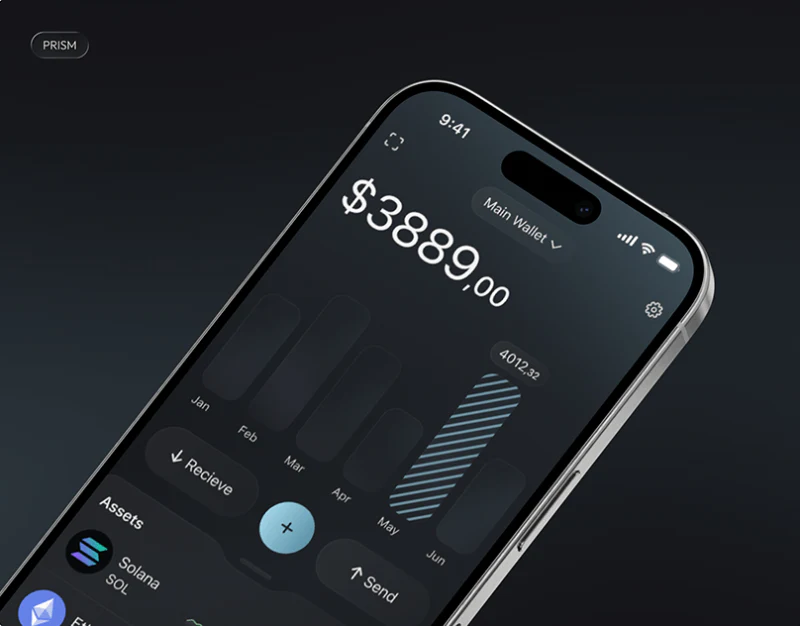
PRISM puts assets, environmental statistics and mission rewards into a dark visual system with blue-green materials. Their numbers serve different purposes: balances support checking, statistics explain, and points show mission status. Asset wallet information hierarchy design needs shared style to preserve these distinctions.
The wallet precedes its asset composition
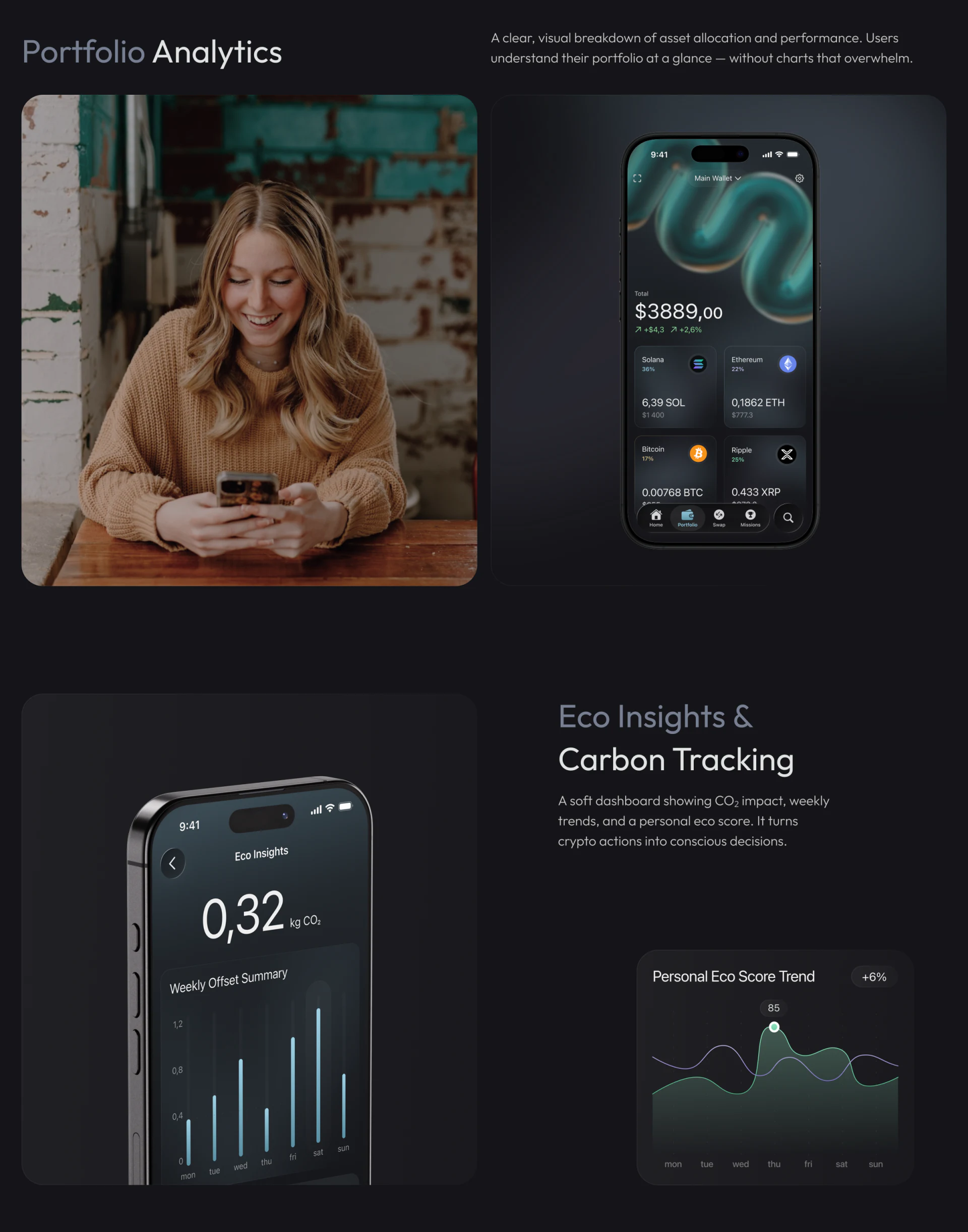
Main Wallet identifies the current object at the top of Portfolio. Total amount leads into Solana, Ethereum, Bitcoin and Ripple cards with name, icon, share, quantity and converted value. Overall-to-component structure is easy to trace.
Shares explain composition, while quantities require their own units. Bare SOL and ETH numbers cannot establish monetary ranking; totals and converted values need pricing currency and update time. Card boundaries let each asset retain name and quantity within the current wallet.
Eco Insights below shows mass units, weekly bars and a score curve. Similar pale blue-green serves another explanatory task. State whether the main value measures generated or offset quantities and for which period; both curves need legends. Green cannot substitute for calculation definitions, and examples should not become environmental outcome claims.
Rewards and locked goals have separate levels
Missions starts with a weekly reward strip and broad Claim Reward, followed by locked Green Growth and Smart Investor. Available actions precede future tasks, clearer than mixing every badge in one grid.
Reward icons and days suggest progress, while locks show unavailable content. Claim still needs account, period and result. After clicking, people should distinguish claimed from processing rather than infer from changed points alone.
JVDS favors equally precise goals. Complete 3 swaps states a count, while Low carbon impact is vague; details need standards and scope. Card names identify missions without automatically evaluating asset behavior.

The assistant names question types at entry
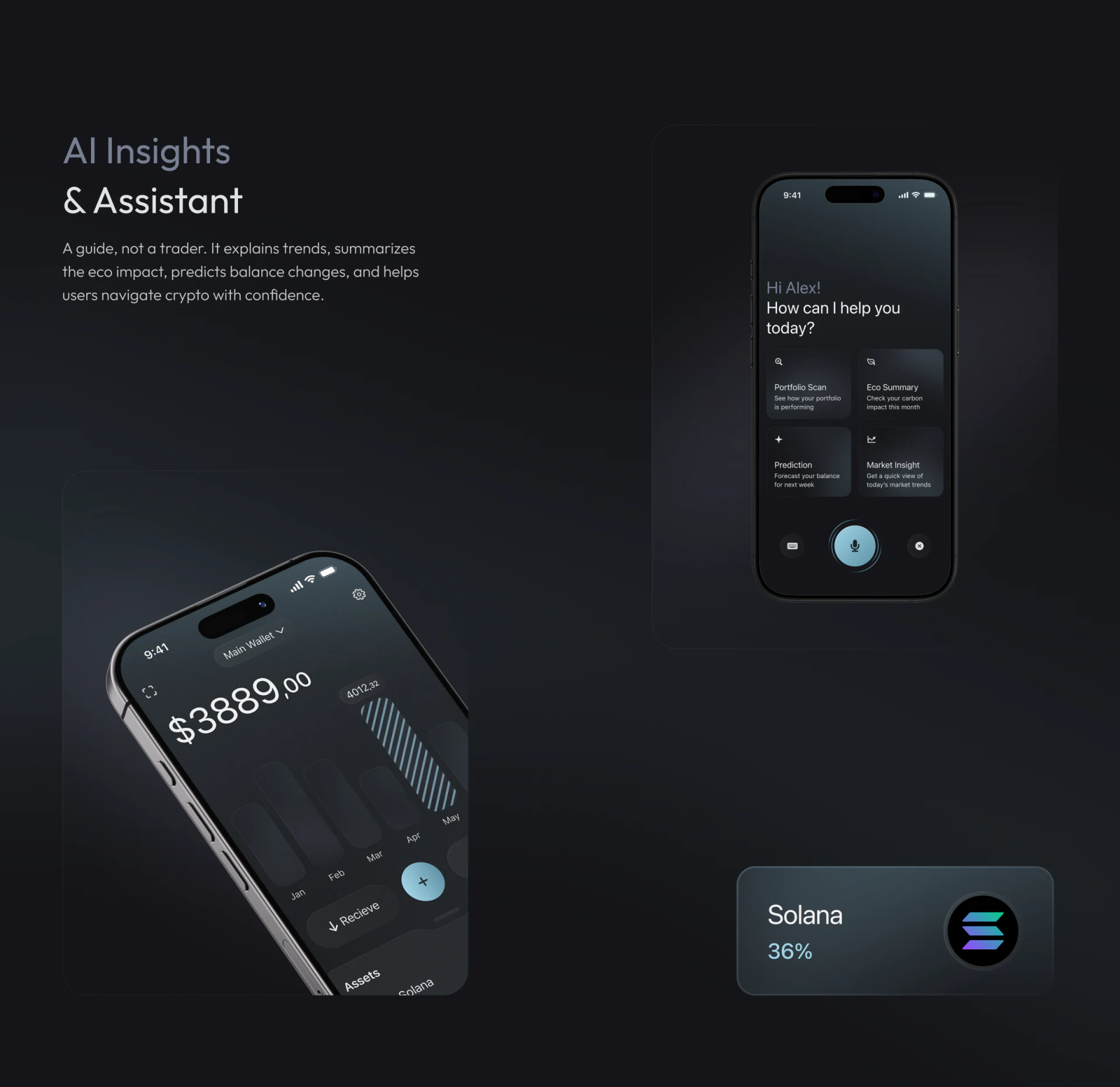
Portfolio Scan, Eco Summary, Prediction and Market Insight form four cards with short descriptions. Voice is most prominent, with keyboard and close beside it. These entries offer first-time starting cues beyond an empty input.
Cards look similar but depend on different evidence. Asset scans and environmental summaries mainly revisit records; predictions and market information involve other conditions. Subsequent titles, periods and sources should preserve distinctions. No answers are shown, so entry copy is not proven analytical capability.
PRISM gives functions separate pages without compressing assets and missions beneath one large number. Dark materials unify atmosphere; units, time, conditions and states unify understanding. Both need to coexist.
Give different data clear boundaries
Wallets, accounts and multi-metric products can distinguish amounts, statistics and mission states before assigning stable units, periods and explanation entries.
JVDS provides UI/UX design and website design and development, helping design account hierarchies, statistics pages and assistant entries.
 Link copied