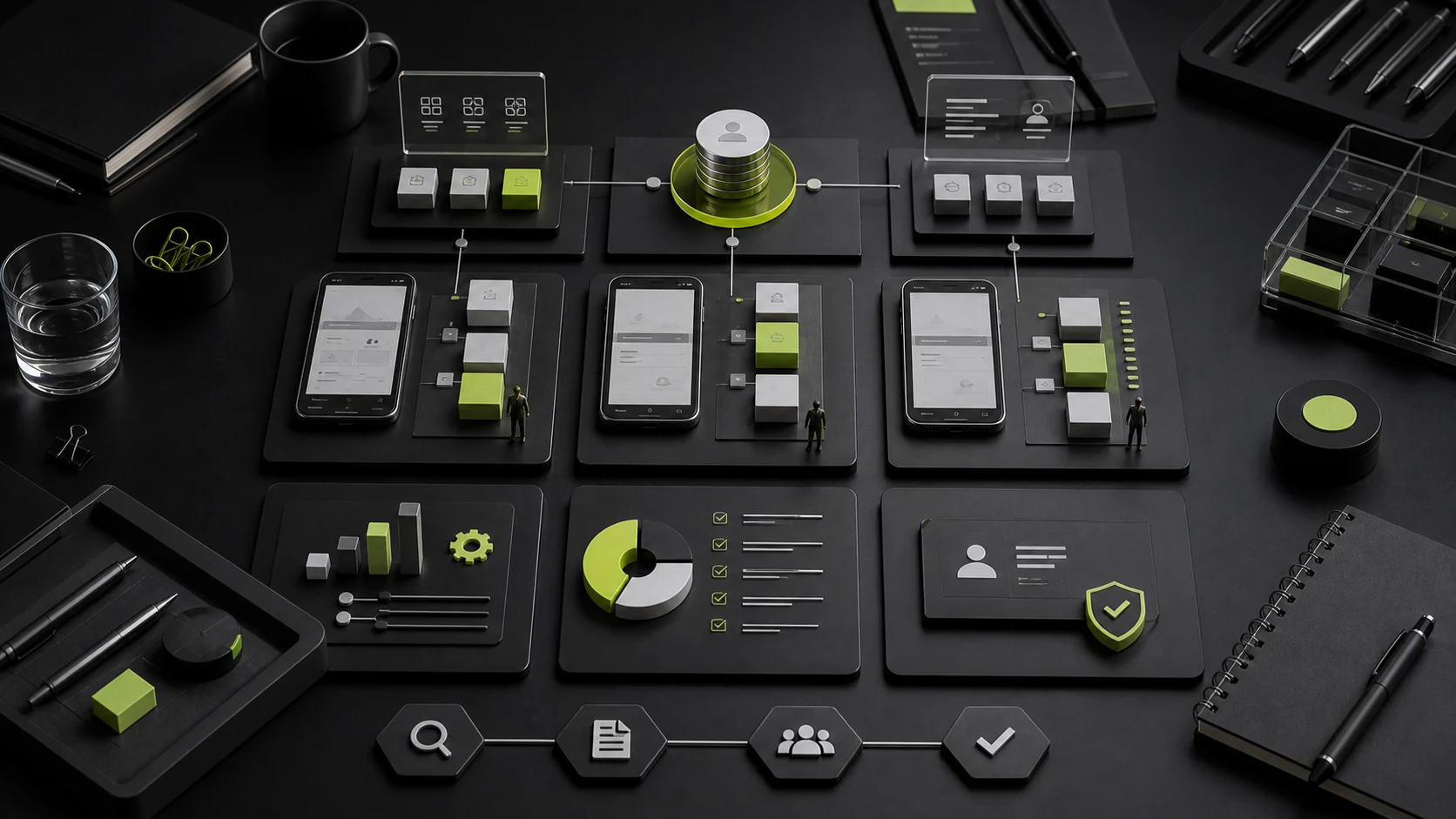
Products called "WeChat Mini Programs" can cost several thousand RMB per year or hundreds of thousands. The reason is not simply a tenfold markup but different delivery models. Templates and SaaS sell access to existing functions, low-code solutions configure a platform, while custom development redesigns the business, front end, back end, admin console, integrations, and testing.
Asking only for "a shopping Mini Program" or "something like this platform" makes any quote unreliable. Define users, business workflows, products and orders, membership, payment, content, operations, administration, data, and third-party systems before selecting an approach.
01 Four Common Implementation Models
Model | Cost Structure | Advantages | Primary Limitations |
|---|---|---|---|
Template Mini Program | Template, configuration, annual, or one-time license fee | Fast launch for simple presentation and validation | Constrained visuals and workflows with weak extension and migration |
SaaS Mini Program | Package subscription, plugins, transactions, or value-added services | Mature functions and platform-managed operations | Platform constrains data, source code, rules, and fees |
Low-Code / Semi-Custom | Platform, implementation, custom-component, and integration fees | Faster than full custom with some differentiation | Complex logic remains constrained by platform capability and lock-in |
Fully Custom | Product, design, front end, back end, testing, deployment, and maintenance | Workflows, brand, and data can follow the business | Higher upfront investment and ongoing technical operations |
02 Understanding Common Budget Scenarios
The following planning ranges are not uniform national market prices. Teams, cities, technical approaches, and delivery depth vary widely. Formal budgets must follow a requirements list and quoted scope.
Scenario | Candidate Budget Range | Typical Content | Best Fit |
|---|---|---|---|
Basic Template / SaaS | Approx. ¥2,000–¥15,000/year | Presentation, forms, basic commerce, or appointments activated by package | Standard requirements and rapid market testing |
Lightweight Semi-Custom | Approx. ¥15,000–¥50,000 | Brand pages, basic business functions, limited integrations, and admin configuration | Some differentiation without complex workflows |
Standard Custom Project | Approx. ¥50,000–¥150,000 | Product design, core business, admin, payments, membership, and testing | Stable business and a defined operations team |
Complex Platform Project | Approx. ¥150,000–¥500,000+ | Multiple roles and stores, complex transactions, systems integration, and data governance | Platform businesses, chains, and enterprise scenarios |
The "+" often comes from multiple merchants or stores, split settlements, complex inventory, ERP/CRM integrations, real-time messages, location services, connected devices, approval permissions, data migration, security and compliance, and high concurrency.
03 Twelve Components of Mini Program Development Cost
Cost Module | Specific Content |
|---|---|
Product and Requirements | Business definition, user roles, workflows, PRD, and boundaries |
UX/UI Design | Information architecture, prototypes, visual design, states, components, and adaptation |
Mini Program Front End | Pages, interactions, login, authorization, performance, and compatibility |
Server-Side Development | Accounts, business logic, orders, data, and APIs |
Admin Console | Content, users, products, orders, permissions, reporting, and configuration |
WeChat Capabilities | Login, phone number, payment, subscription messages, maps, and more |
Third-Party Integration | ERP, CRM, logistics, SMS, support, invoices, and data platforms |
Testing and Review | Functions, compatibility, exceptions, security, privacy, and submission review |
Servers and Cloud Services | Hosting, databases, storage, CDN, backups, and monitoring |
Certification and Payment | Entity verification, payment merchant account, related services, and fees |
Content and Operations | Product data, campaigns, support, analytics, and growth |
Maintenance and Iteration | Incident fixes, platform changes, feature upgrades, and security maintenance |
04 Page Count Is Not the Most Reliable Pricing Unit
A static introduction and an order page with login, inventory, discounts, payment, refunds, messages, permissions, and exception states require entirely different workloads. Better estimates consider user roles, core workflows, business rules, state counts, integrations, and data.
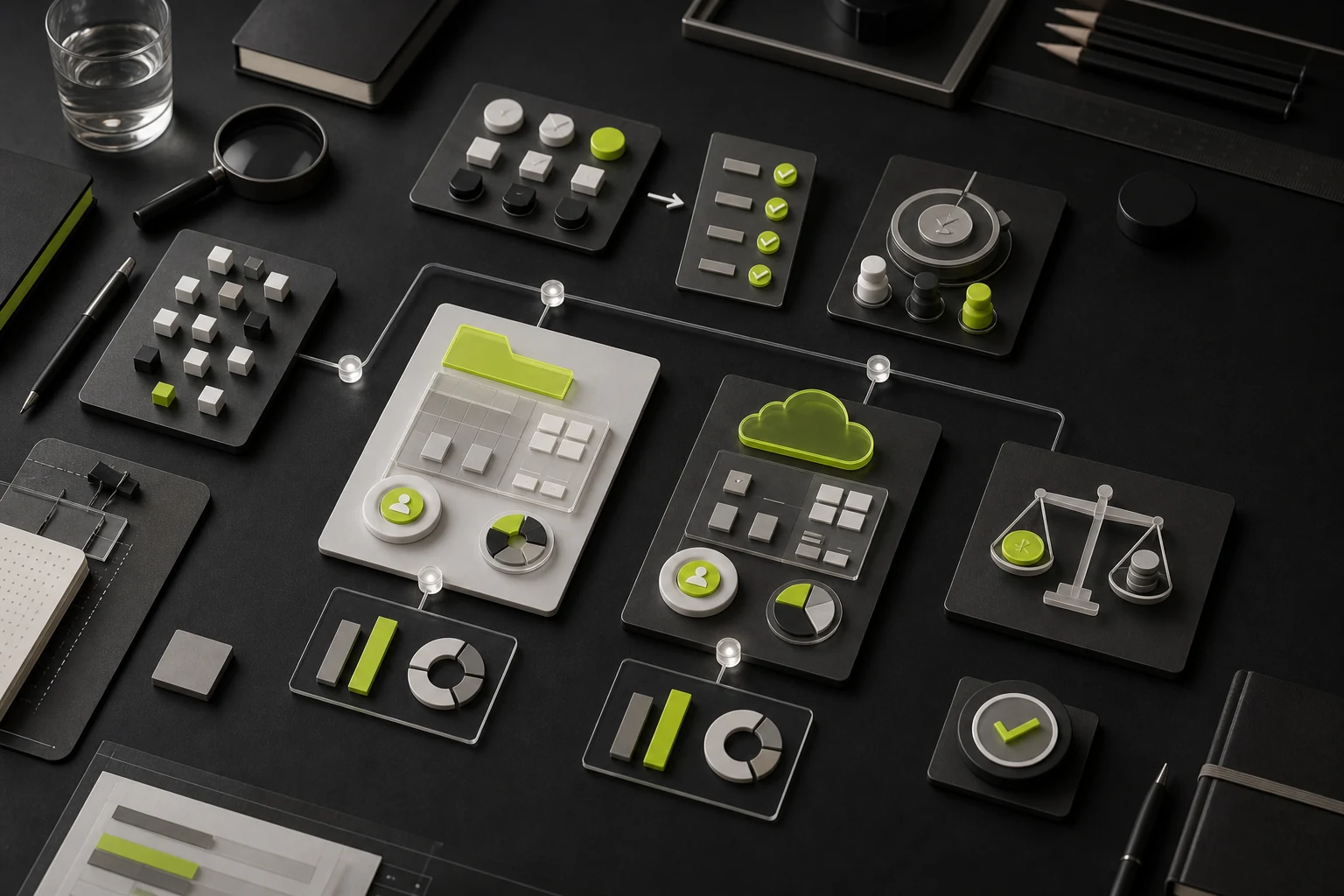
- Roles: regular users, members, merchants, store associates, administrators, and operations;
- Workflows: browse, book, order, pay, fulfill, after-sales, and review;
- Rules: inventory, pricing, discounts, points, membership tiers, and refunds;
- States: empty, loading, failure, expired, exception, unauthorized, and under review;
- Administration: configuration, review, analytics, import/export, and permissions;
- Integrations: WeChat capabilities, enterprise systems, and third-party platforms.
05 When Templates and SaaS Offer Better Value
SaaS is often more reasonable when workflows are mature and standardized, differentiation is mainly content and brand, the team lacks technical maintenance capability, and rapid validation is needed. Mature products already support restaurant ordering, basic commerce, event registration, and simple appointments; rebuilding may not add business value.
- □ Does a mature product fully cover the core functions?
- □ Can the platform support required brand styling and workflows?
- □ Can data be exported, and how does migration work after cancellation?
- □ Are packages, plugins, transaction commissions, and renewals transparent?
- □ Who handles support, incidents, review, and platform changes?
- □ Are integrations and customization available after growth?
06 When Custom Development Fits Better
- The business workflow itself is a competitive advantage that standard templates cannot express;
- Multiple roles, organizations, stores, or complex permissions are required;
- ERP, CRM, supply chain, devices, or internal systems must connect;
- Data ownership, deployment, security, and audit requirements are high;
- Ongoing experiments and iteration are needed, but the platform is restrictive;
- Stable users, an operations team, and a long-term budget already exist.
07 Costs Commonly Missing from Quotes
Often Omitted | Question Before Signing |
|---|---|
Platform Annual Fee / Renewal | What do year two and upgraded packages cost? |
Plugins and Value-Added Services | Are SMS, logistics, support, livestreaming, and invoices extra? |
Transaction Fees | How are payment fees, commissions, and split-settlement services calculated? |
Servers and Cloud Resources | Which specifications drive estimates, and how does pricing grow with traffic? |
Review and Policy Changes | Are first submission, rejection revisions, and later rule changes included? |
Content Entry | Who organizes and uploads products, stores, articles, and images? |
Maintenance | Does free maintenance cover only Bugs or also small changes and platform adaptation? |
Source Code and Data | Are they delivered, can the system deploy independently, and how is data exported? |
08 Three-Year Total Cost Matters More Than the First-Year Quote
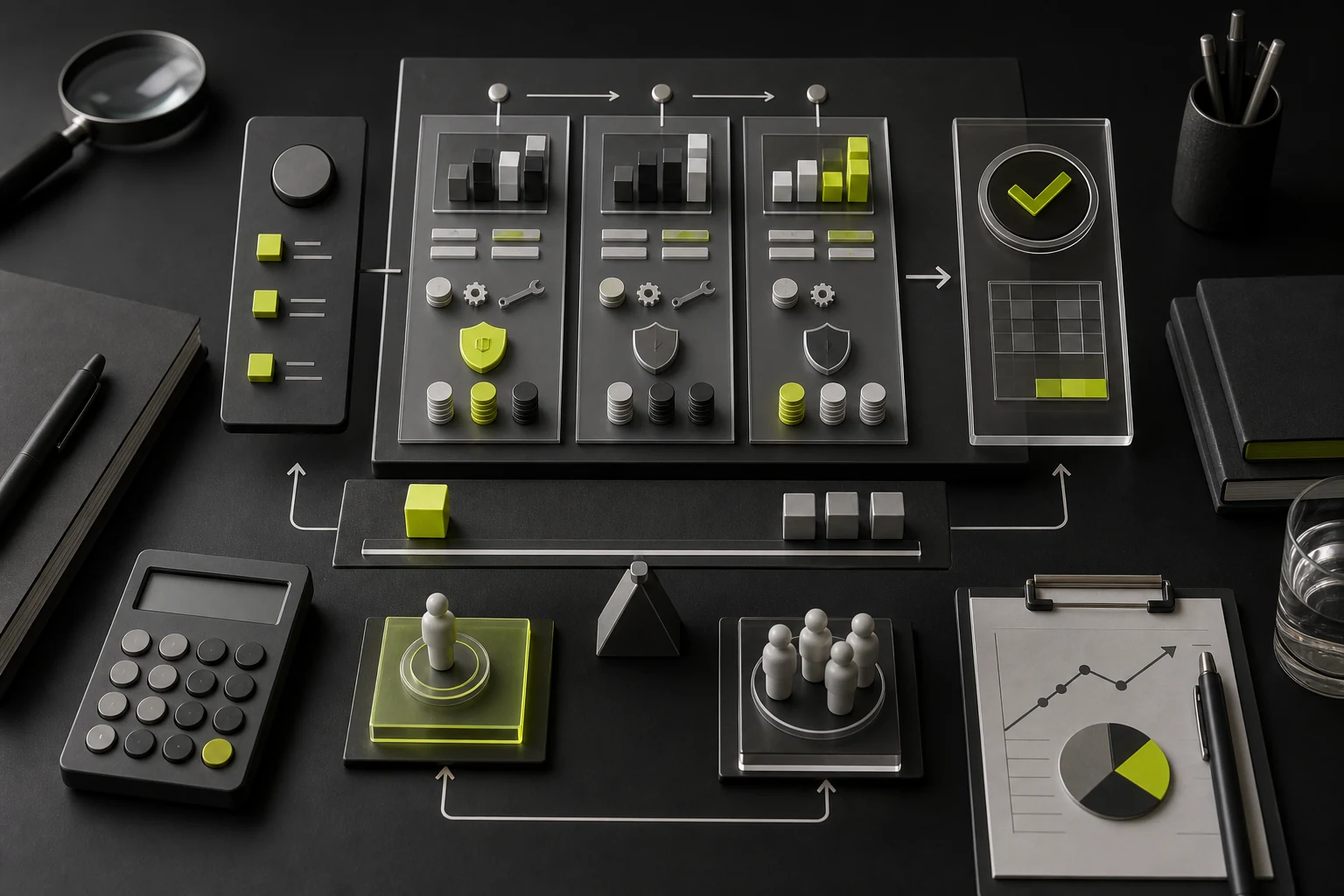
Compare three-year total cost of ownership: first-year build/implementation + three years of platform/server fees + plugins and integrations + maintenance and iteration + content operations + possible migration. SaaS starts cheaply but long-term costs can rise with transactions, accounts, plugins, and customization. Custom starts higher but also creates ongoing cost without a maintenance team.
Cost Item | Year 1 | Year 2 | Year 3 |
|---|---|---|---|
Build / Implementation | Complete | — or Iteration | — or Iteration |
Platform / Server | Complete | Complete | Complete |
Plugins / APIs / Messages | Complete | Complete | Complete |
Maintenance and Feature Iteration | Complete | Complete | Complete |
Operations, Content, and Support | Complete | Complete | Complete |
Migration and Exit Cost | Assess | Assess | Assess |
09 Clarify Ownership of Source Code, Accounts, and Data
Confirm who registers and controls the Mini Program entity, WeChat Official Account Platform account, payment merchant account, domain, servers, cloud resources, code repository, database, and third-party accounts. Even with SaaS, define export scope and exit procedures.
- □ The Mini Program entity and administrators belong to the company;
- □ The company controls payment merchant, domain, and cloud accounts;
- □ Code and documentation scope appears in the contract;
- □ Database backups, export formats, and migration responsibility are clear;
- □ Third-party API keys and accounts can transfer securely;
- □ Post-termination access, data deletion, and technical support are defined.
10 Privacy and Security Cannot Wait for Platform Review
Mini Programs often handle phone numbers, addresses, locations, orders, and payment information. Product design should follow data minimization, explicit purpose, user control, and necessary authorization from the start, with data permissions, logs, backups, exception handling, and exit mechanisms. Passing platform review alone does not satisfy every compliance and security responsibility.
11 A Comparable Request-for-Quote Checklist
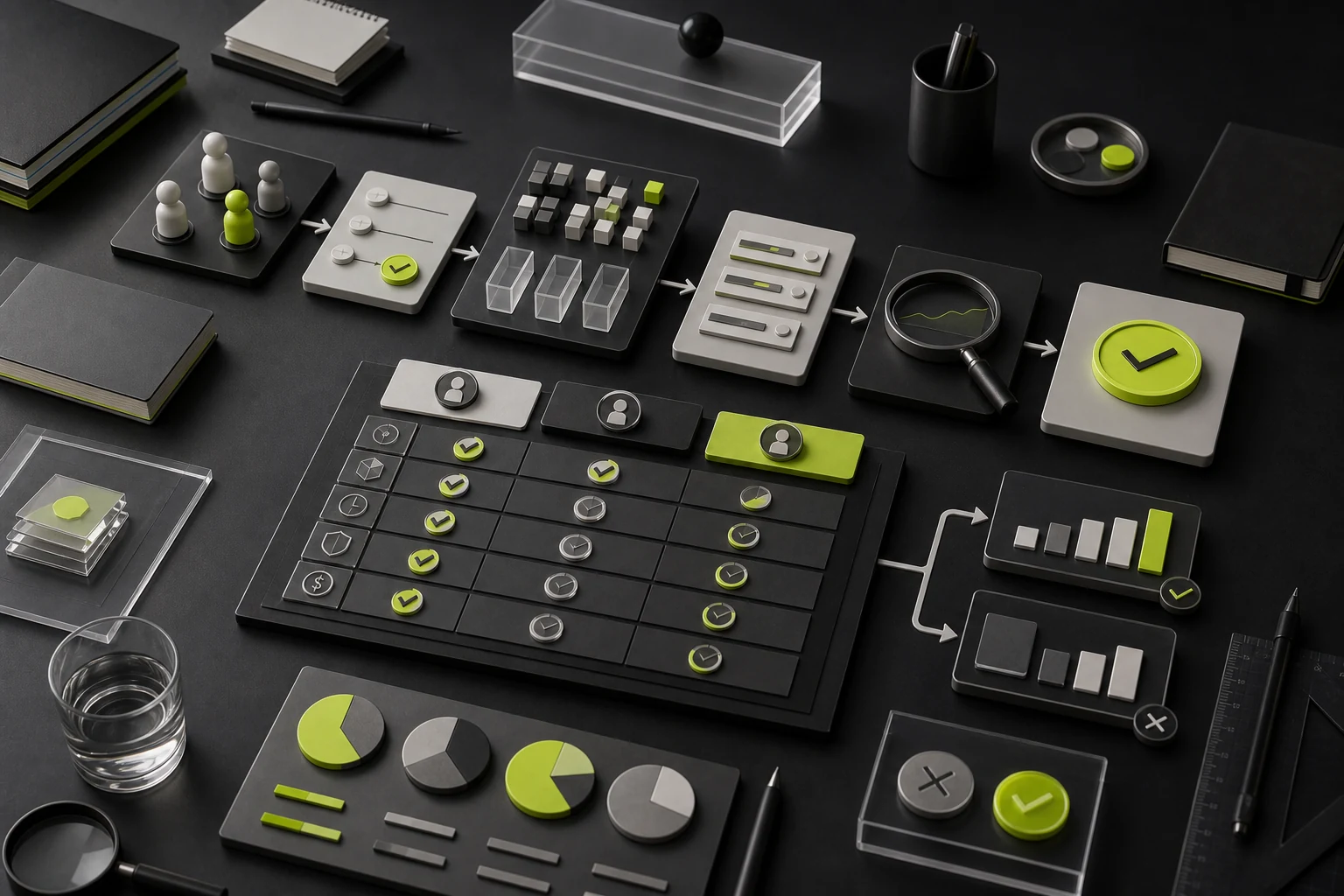
- □ Target users, business goals, and first-release success criteria;
- □ User roles, critical workflows, and mandatory functions;
- □ Product, order, payment, membership, message, and after-sales rules;
- □ Admin console, permissions, reports, and data-export requirements;
- □ Enterprise systems and third-party services to integrate;
- □ Ownership of visual design, content, assets, and operations;
- □ Source code, deployment, data, documentation, training, and handoff;
- □ Boundaries for review, testing, maintenance, Bugs, and new requirements;
- □ Timeline, payment milestones, acceptance, and exit mechanisms;
- □ First-year and three-year total cost.
12 Final Choice: Validate the Critical Assumption at Minimum Cost
Not every business should begin with full custom development. Identify the core assumption: will users adopt it, does the workflow work, will transactions occur, and can the company operate it? Use mature solutions when standard capabilities are sufficient. Invest in a custom system once differentiation is clear and long-term operations are supported.
Frequently Asked Questions
What is the lowest cost to build a WeChat Mini Program?
Templates or SaaS may start at several thousand RMB, but annual fees, plugins, certification, content, and operations still matter. The lowest starting price is not the complete cost.
Does Mini Program development include servers?
Not always. Custom projects often list annual cloud resources separately; SaaS may include them in a package. Confirm specifications and overage fees.
Can a template Mini Program be customized?
It depends on the platform. Some allow configuration only; others offer APIs or custom components. Confirm capability, price, and source-code boundaries before signing.
How long does Mini Program development take?
Simple configuration may take days or weeks, standard custom work often takes months, and complex platforms take longer. Timing depends on requirements, content, integrations, review, and feedback.
Is custom development always better than SaaS?
No. Custom is more reasonable only when differentiated workflows, systems integration, data control, or long-term iteration create enough value.
Service | View |
|---|---|
Mini Program and Digital Product Design | |
Corporate Website and Digital Development | |
Project Inquiry |
Need design or website development services?
JVDS Design Studio is a professional design studio focused on digital product experiences and brand identity. We work with businesses in China and overseas that want to strengthen their brand image, improve user experience and grow their business, providing clear, usable UI/UX design, high-quality website design and development, app and mini-program development, and cohesive, distinctive brand identity design.
Working on a B2B system or an app? Share your current screens and key user tasks so we can discuss the design scope.
 Link copied