Corporate websites are often expected to do too much: elevate the brand, acquire customers, present products, support sales, recruit talent, serve customers, publish news, and improve SEO. Every goal is reasonable, but without priorities, the home page fills with a company profile, ten business lines, news, jobs, downloads, QR codes, and multiple forms—leaving users unsure what to do next.
The first step in website development is not listing pages, but defining primary goals, secondary goals, and constraints. Primary goals determine home-page order, core content, and action paths. Secondary goals are supported through navigation and dedicated pages. Problems a website cannot solve directly belong to sales, product, or customer-service systems.
01 Six Common Goals for Corporate Websites
Goal | What the Website Must Do | Primary Metrics |
|---|---|---|
Brand Credibility | Help users verify the company, capabilities, scale, and professionalism | Branded search, core-page visits, direct traffic, and views of key evidence |
Lead Generation | Help qualified prospects understand the value and submit meaningful requirements | Qualified inquiries, appointments, downloads, lead quality, and revenue contribution |
Sales Support | Provide product, case, technical, and procurement information for long decision cycles | Sales-shared pages, content usage, follow-ups, and decision-cycle length |
Customer Service | Help existing customers solve problems independently and obtain support | Help-center success, reduced tickets, logins, and service usage |
Recruiting and Employer Brand | Help candidates understand the team, roles, and growth opportunities | Job views, completed applications, candidate quality, and employer-brand content |
Media / Investors / Partners | Provide corporate facts, news, materials, and contact paths | Downloads, partnership inquiries, media contacts, and visits to important pages |
02 Distinguish Business Problems from Website Problems
A website can improve communication, trust, discovery, action, and self-service, but it cannot independently fix an uncompetitive product, slow sales follow-up, confused pricing, or insufficient service capacity. At project approval, document evidence of the problem: do customers not understand what the company does, or do they understand but still not trust it? Is traffic absent, or is traffic present without qualified inquiries? Does presales repeatedly explain the same topics, or can customers not find support information?
Surface Request | Possible Real Problem | What the Website Can Do |
|---|---|---|
The Corporate Website Does Not Feel Premium | Unclear positioning, weak evidence, or dated visuals | Rebuild the value proposition, brand system, and case evidence |
Too Few Inquiries | Mismatched traffic, unclear value, form friction, or follow-up issues | Optimize landing pages, evidence, CTAs, and analytics |
Too Many Products to Explain Clearly | Categories follow internal structures and lack scenarios or selection logic | Rebuild catalogs, solutions, comparisons, and filters |
Sales Keeps Sending PPT Files | The website lacks decision materials or pages that can be shared precisely | Create product, case, security, procurement, and download centers |
Customers Ask Too Many Questions | Help content is fragmented, search is weak, or status is unclear | Build a help center, status page, and tiered support paths |
03 Goal Priorities: Primary, Secondary, and Baseline Requirements
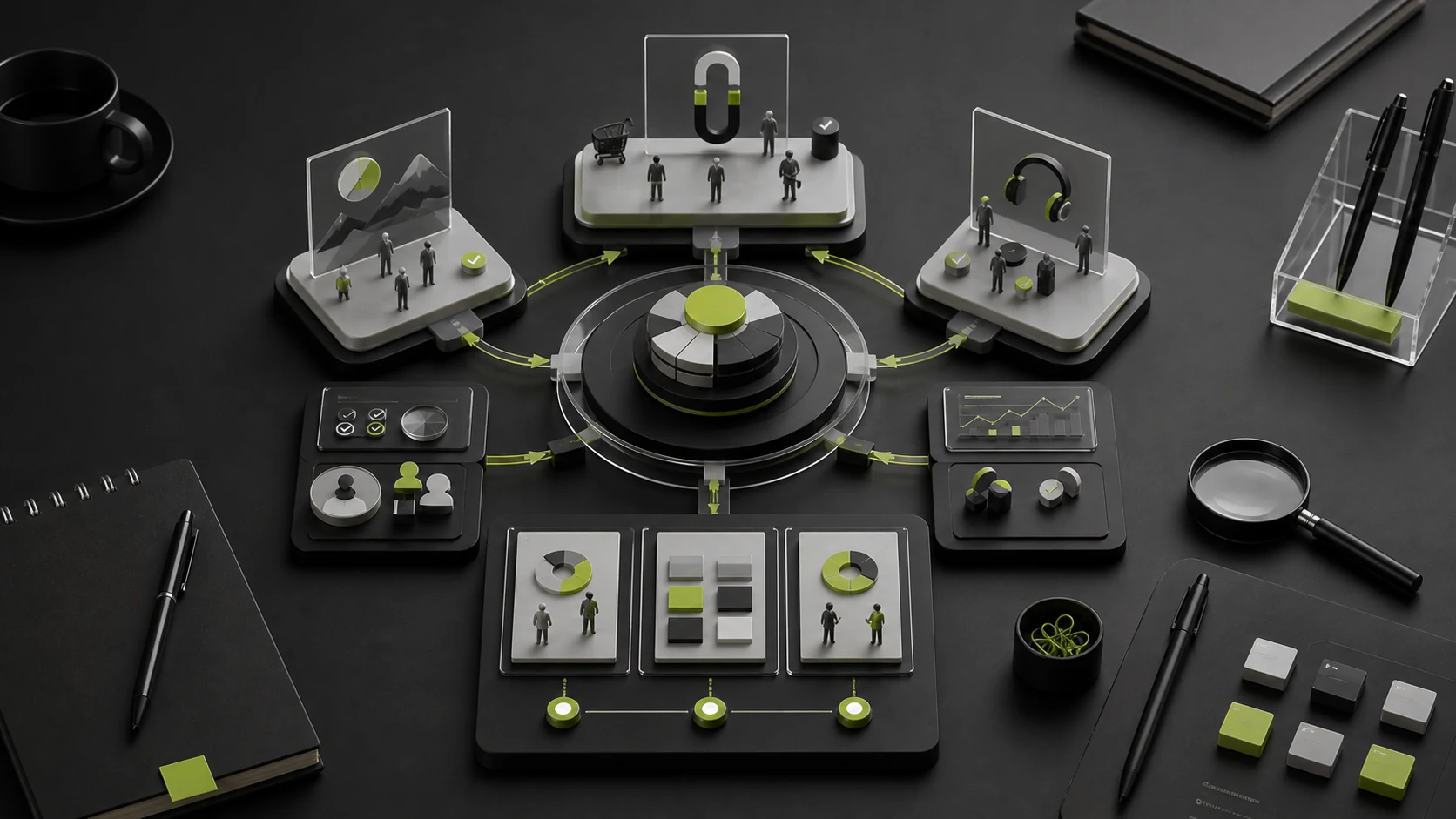
Manage goals in three layers. Primary goals directly affect return on investment, such as qualified leads or product trials. Secondary goals support long-term value, such as brand awareness, sales materials, and recruiting. Baseline requirements apply to every website: credibility, usability, mobile support, security, maintainability, and search discoverability.
04 Different Goals Require Different Page Priorities
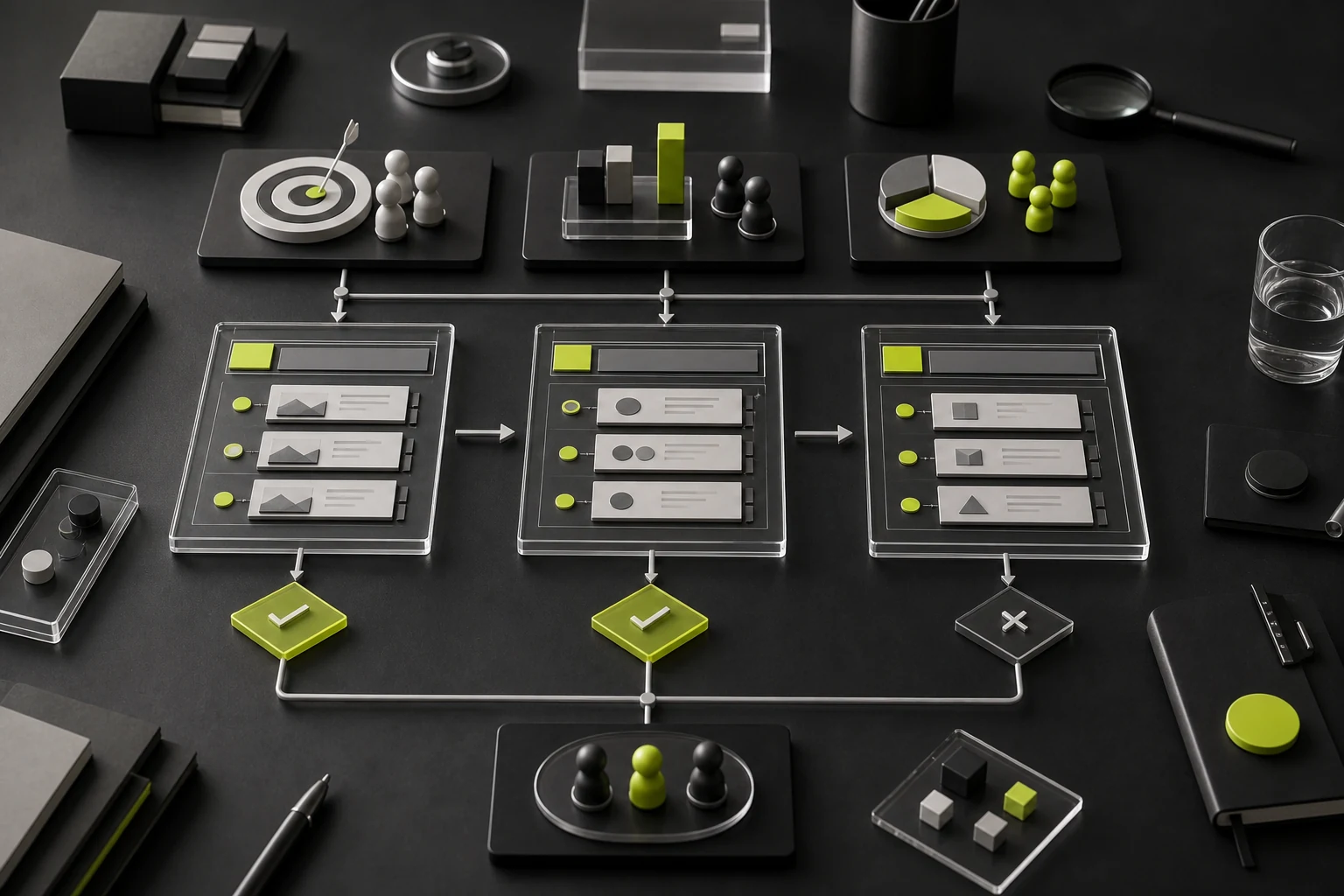
Primary Goal | Home-Page Priority | Core Pages |
|---|---|---|
Brand Credibility | Positioning → business scope → representative capabilities → customers/cases → company facts → contact | About, capabilities, customers, cases, team, and news |
Lead Generation | User problem → solution → differentiation → evidence → process/cost → CTA | Services, solutions, cases, pricing/process, and inquiry |
Product Trial | Product value → scenarios → features → integrations/security → pricing → trial | Features, solutions, pricing, documentation, security, and registration |
Customer Service | Task entry → search → FAQs → status → ticket/login | Help center, documentation, status, and customer portal |
Recruiting | Mission → ways of working → team → growth → roles → application | Culture, team, jobs, and recruiting FAQs |
05 Turn Goals into User Tasks
"Improve the brand image" cannot guide a page directly. A more actionable goal is: enable a procurement lead encountering the company for the first time to confirm its primary business, industries served, representative customers, and contact channel within three minutes. "Generate more leads" should likewise become: enable a high-intent visitor from Google to find the relevant service, see a credible case, and submit requirements that include budget and timing.
- Who is the user: role, industry, familiarity, and decision responsibility;
- What problem brings them here: comparison, validation, procurement, usage, or support;
- Which evidence do they need: cases, data, process, technology, compliance, or pricing;
- Which action defines success: continued reading, download, appointment, inquiry, registration, or login;
- Who takes over beyond the website: sales, support, channel, recruiting, or product teams.
06 Control Scope with a Goal–Page–Metric Table
Goal | Supporting Pages | Page Action | Measurement |
|---|---|---|---|
Generate Corporate Website Design Inquiries | Services, cases, process, and FAQs | Submit project requirements / book a discussion | Qualified lead count, completeness, and source page |
Demonstrate International Delivery Capabilities | International cases, multilingual services, and process | View cases / download a capabilities deck | Target-market visits, case depth, and sales usage |
Reduce Repeated Presales Explanations | Service scope, quote variables, and contract and delivery articles | Read / download / share through sales | Fewer repeated questions, sales feedback, and content usage |
Strengthen Brand Credibility | About, customers, cases, methodology, and team | Review evidence / proceed to contact | Branded search, direct traffic, and key-evidence views |

07 Website Functions Should Follow Goals
When the goal is lead generation, form fields, CRM, source tracking, and content operations matter more than flashy motion. For product support, search, document versions, status pages, and accounts matter more. For a brand launch, imagery, motion, and campaign assets may justify more budget. Do not copy a module merely because a competitor has it.
08 Goal Workshop Before Project Kickoff
- □ List the three most important business goals for the next 12 months;
- □ List the three most important website audiences and rank them by value;
- □ Collect the 20 questions most often asked by sales, support, and customers;
- □ Review current website data, search performance, and conversion issues;
- □ Define the primary goal, secondary goals, and explicit exclusions;
- □ Select one to three core metrics and a data owner for the primary goal;
- □ Map every page to a user task and business goal.
09 Common Goal Mistakes

- Treating "look better" as the final goal without defining user or business change;
- Assuming the home page can serve every role equally and distributing information uniformly;
- Confusing traffic, inquiries, and revenue without distinguishing lead quality;
- Reviewing only total visits after launch, not critical pages and actual actions;
- Using numerous functions to hide weak content and evidence;
- Failing to assign an operating owner, allowing the site to become outdated quickly.
10 How to Determine Whether the Primary Goal Is Achieved After Launch
For brand goals, review branded search, direct traffic, and engagement with cases and About. For lead generation, track qualified inquiries, sources, service-page-to-form journeys, and revenue contribution. For product goals, review trials, documentation, activation, and support. For customer service, track search success, issue resolution, and ticket changes. Metrics must connect to business actions rather than pursue one isolated number.
Frequently Asked Questions
What is the most important goal of a corporate website?
It depends on the company's stage. A startup product may need to explain value and generate trials; a mature B2B company may prioritize sales and procurement support; a group may emphasize unified branding and stakeholder communication.
Can brand presentation and lead generation work together?
Yes, but the home page and critical landing pages need clear priorities. Brand content creates trust and differentiation, while lead paths provide specific evidence and actions. They are not mutually exclusive.
Must a corporate website generate sales directly?
High-value B2B projects rarely close entirely online, but the corporate website can influence discovery, comparison, trust, shortlisting, and sales follow-up. Measure both leads and sales-support value.
If there is no traffic, should we redesign the website or promote it first?
First ensure that the website can clearly serve the target traffic, then invest in promotion. Otherwise, traffic merely amplifies problems in value communication and conversion paths.
How can we stop website requirements from expanding continuously?
Evaluate every new requirement against primary goals, user tasks, and metrics: whom does it serve, what does it solve, and how will it be measured? If those questions cannot be answered, it should not enter the first release.
Service | View |
|---|---|
Corporate Website Design and Website Development | |
Brand Visual Design | |
Project Inquiry |
Need design or website development services?
JVDS Design Studio is a professional design studio focused on digital product experiences and brand identity. We work with businesses in China and overseas that want to strengthen their brand image, improve user experience and grow their business, providing clear, usable UI/UX design, high-quality website design and development, app and mini-program development, and cohesive, distinctive brand identity design.
Planning a corporate website, a multilingual site or a redesign? Tell us about your audience, existing website and the work you need.
 Link copied