Fintora emphasizes voice with black backgrounds, purple gradients and waves, while retaining common money actions and transaction lists on the homepage. Voice can express several conditions in one sentence; records help review results. Between them, the essential element is a clear, editable instruction summary.
Key takeaways
- Compound voice instructions should first become reviewable field drafts.
- Types, states and statistical scope need separate explanations for review.
Waves describe input; fields describe actions
Voice Analysis shows an exchange-and-transfer sentence below the wave, naming source currency, target currency and destination wallet. Voice suits multiple intentions, and large text on black makes recognition results easy to locate.
Results should become an editable draft listing amount, source, destination and execution order. A misheard wallet can be corrected locally instead of repeating everything. JVDS prefers restating the final fields before a money action so confirmation concerns a specific draft.
Multiple steps need separate results. Completed exchange and unfinished transfer should have their own states; retry should name its step so Failed does not obscure actions already performed.

Lists and filters provide review cues
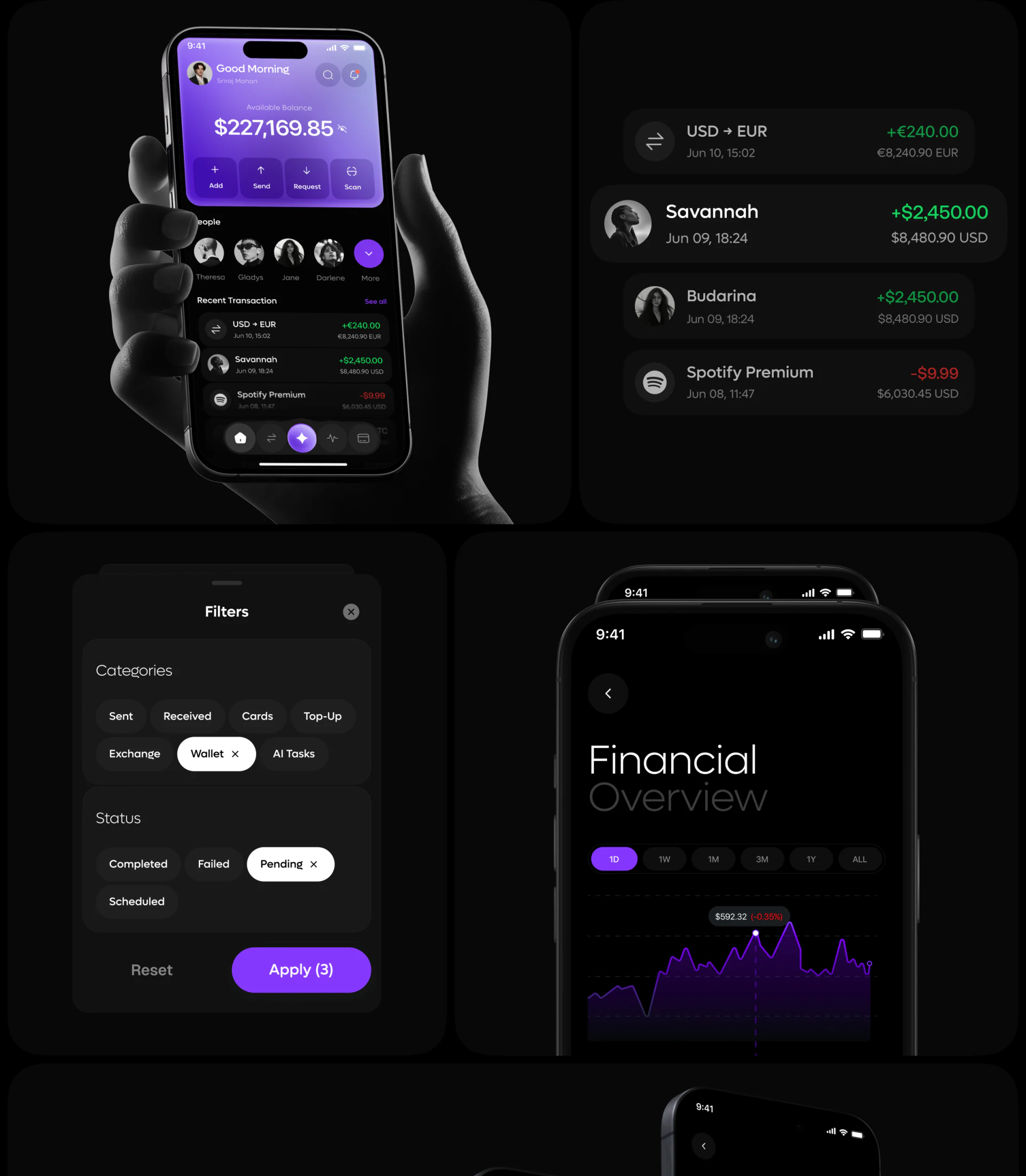
A purple homepage card groups balance with Add, Send, Request and Scan. Transactions below use icons, names, dates and amounts. Signs and green/red distinguish changes, but gray second-line amounts still need field names.
Change, converted value and post-transaction balance are different information. Once named, hiding balance should be checked across areas, rather than hiding only the hero and retaining equivalent sensitive values in records.
Filters separate Categories from Status. Wallet and Pending have removal marks; Reset and Apply sit below. Separating action type and progress is useful. Carry active conditions back to results and explain Pending versus Scheduled.
Analytics first define what is counted
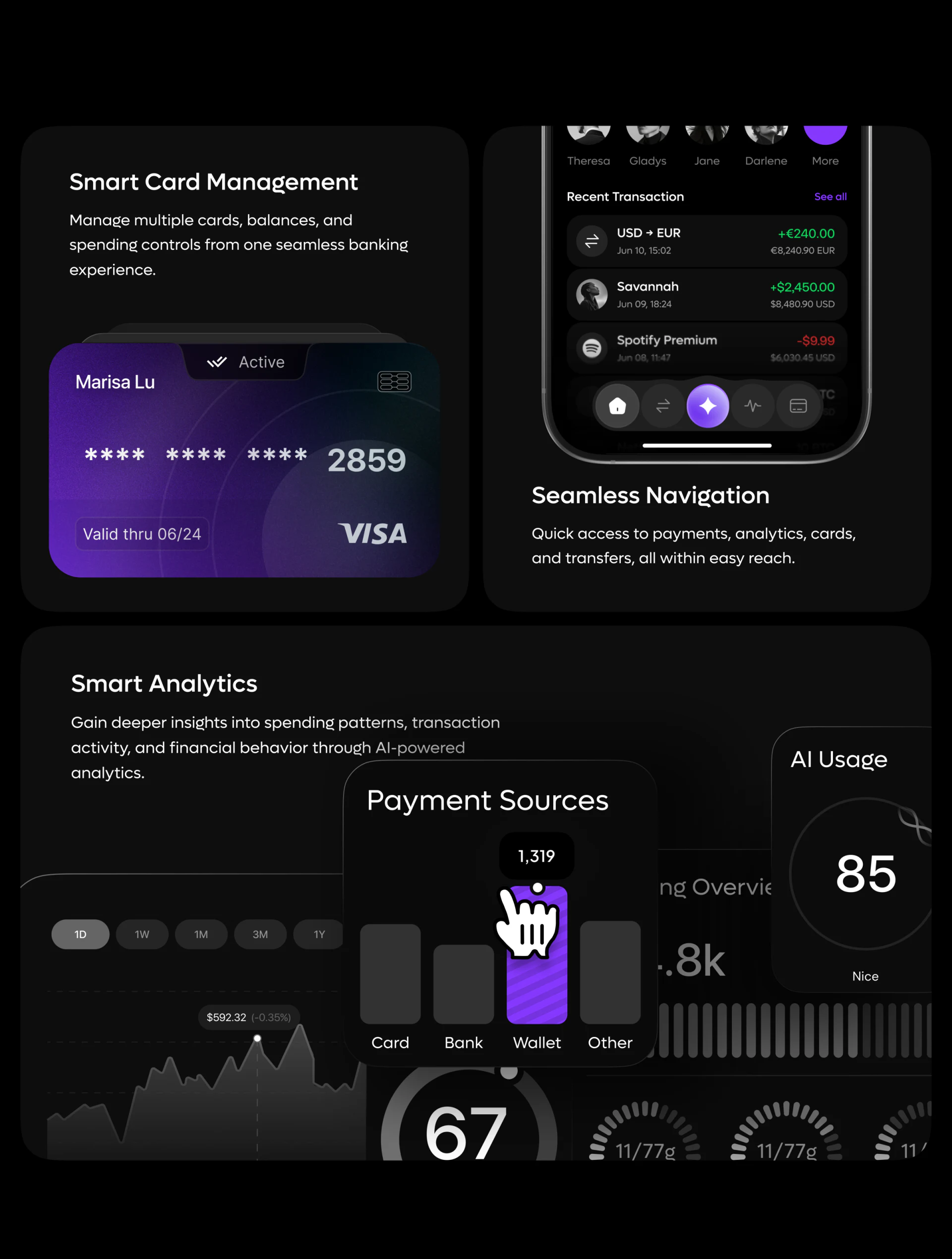
Payment Sources uses Card, Bank, Wallet and Other bars, while AI Usage has a large circular number. Fixed categories aid distribution reading and period switching provides a review route.
Values need units, scope and counting rules. A compound voice task may count as one use or several steps; its definition should be stable. State which card time switching affects, rather than implying all visible cards changed together.
Card management identifies individual cards by suffix and Active; analytics names statistical sets. These subjects should stay distinct. Purple can maintain brand emphasis, while key fields need more explanation than decorative numbers.
Frequently asked questions
Should money actions execute as soon as voice ends?
Show an editable summary and confirm its final version first. Compound actions also need stepwise results and a clear retry scope.
How should a second transaction amount be labeled?
Name its actual meaning—balance, conversion or another field—and retain currency. Position and color cannot replace a label.
Design review checklist
- Allow item-by-item corrections to voice drafts.
- Explain compound-task states by step.
- Give transaction and analysis values names and scope.
Plan voice instructions through to result records
AI wallets can first design recognition drafts, confirmation and stepwise receipts, then connect transaction filters and analytics.
JVDS Design Studio provides UI/UX design, website design and development, helping organize page content, interface structure and implementation requirements.
 Link copied