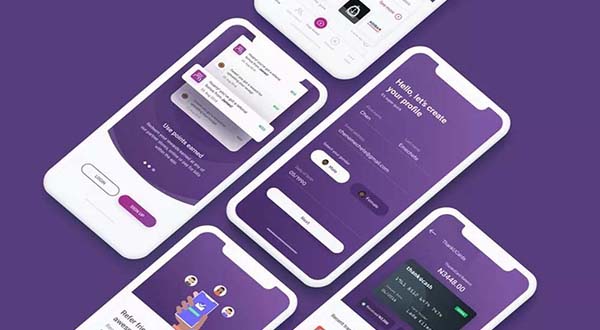
Faced with APP interface design that is highly homogeneous and weakly differentiated, brand-led APP development brings interface design and brand promotion together. The interface serves the brand, strengthening its image and approachability, expanding its influence, and deepening understanding of target users. Four principles can help integrate APP interface design with distinctive brand characteristics.
Consistency in APP interface design means creating unity through visual structure, hierarchy, and elements. This reduces users' cognitive load and deepens brand understanding. To control how a branded APP appears across multiple mobile devices, designers need an overall strategy that extends from offline to online. They must address differences between operating systems and use each platform's advantages so the APP performs at its best on every device while preserving the integrity and continuity of the brand image.An APP's visual structure generally has four main parts: the status bar, navigation bar, main menu, and content area, each of which contains additional elements. In branded APP interface design, those elements should be integrated logically and effectively to communicate brand information. For example, the APP interface's main menu commonly appears at the top of the screen. Following this convention, keeping other page layouts consistent, and balancing the proportions of controls prevents visual disorder. Users can then adapt to the APP layout quickly and absorb brand information. Recommended reading: Minimalist Principles in Interface Design.
First, consider the branded launch icon. Its appearance should remain consistent with the brand's interface design style. Most brand marks serve as the icon's core graphic element, reducing the cognitive effort required to recognize the brand, reinforcing its image within limited interface space, and attracting attention. Second, functional icons inside the interface should share visual characteristics with the existing brand identity system.
In brand-led APP interface design, the brand's primary and secondary colors should first remain consistent with their use on other platforms, while being refined for the characteristics of mobile devices. Because device sizes vary, the proportions of brand colors in the interface should produce visual consistency. Color combinations should center on the pure brand colors, with a three-color combination used as support. Concise, confident use of color preserves brand consistency and makes the intended atmosphere easier for users to feel.
The operating interface of a branded mobile APP should account for efficiency and time. Users often interact in fragmented moments, so simple, convenient functions should improve interaction efficiency. APP interfaces now operate on touchscreens. Without the tactile feedback of physical buttons, users depend on visual and auditory feedback to understand the current state. If guidance and timely feedback are inadequate, users may lose their sense of direction and become frustrated.
In a market filled with homogeneous products, a brand must remain distinctive to stand out, express its character, strengthen competitiveness, and demonstrate value. In the mobile internet environment, new media gives brands an important channel for participating in APP interfaces. Within an interactive product system, the interface can represent the quality of the user experience. A system that invites participation can be memorable, feel worthwhile, and be enjoyable to use. User-centered, brand-led APP interface design should pursue more individualized experiences that meet target users' personal expectations for engagement and emotion.
Environmental principles for branded APP interface design cover two areas. One is the APP's operating-system environment, such as iOS, Android, or Windows. The other is the physical and situational context in which users operate the APP. This article focuses mainly on the second. To maintain strong consumer relationships and provide a better experience, brands should consider how the APP communicates with users and the contexts in which it will be used. Branded APPs can make flexible use of mobile hardware such as gravity sensors, GPS, and cameras to increase engagement while users are walking, attending meetings, riding, speaking with others, or participating in other activities.
Strong interaction design and intuitive visual design communicate brand information more effectively and help users develop a more positive feeling toward the brand through experience. Environmental principles do not need to be followed rigidly by every branded APP, but careful consideration during development and interface design can create stronger brand characteristics and competitiveness.
In today's mobile internet era, developing and designing a branded APP is one of the most competitive and adaptable ways to strengthen a brand. Through principles of consistency, communication, personalized user experience, and context, brand-led APP interface design can connect interface design with brand characteristics and improve content presentation, information delivery, target-user understanding, and brand influence.
Need design or website development services?
JVDS Design Studio is a professional design studio focused on digital product experiences and brand identity. We work with businesses in China and overseas that want to strengthen their brand image, improve user experience and grow their business, providing clear, usable UI/UX design, high-quality website design and development, app and mini-program development, and cohesive, distinctive brand identity design.
Working on a B2B system or an app? Share your current screens and key user tasks so we can discuss the design scope.
 Link copied