


Website & Design Insights
All Insights
 Interface Design
How to Design Legal Technology Products: Rigor Does Not Require More Complexity
Legal technology products often fall into one of two extremes: copying paper workflows onto screens until every page looks like a stack of forms, or removing versions, dates, and accountability in the name of simplicity until no professional trusts the product for critical work. Rigor and usability are compatible. The goal is to make professional facts easier to verify, trace, and hand off.
 Interface Design
How to Design an Automotive Digital Showroom: 3D Is Not the Whole Experience
For new energy vehicle and premium mobility brand websites, 3D vehicle viewing and car configurators built with WebGL / Three.js have become almost standard. Yet actual paid-traffic conversion data shows that many automakers see bounce rates above 60% on their 3D showroom pages. The reason is straightforward: users open the page on a mobile network and encounter a black-screen progress bar that needs to download 40MB of assets and sits at Loading 23% for more than ten seconds. They lose patience before even seeing the car. Or they spend time spinning the 3D model, then cannot find a clear table when they want to compare the specifications and monthly payment plans of two versions.
 Interface Design
How to Design a Clinical Research System: Clarify Subjects, Visits, Data, and Accountability
The greatest risk in a clinical research system is having every feature but no clear account of the facts. Why did a subject miss a visit? Who changed a data point? When did the investigator sign? Why was a query closed? Every answer must be reconstructable. The interface's first job is not to look professional, but to remove ambiguity from research processes, data accountability, and time.
 Interface Design
Low-Fidelity, High-Fidelity, or Interactive Prototypes? Choose by Validation Goal
Low fidelity does not mean poorly made, and high fidelity does not mean closer to the right answer. A prototype is valuable when it answers the most important current question. Black-and-white wireframes may be fastest for validating information order. Payment confirmation and status feedback require an interactive flow. Brand trust calls for high-fidelity visuals.
 Branding
How to Measure Brand Design Effectiveness Beyond Appearance
Applause at the brand launch, compliments on social media, and the CEO’s satisfaction with the new logo cannot individually prove that a rebrand worked. Brand-design results appear in multiple places: whether teams create materials faster, users recognize the brand, sales explains value more easily, and the website gains branded searches and qualified inquiries. Measurement must begin with a baseline before design starts.
 Interface Design
Designing a Membership Mini Program for Repeat Purchases
Many membership mini programs become little more than a digital membership card: users register during their first purchase, receive a few points, and never think about opening it again. The problem is not visual polish. The membership system provides no clear reason to return. Points, benefits, orders, and messages must coordinate around the real repurchase cycle rather than exist as separate feature entrances.
 Web Insights
Choosing Front-End Technology for a Corporate Website
A corporate website does not need a rewrite because “everyone uses React,” and adopting Next.js does not automatically improve SEO. A framework determines how a site is developed and maintained—not its business outcome. A simple approach that publishes reliably, loads quickly, and transfers cleanly is often more mature than a fashionable stack nobody dares maintain.
 Branding
AI Company Branding Beyond Blue-Purple Gradients and Glowing Orbs
Place a logo inside a blue-purple gradient sphere, add grids and particles, and people can tell it is “an AI company.” That is exactly the problem: they recognize the category but cannot remember the brand. AI is a technology category, not a personality. Real differentiation grows from the problem the product solves, why users trust it, and how the company defines the relationship between automation and people.
 Web Insights
How to Create a Website Structure Map—and Why It Is Not an XML Sitemap
When someone asks for a “sitemap” in a project meeting, the product manager may imagine a page-structure diagram, the developer thinks of sitemap.xml, the content team pictures a footer directory, and the designer thinks of navigation hierarchy. None is wrong. But without shared terminology, the project can end with a generated XML file while the website’s page relationships remain chaotic.
 Interface Design
How Many Participants Does User Research Need?
“Test with five people” can be a reasonable starting point—or a source of dangerously false confidence. Sample size is not determined by the method’s name. It depends on what you need to learn, how much users differ, how precise the conclusion must be, and the cost of a wrong decision.
 Web Insights
Do Meta Descriptions Affect Rankings? Focus on Earning the Click
A meta description is not a hidden keyword list, nor is it finished simply because it reaches 160 characters. It works more like a second headline in search results: when the title alone does not convince users to click, these two or three lines should quickly explain what the page offers, who it is for, and how it differs from other results.
 Web Insights
Does a Corporate Website Need a Privacy Policy and Cookie Notice?
Not every corporate website needs a cookie banner covering half the screen. But if a site collects names, phone numbers, email addresses, IP addresses, browsing behavior, or shares data with third-party services, it cannot pretend to “only display information.” The right first step is not copying a privacy policy. It is inventorying what the website collects, why, who receives it, and whether users can refuse.
 Interface Design
Combining Quantitative Data and Qualitative Research
Back-end data can tell you where users drop off; interviews may reveal why. But placing a funnel report and a few user quotes on the same slide is not mixed-methods research. Effective integration makes both types of evidence serve one decision loop: detect an anomaly, explain the cause, shape a solution, and return to the data to validate it.
 Web Insights
Local SEO for a Beijing Design Studio: Avoid Copy-Paste City Pages
Local SEO is not about repeating “Beijing” across your homepage, service pages, and 50 articles. Search engines need to establish who the organization is, whether it genuinely operates here, what services it provides, whether local project evidence exists, and whether the page answers Beijing clients’ questions better than a generic national template.
 User Experience
Can Great UI Design Be Delivered Remotely? Video Meetings Are Not the Key
Being in the same city does not guarantee smooth communication, and remote work does not mean losing control. UI rework usually comes from requirements scattered across chat, everyone giving final feedback, unfrozen design versions, and decisions left unrecorded after meetings—not distance.
 Branding
Does an Original Logo Guarantee Trademark Registration? These Are Different Tests
A designer delivering an original Logo does not guarantee trademark approval; finding no identical graphic in a search does not eliminate similarity risk. Original design, copyright protection, and trademark registration are related but apply different standards.
 Interface Design
How to Create a User Journey Map: Do Not Draw Only an Emotion Curve
A journey map containing only Awareness—Comparison—Purchase—Use and a curve from frown to smile rarely guides design. It looks complete but does not explain where pain originates, who owns it, which metrics it affects, or whether evidence supports the journey.
 Interface Design
How to Analyze User Interviews: A Wall of Sticky Notes Is Not an Insight
Two common extremes after interviews are equally unreliable: writing conclusions from memory or clustering hundreds of sticky notes, photographing the wall, and declaring "insights complete." Real analysis separates raw evidence, interpretation, and recommendations so others can trace every conclusion.
 Interface Design
How to Write a User Interview Guide: Remove "Do You Like It?" from the Questions
An interview guide easily becomes a list designed to hear a desired answer: Is this feature useful? Would you pay? Is this page clearer? Participants often nod politely, and the team leaves with positive-looking notes that cannot support a decision.
 Web Insights
Google Crawling, Indexing, and Ranking: Diagnose Which Layer Is Blocking You
"Google has not indexed it," "the page does not rank," and "the crawler did not find it" are often combined, but they are different problems. Fixing the wrong layer wastes time: changing titles cannot help an undiscovered page, and repeated indexing requests do not improve an indexed page that misses search intent.
 Interface Design
How to Design Loan Repayment Flows: Plain-Language Bills, Reminders, Failures, and Extensions
On a due date, users usually do not open a lending APP to browse products. They may be confirming today's amount, worrying about a duplicate charge after payment failure, or lacking cash and looking for a legitimate, clear next step. The interface should provide accurate, actionable, traceable information—not manufacture urgency.
 Interface Design
How to Design a SaaS Feature Page: Stop Listing Features and Product Screenshots
Many SaaS feature pages have plenty of content: a dozen features, three admin screenshots, a row of customer Logos, and a "Try Now" button. Yet visitors still do not know what the feature saves, what risk it reduces, or why replacing the current method is worthwhile.
 Web Insights
How to Make Web Images Responsive: Stop Loading a 3000px Image on Mobile
A mobile-responsive page does not guarantee responsive images. Many pages still download a 3000px, two- or three-megabyte original on a 375px-wide screen. It may look like the image is merely slower, but it delays the first screen, wastes data, and can make the layout jump during loading.
 Interface Design
How Does B2B UI Design Differ from B2C? Goals, Users, and Evaluation Criteria
The difference between B2B and B2C is not that one is serious and the other attractive. What truly shapes design is the buyer-user relationship, task frequency, domain expertise, permissions, error cost, and success criteria.
 Branding
How to Choose Brand Fonts: A Complete Guide to Chinese, English, Numerals, and Licensing
Brand typography is not a style image in a proposal. It must work continuously across corporate websites, APPs, presentations, contracts, data tables, and international materials while meeting multilingual, readability, collaboration, and licensing requirements.
 Interface Design
How to Design WeChat Mini Program UI: Platform Conventions, Brand, and Conversion Paths
A Mini Program operates inside WeChat's navigation, authorization, sharing, and payment environment. Strong design does not shrink an entire APP; it uses platform familiarity to complete tasks, then builds the brand through content, visuals, and service details.
 Interface Design
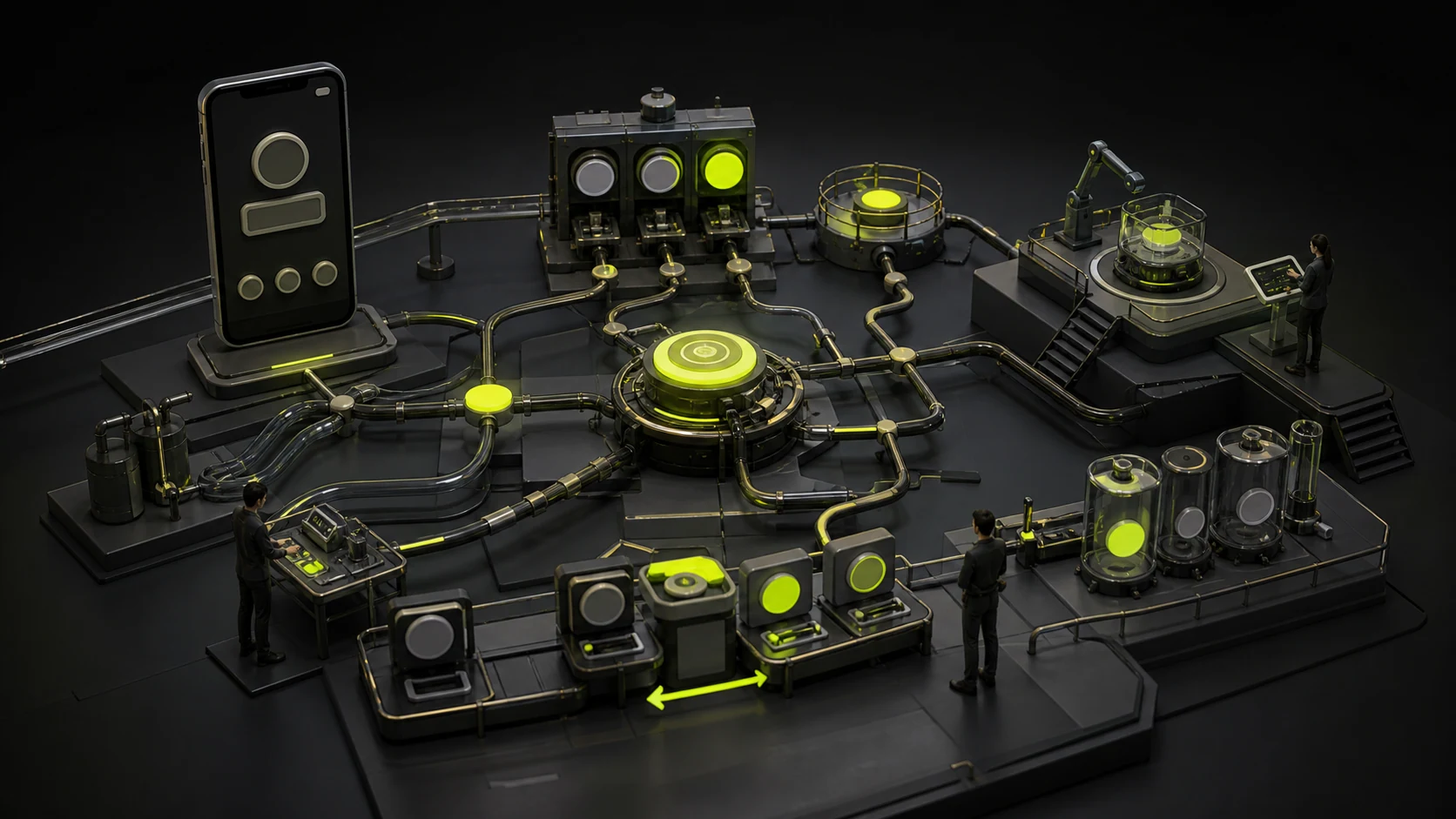
How to Design Mobile Payment Flows: Order, Failure, Cancellation, and Refund States
Returning from a payment page does not mean the server confirmed the transaction. Mobile payments must separate order, payment, and refund states to prevent duplicate charges, incorrect fulfillment, and support disputes.
 Interface Design
How to Design APP User Flows: Normal, Error, and Interruption-Recovery Paths
Real users do not move from the first screen to success exactly as a prototype does. They lose connectivity, switch to the background, deny permissions, let sessions expire, or enter directly from a notification. Flow design must handle every branch, not only the easiest path.
 Web Insights
Can AI-Assisted SEO Articles Rank? Google Cares About Value, Not the Tool
AI can produce a draft quickly, but it does not automatically supply independent experience, reliable evidence, or editorial judgment. Ranking depends not on whether content "looks like AI," but whether the page is genuinely more useful than existing answers.
 Web Insights
Which Metrics Matter After a Corporate Website Launch? Do Not Track Traffic Alone
More traffic does not mean people understand the brand, much less that sales leads improved. A corporate website needs a metric tree from discovery and understanding through action and sales outcomes to guide the next iteration.


