As a user experience designer, you have probably been asked many times: "What process do you follow when designing APPs and websites?" The question is popular for a simple reason: the user experience process is the foundation of user experience design.
Without a solid user experience design process, creating a product with a strong user experience is nearly impossible. Conversely, a well-defined and well-executed process can create an outstanding experience for users.
This article defines a general user experience design process, the typical sequence of its stages, and the methods used at each one.
What Is the User Experience Process?
The answer is: it depends. Your process will reflect the type of product you are designing. Different projects require different approaches; designing a corporate website, for example, differs from designing a dating APP.
Most designers know the concept of "design thinking" within the user experience process. It has five stages: empathize, define, ideate, prototype, and test. Most design processes originate from this concept.
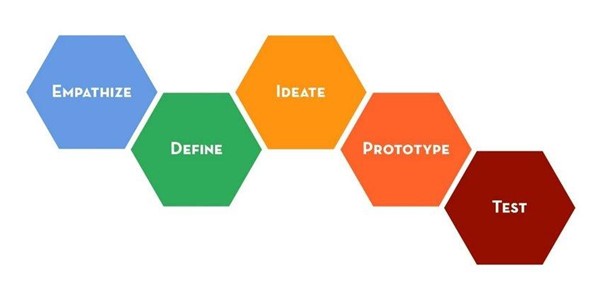
The "design thinking" process defined by Stanford's d.school includes five stages: empathize, define, ideate, prototype, and test.
When design thinking is applied to product design, the user experience process follows five key stages:
· Product definition · Research · Analysis · Design · Validation
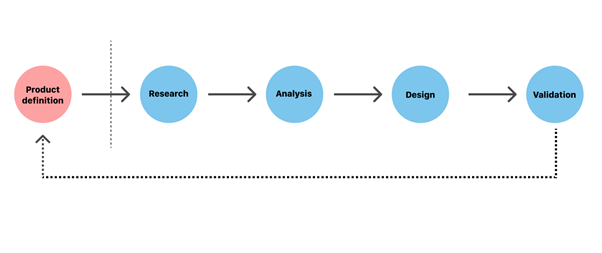
The user experience design process includes five key stages: product definition, research, analysis, design, and validation.
1. Product Definition
One of the most important stages of user experience design happens before the product team creates anything. Before making a product, you need to understand the context in which it will exist. Product definition establishes the foundation for the final result. At this stage, user experience designers and stakeholders brainstorm at the highest level—essentially defining the product concept.
This stage typically includes:
· Stakeholder interviews: Interview key stakeholders to gather insight into business goals.
· Value-proposition mapping: Consider the product's key attributes and value proposition—what it is, who will use it, and why.
· The value proposition helps the team and stakeholders agree on what the product will contain and how it will meet user and business needs.
· Concept sketching: Create an early model of the future product, such as a low-fidelity paper sketch of the product architecture.
This stage usually ends with a project kickoff. The meeting brings all key participants together and sets appropriate expectations for the product team and stakeholders. It covers a high-level summary of the product's purpose, team structure, communication channels, stakeholder expectations, key performance indicators, and how success will be measured.
2. Product Research
Once the idea is defined, the product team enters the research stage, which typically includes user and market research. Experienced product designers see research as a sound investment: it informs design decisions, while early research can save significant time and money later.
Product research varies more between projects than almost any other stage because it depends on product complexity, timing, available resources, and many other factors.
This stage may include:
· One-to-one in-depth interviews: Strong product experiences begin with a thorough understanding of users. In-depth interviews provide qualitative data about the target audience, including needs, desires, fears, motivations, and behavior.
· Competitive research: Research helps user experience designers understand industry standards and identify product opportunities within a particular market segment.
3. Analysis
The analysis stage turns research data into insight, moving from what users "want, think, or need" to why they want, think, or need it. Designers use this stage to confirm whether the team's most important assumptions are correct.
This stage of the user experience process typically includes:
· Creating user personas: Personas are fictional characters representing different types of product users. Designers can refer to them as realistic representations of the target audience.
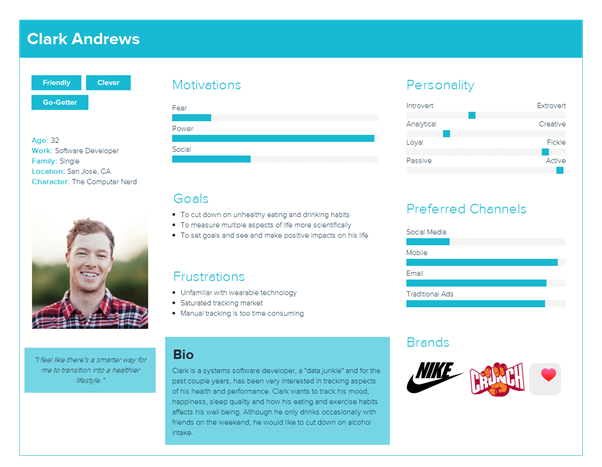
Example user persona showing gender, age, motivations, and other attributes
· Creating user stories: A user story helps designers understand a product or service interaction from the user's perspective. It is commonly structured as: "As a [user], I want to [achieve a goal], so that [motivation]."
· Storyboarding: A storyboard connects user personas and user stories. As the name suggests, it is essentially a story of a user's interaction with the product.
4. Design
Once user requirements, needs, and expectations are clear, product designers enter the design stage. The product team undertakes activities ranging from information architecture (IA) to interface design. An effective design stage is both highly collaborative—requiring active participation from everyone involved—and iterative, repeatedly testing different ideas.
The design stage typically includes:
· Sketching: Sketches are the easiest and fastest way to visualize ideas. Draw them on paper, a whiteboard, or with a digital tool. They are especially useful during brainstorming because they help the team visualize alternatives before selecting a direction.
· Creating wireframes: Wireframes help designers visualize the basic structure of future pages, including key elements and their relationships. They form the product's skeleton and commonly serve as the basis for mockups and prototypes.
· Creating prototypes: Wireframes focus on structure and visual hierarchy, while prototypes address the actual interaction experience—both appearance and feel. A prototype simulates the product and may be low fidelity, such as a clickable wireframe, or high fidelity, such as a coded prototype.
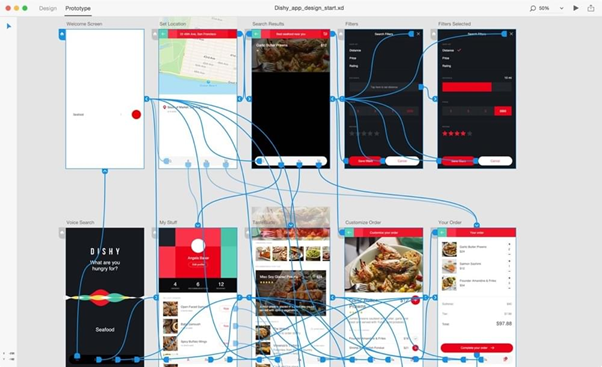
· Creating design specifications: Specifications contain all visual design assets developers need to turn the prototype into a working product.
· Creating a design system: On large projects, designers often create a system of components, patterns, and styles that helps designers and developers stay consistent.
5. Validation (Testing)
Validation is essential because it helps the team understand whether the design works for users. It commonly begins after high-fidelity design is complete, when testing can generate more valuable feedback from end users. Across a series of user tests, the team validates the product with stakeholders and end users.
Validation activities may include:
· "Eating your own dog food": Once the product is usable, the design team should test it internally. Team members should use it regularly and complete common tasks to identify major usability defects.
· Test sessions: User testing with people who represent the target audience is critical. Formats include moderated and unmoderated usability testing, focus groups, beta testing, and A/B testing.
· Surveys: Surveys are excellent tools for collecting quantitative and qualitative information from real users. User experience designers can add open-ended questions such as, "Which part of the product do you dislike?" to gather opinions about specific features.
· Analytics: Quantitative data from analytics tools—clicks, navigation time, search queries, and more—helps teams understand how users interact with the product.
How to Improve the User Experience Design Process
Now that the connections between stages are clear, consider several useful ways to improve the user experience design process:
Embrace the Iterative Nature of Design
User experience design is not linear; it is iterative. Its stages overlap substantially and often move back and forth. Consider research and design: as a user experience designer learns more about the problem and the users, previous decisions may need reconsideration. Accept that a design will never be perfect. Continue researching user needs so the product can serve them better.
Focus on Effective Communication
Communication is a critical user experience design skill. Creating an excellent design is one challenge; communicating it is equally important. Hold regular design reviews and meet with stakeholders so everyone understands and agrees with product design decisions.
Conclusion
There is no universal solution for the user experience design process. Whatever process you follow, the goal is the same: create an excellent product for users. Use the methods that work for the project, discard those that do not, and continue improving the process as the product evolves.
Need design or website development services?
JVDS Design Studio is a professional design studio focused on digital product experiences and brand identity. We work with businesses in China and overseas that want to strengthen their brand image, improve user experience and grow their business, providing clear, usable UI/UX design, high-quality website design and development, app and mini-program development, and cohesive, distinctive brand identity design.
Working on a B2B system or an app? Share your current screens and key user tasks so we can discuss the design scope.
 Link copied