Many project budgets look complete: one line for UI, one for the front end, and one for the back end. After work begins, however, no one owns content definition, workflows remain unvalidated, exception states are not designed, testing is compressed, and no maintenance budget exists after launch. The problem is not always an insufficient total; it is often that funding went only to visible outputs.
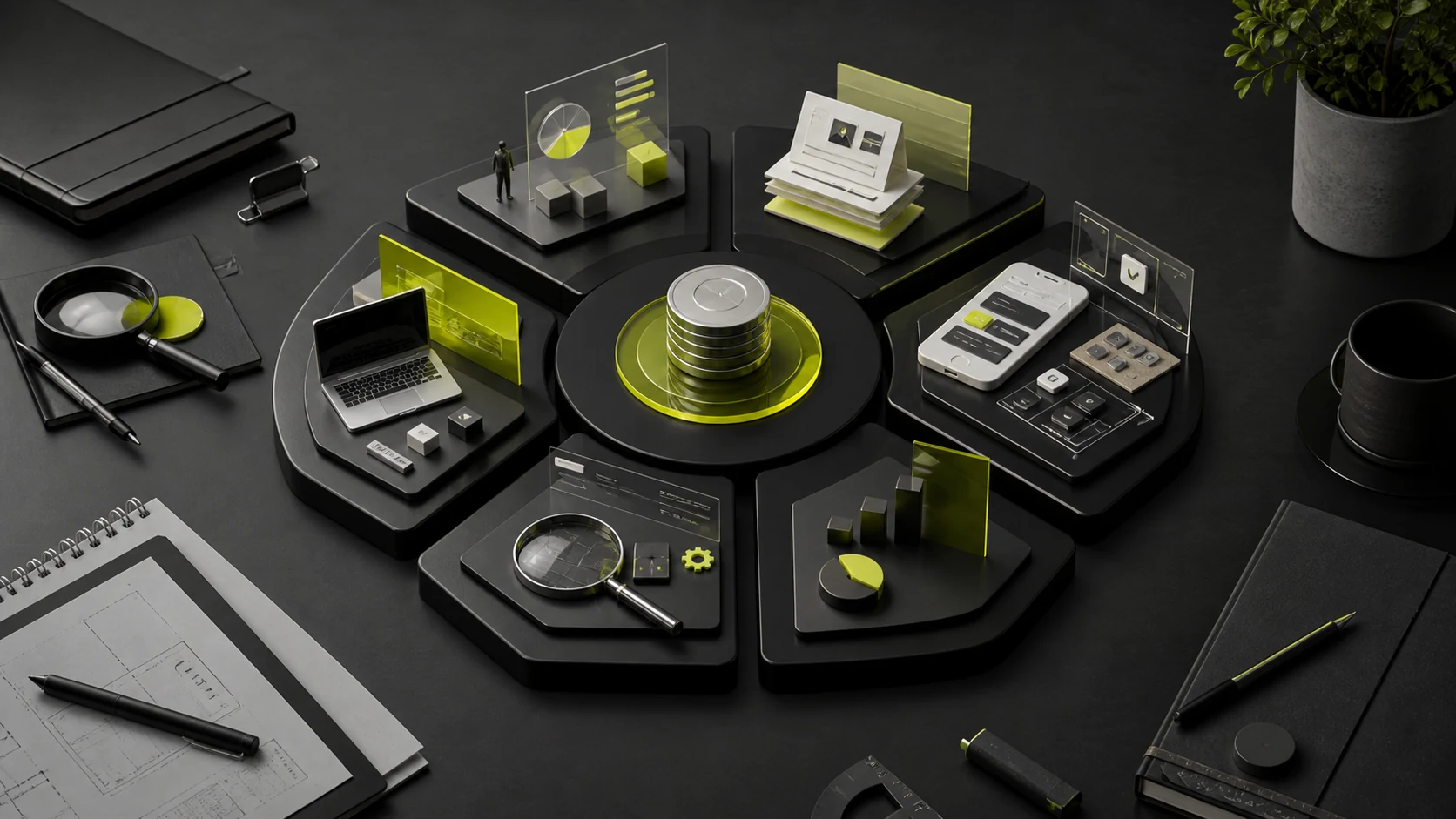
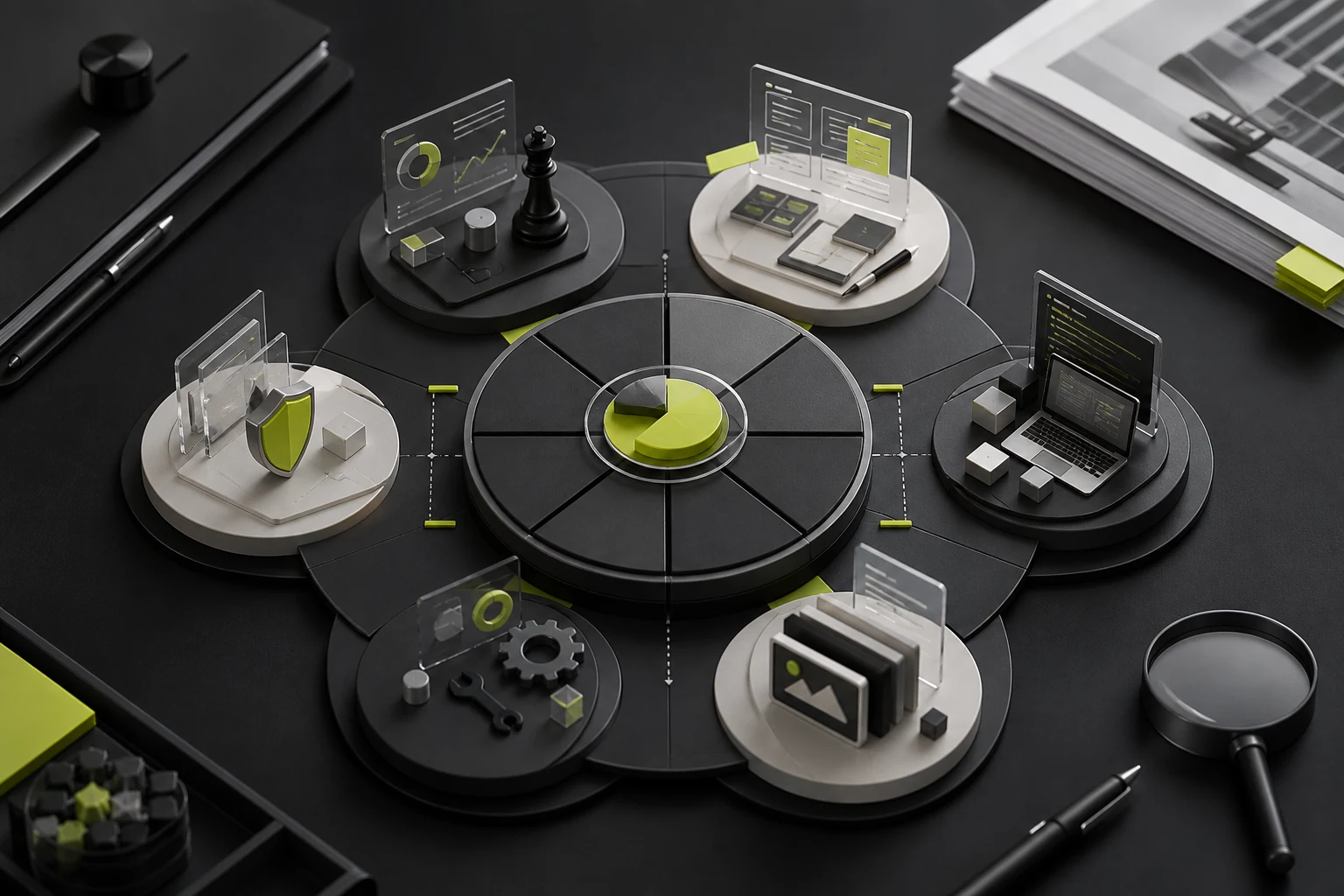
First divide the project into six funding pools: problem definition and strategy, content and brand, experience design, technical implementation, quality and launch, and maintenance and risk. Then allocate funds according to project risk. The more uncertain the project, the higher the share for early research and prototypes. Mature, standardized projects can assign more to execution and development.
01 Distinguish the Total Project Budget from the Vendor Contract Price
A vendor contract price covers only the work in the contract. A corporate project may also incur costs for internal staff time, copywriting, photography, translation, font and image licenses, domains and servers, third-party software, legal review, data migration, test devices, promotion, and operations. Treating the contract price as the total budget makes every necessary later expense look like an unexpected surcharge.
- Total Project Budget: all external purchases and internal resources required to achieve the business goal.
- Vendor Contract Price: the clearly committed service scope and deliverables of one team.
- Risk Reserve: change, integration, content, and timing risks known to exist but impossible to estimate precisely at project approval.
- Ongoing Budget: post-launch monitoring, content updates, optimization, system upgrades, and maintenance.
02 Establish Six Budget Pools
Budget Pool | What It Includes |
|---|---|
1. Problem Definition and Strategy | Research, interviews, data, current-state audits, goals, scope, and priorities |
2. Content and Brand Assets | Copy, product materials, images, brand guidelines, translation, and migration |
3. UI/UX and Prototypes | Information architecture, workflows, wireframes, visuals, design systems, motion, and testing |
4. Development and Integration | Front end, back end, CMS, APIs, data, third-party services, and deployment |
5. Quality and Launch | Functional, compatibility, performance, security, and accessibility testing, plus training and release |
6. Maintenance and Risk Reserve | Warranty, monitoring, iteration, platform upgrades, unknown issues, and scope changes |
Six pools do not mean every project must purchase every service. They make clear which risk control is being removed when scope is reduced, rather than suggesting that design and development are the only costs.
03 Sample Allocations for Three Project Types
The following percentages are JVDS planning examples for early discussions. They are not industry averages and do not directly constitute quotes. Adjust actual projects for existing assets, requirements maturity, technical complexity, number of decision-makers, and launch risk.
Model A: Brand-Upgrade Priority
Budget Direction | Sample Share | Focus |
|---|---|---|
Problem Definition and Brand Strategy | 20% | Brand audit, positioning, architecture, and core direction |
Brand Visual System | 35% | Logo, color, typography, graphics, guidelines, and key applications |
Digital Touchpoint Experience | 20% | Adaptation for corporate websites, social media, sales templates, or product interfaces |
Production and Training | 15% | Templates, files, vendor collaboration, and internal training |
Testing and Risk Reserve | 10% | Trademark boundaries, font and image licenses, proofs, and adjustments |
Model B: Corporate Website and Growth
Budget Direction | Sample Share | Focus |
|---|---|---|
Strategy and Requirements | 10% | Goals, audiences, competition, conversion paths, and scope |
Content and SEO Foundation | 15% | Page copy, product materials, keywords, and migration |
UI/UX Design | 20% | Structure, prototypes, visuals, responsive design, and motion |
Development and CMS | 35% | Front end, back office, forms, deployment, and integrations |
Testing and Launch | 10% | Performance, compatibility, accessibility, redirects, and acceptance |
Maintenance and Reserve | 10% | Launch support, defects, content adjustments, and unknown risks |
Model C: Complex B2B or SaaS Product
Budget Direction | Sample Share | Focus |
|---|---|---|
Discovery and Business Definition | 15% | Roles, workflows, permissions, rules, and risk assumptions |
UX and Service Design | 20% | Task flows, information architecture, prototypes, and usability validation |
UI and Design System | 15% | Dense interfaces, components, states, and guidelines |
Development and Systems Integration | 30% | Front end, back end, APIs, data, permissions, and deployment |
Testing, Security, and Launch | 10% | Regression, performance, security, accessibility, and training |
Maintenance and Reserve | 10% | Release iteration, monitoring, dependency upgrades, and scope changes |
04 Control Investment by Phase Instead of Locking the Entire Budget at Once
The Design Council's Double Diamond summarizes the process as Discover, Define, Develop, and Deliver: understand the problem, define it, develop and test multiple solutions, and then deliver. It is not a fixed waterfall process, but it reminds companies not to commit most of the budget to final production while the problem remains unclear.
Phase | What the Budget Buys | Expected Outcome at Phase End |
|---|---|---|
Discover | Understand users, the business, current conditions, and constraints | Research findings, risks, and assumptions requiring validation |
Define | Define the problem, goals, scope, and success criteria | Brief, roadmap, and release boundaries |
Develop | Explore, prototype, test, and iterate solutions | A validated solution and technical direction |
Deliver | Produce, test, launch, and improve continuously | Final assets, product, documentation, and operating mechanisms |
When requirements remain immature, contract for Discovery or a proof of concept first, then determine the downstream total from the results. This does not fragment the project to inflate costs; it avoids committing the entire budget to the wrong direction.
05 The Most Commonly Underestimated Budgets
- Content Preparation: product information, cases, data, images, and multilingual content often take longer than expected.
- Exception States: errors, empty data, insufficient permissions, weak networks, loading, and boundary conditions all require design and development.
- Internal Decisions: the more departments involved, the greater the review, revision, and coordination costs.
- Design System: without components and rules, a complex product becomes harder to maintain as page count grows.
- Accessibility: include it throughout production instead of remediating immediately before launch.
- Data and Integration: legacy systems, third-party APIs, data cleansing, and permissions concentrate risk.
- Launch and Migration: redirects, SEO, analytics, training, phased rollout, and rollback are more than pressing a publish button.
- Long-Term Maintenance: content, browsers, systems, dependencies, and platform rules continue to change.
06 What to Cut First When the Budget Is Limited
With a limited budget, reduce scope instead of thinning every phase. It is better to complete eight critical pages than twenty unvalidated pages, and better to deliver one complete core APP workflow than every function on two platforms.
Approach | Typical Content |
|---|---|
Preserve First | Core user tasks, key business rules, exception states, acceptance, testing, and asset ownership |
Can Be Reduced | Page count, use cases, motion scope, secondary functions, noncore languages, and advanced components |
Can Be Deferred | Low-frequency functions, full reporting, complex personalization, long-tail applications, and nonessential integrations |
Should Not Be Deleted Outright | Security, privacy, backups, accessibility fundamentals, critical monitoring, and launch rollback |
07 How to Use the Risk Reserve
For complex projects, JVDS recommends using a risk reserve of approximately 10%–15% as an initial planning point, adjusted for requirements maturity, external APIs, data migration, number of decision-makers, and schedule pressure. This is editorial guidance, not an industry rule. A risk reserve is not extra money the vendor may use automatically; every draw should state the reason, impact, and remaining balance.
08 Payment Milestones Are Not Cost Allocations
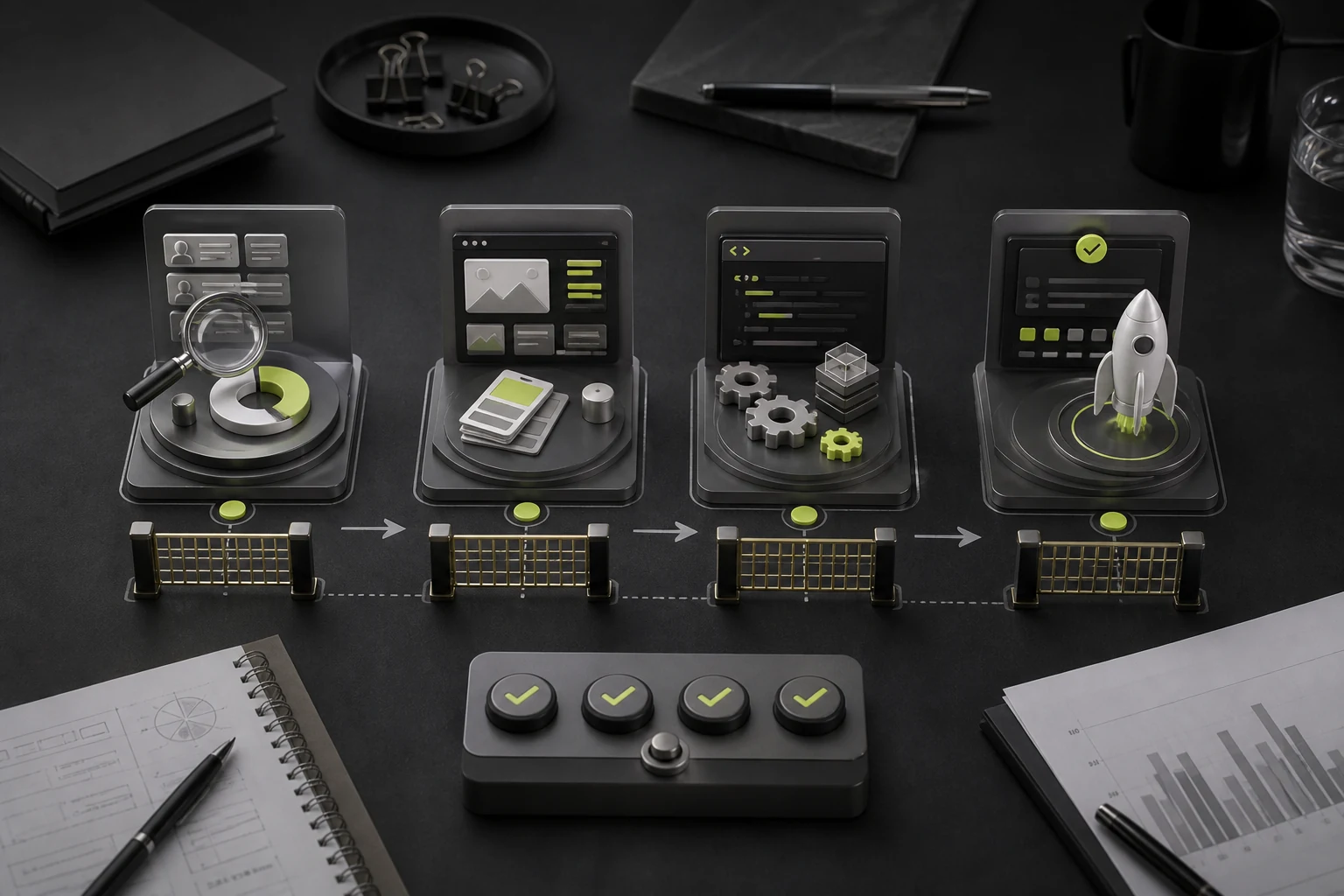
JVDS Design Studio's current contracts often use milestone payments of 50% at kickoff, 30% at stage approval, and 20% at final delivery. These percentages manage cash flow and performance risk; they do not mean costs occur in precisely a 50/30/20 pattern. Companies should manage both a budget-allocation sheet and a contractual payment schedule.
Payment Milestone | Purpose | What the Client Should Receive at the Same Time |
|---|---|---|
Kickoff Payment | Reserve the team and begin research and planning | Requirements materials, project plan, staffing, and kickoff confirmation |
Stage Payment | Approve a direction or design phase | Phase outputs, scope changes, and next-stage plan |
Final Payment | Final acceptance and complete delivery | Source files, code, documentation, accounts, and a handoff checklist |
09 Twelve Questions for a Budget Meeting
- What business problem must the project solve, and what loss results if nothing is done?
- Which task must the first release enable which users to complete?
- How much of the existing brand, content, data, and technology can be reused?
- Which regulatory, platform, or market-launch deadlines cannot move?
- Which work will the company perform internally, and which must be outsourced?
- Do we need research, testing, and recruitment of real users?
- Does scope include mobile, responsive design, multiple languages, and accessibility?
- Does development involve back-office systems, APIs, data migration, and third-party systems?
- Who owns content, servers, monitoring, releases, and security updates after launch?
- Which costs are excluded from the vendor quote?
- How will requirement changes and approval delays affect the budget?
- Which metrics determine whether continued investment is worthwhile?
10 Frequently Asked Questions
What share of the total project should go to design?
There is no fixed ratio. Brands, corporate websites, and complex products have different risks. First assess existing assets, content, technology, and launch responsibilities.
Should the budget be approved all at once or by phase?
Projects with clear goals and stable scope can be approved at once and paid by milestone. Projects with high uncertainty are better suited to phased decisions.
Can we do only UI without research and prototypes?
Yes, if reliable requirements, workflows, and information architecture already exist. If they do not, the money saved up front may become rework later.
Why reserve a budget for after launch?
Real users, devices, content, and system environments expose issues that design cannot reveal. Without an ongoing budget, ownership disappears on release day.
Conclusion
The point of a design-project budget is not to divide every dollar evenly among roles. It is to place resources where they reduce errors, validate risks, and support delivery. When scope is unclear, buy understanding first; once direction is clear, buy outputs; after launch, retain budgets for testing, monitoring, and iteration.
Budget models can change, but content, research, exception states, testing, accessibility, launch, and maintenance cannot be treated as optional extras to add only when money remains. They may not all require a large share, but they must be visible before the project starts.
Next StepSubmit your project goals, estimated pages or functions, existing content, technical environment, target launch date, and budget range to JVDS Design Studio. We will first help determine which phases you should purchase instead of quoting directly by page count.
Need design or website development services?
JVDS Design Studio is a professional design studio focused on digital product experiences and brand identity. We work with businesses in China and overseas that want to strengthen their brand image, improve user experience and grow their business, providing clear, usable UI/UX design, high-quality website design and development, app and mini-program development, and cohesive, distinctive brand identity design.
Working on a B2B system or an app? Share your current screens and key user tasks so we can discuss the design scope.
 Link copied