


Website & Design Insights
All Insights
 Web Insights
How to Improve Corporate Website Conversion Rates
When a corporate website generates no inquiries, teams often replace the hero section, change button colors, or shorten forms first. These changes sometimes help but may miss the problem entirely. Traffic seeking jobs, education, or free resources was never going to buy. If the service value is unclear, users have no reason to complete a form of any length. If cases and company information are weak, shorter forms merely increase low-quality inquiries.
 Web Insights
Where Does SEO-Friendly Website Design Begin?
There is a widespread misconception in website projects: many companies think, “Let's build a beautiful, impressive website and get it online first. After launch, we can hire an SEO specialist to fill in some keywords in the CMS and publish a few articles.”
 Web Insights
Corporate Website Launch Acceptance Checklist
As a new website nears completion, project teams can become absorbed in visual details such as a spacing difference of 2 pixels while overlooking critical issues: a staging noindex tag left in place, failed form email notifications, or missing 301 redirects from old URLs. These oversights can cause indexing to disappear or inquiries to be lost immediately after launch.
 Branding
How to Design a Brand Website That Converts
Many brand websites swing between two extremes. One emphasizes atmosphere, motion, and concepts but leaves users unsure what the product is. The other fills every page with buttons, selling points, and promotions until any brand distinction collapses into a standard e-commerce template. A mature brand website uses brand expression to help users understand, trust, and act.
 Web Insights
How to Design a B2B Website for Every Buying Role
B2B transactions typically have long sales cycles, high order values, and decisions shared by multiple roles. From a potential customer's first search-engine visit to a signed procurement contract, the journey often passes through four stages: initial screening → technical feasibility checks → internal proposal presentation → commercial inquiries and supplier qualification reviews. Effective B2B corporate website design should work like an experienced presales consultant, giving visitors in different roles the right information at each stage.
 Web Insights
What Should a Corporate Website Actually Accomplish?
Corporate websites are often expected to do too much: elevate the brand, acquire customers, present products, support sales, recruit talent, serve customers, publish news, and improve SEO. Every goal is reasonable, but without priorities, the home page fills with a company profile, ten business lines, news, jobs, downloads, QR codes, and multiple forms—leaving users unsure what to do next.
 Web Insights
How to Design a Payment Platform Website
Payment platform and FinTech websites face a distinctive challenge: moving money inherently requires a very high level of trust. Whether the customer is a cross-border e-commerce seller, a SaaS subscription business expanding overseas, or a physical retail chain, the payment provider is often evaluated jointly by business leaders, finance managers, backend engineers, and compliance and risk teams. Within one consistent visual system, the website must help all four groups quickly find the evidence relevant to their decisions.
 Interface Design
How Long Does Mobile App Development Take?
A mobile app timeline cannot be estimated from page count alone. A 20-screen content tool with a simple admin system and no payments may ship quickly. A financial product with only ten core screens may take far longer because identity verification, transaction states, security, compliance, and exception handling all require substantial work.
 User Experience
Freelancer, Design Studio, or Agency: Which Fits Your UI Project?
When businesses need external support for UI/UX product design or a brand website, there are three main types of suppliers to choose from: individual freelancers, boutique design and development studios (such as JVDS), and large full-service advertising/software outsourcing agencies.
 User Experience
Should One Team Handle Both Design and Development?
When starting a website redesign or web product project, many businesses hesitate between two engagement models: Model A (split outsourcing)—first hiring a graphic/UI design company to produce the designs, then taking them to a separate software outsourcing company or internal IT team to write the code; and Model B (integrated design and development)—commissioning a team such as JVDS, which combines UI/UX design with front-end and back-end development capabilities, to handle the project end to end.
 Web Insights
Corporate, Brand, Marketing, and Product Websites: What Is the Difference?
Many companies begin a website brief by saying, “We want a premium brand site that converts like a marketing site and explains features like a product site.” Those goals are compatible, but without a clear priority, the result often includes every module while making no objective stand out.
 User Experience
Who Owns Design Files, Source Code, and Copyright?
When signing design and website development contracts, many corporate legal or procurement staff habitually include a broad statement such as “All intellectual property and source files produced under this project belong to the client.” At the other extreme, some fall foul of template website providers' standard contracts: after paying the final balance and trying to migrate servers, they are told, “The contract only covers the right to use the website; it does not include handover of the underlying source code.”
 User Experience
Design and Website Contracts: 10 Clauses to Define Clearly
A Website Development and Design Technical Services Agreement with clear responsibilities is not intended to prepare for litigation when something goes wrong. It is intended to establish strong agreement between client and supplier from day one on “what will be done, to what standard, in how many handover stages, and how it will be maintained afterward.” The following 10 key clauses must be addressed individually when signing a website development or design contract:
 User Experience
How to Write a Design and Website Development RFP
When a company needs to compare proposals and quotes from 3 website development or design suppliers, sending only a verbal brief—“We want to redesign our website; please give us a proposal and quote”—often results in 3 quotes that cannot be compared side by side. Company A quotes RMB 25,000 but only provides 5 template-based pages; Company B quotes RMB 68,000 including a custom bilingual site and backend development; Company C quotes RMB 150,000 but packs in brand planning and 3D animation you do not need at all.
 Web Insights
How to Design a Corporate Website for Global Markets
When we take on a website project for overseas markets, there is one sentence we dread hearing: “Our Chinese site is already very complete. Just build an English version using the same layout. We'll have a translation agency translate the copy and send it over.”
 Web Insights
How Long Does Google SEO Take to Work?
Google SEO does not start “working” on one universal date. Crawling and recrawling may take days to weeks. Stable indexing, query matching, and rankings for new content usually take longer. A project may treat months 1–3 as the technical and early-visibility stage, months 3–6 as the period for evaluating topic growth and non-brand traffic, and months 6–12 or later as the point for reviewing competitive rankings, qualified leads, and commercial returns. The actual timeline depends on website foundations, competition, content gains, external authority, and execution quality.
 Web Insights
How to Calculate SEO ROI from Traffic to Revenue
SEO ROI should end with attributable gross profit—not rankings or traffic. The basic formula is: “(Gross profit attributable to SEO − total SEO investment) ÷ total SEO investment × 100%.” Separate brand and non-brand queries, track the complete funnel from organic search to qualified leads, opportunities, and closed business, and disclose how long sales cycles, assisted conversions, content reuse, and the organic-growth baseline are handled.
 Web Insights
How to Build a Multilingual Corporate Website
For many companies, a multilingual website begins with a burst of enthusiasm and falls into neglect six months later. The project starts ambitiously, with seven or eight languages launched at once—Chinese, English, German, French, Spanish, Japanese, Russian, and perhaps more. Six months on, the Chinese site has published thirty new product and case-study posts, while the German and Spanish pages remain the same empty shells. Some navigation bars are still half English and half machine-translated Spanish.
 Web Insights
How to Design a Corporate Website for B2B Services
Unlike consumer purchases, procurement of business services—such as B2B software, consulting, digital solutions, and finance, tax, or supply-chain platforms—often involves a decision-making committee of 4 to 6 people and takes anywhere from weeks to months. If a website is filled with obscure technical jargon, business leaders cannot understand its commercial value. If it offers only empty marketing slogans, IT and procurement teams cannot find the technical boundaries and compliance evidence they need.
 Interface Design
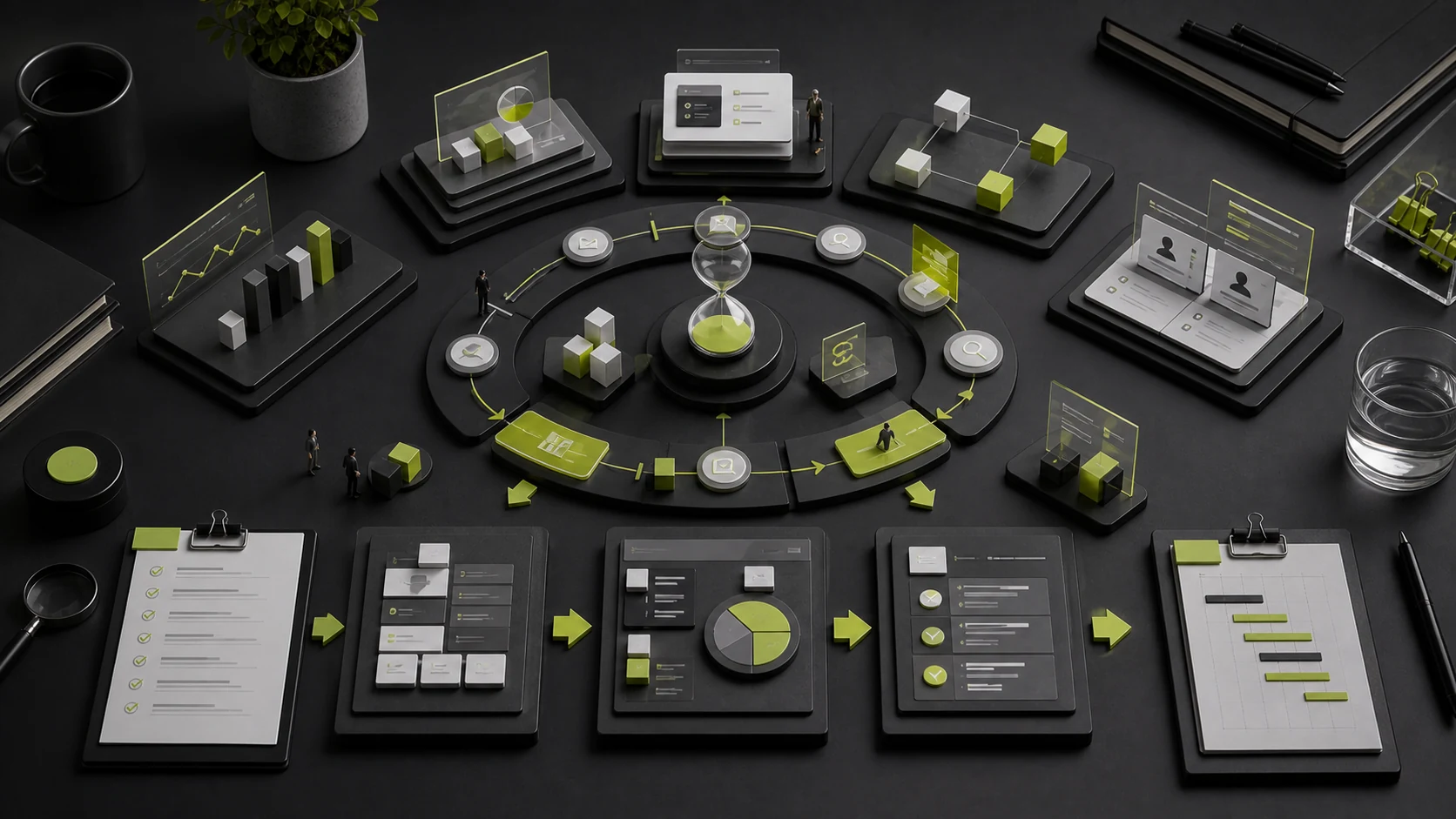
How Long Does a UI/UX Design Project Take?
A small UI project with stable wireframes can typically be planned over 2–4 weeks. A standard UX/UI project covering core flows, wireframes, visual design, and foundational components usually requires 4–8 weeks. Enterprise projects involving multiple roles, complex workflows, a design system, or user validation often require 8–16 weeks or more. The real drivers are the number of flows, state complexity, depth of research, decision speed, and collaboration with development—not page count alone.
 Interface Design
Which Businesses Are a Good Fit for WeChat Mini Programs?
Businesses suited to WeChat Mini Programs usually have a clear entry point within WeChat, short tasks, users willing to scan or follow a shared link, a need for WeChat identity or payment, and no dependence on complex background processing or deep device capabilities. Low frequency is not automatically a problem: occasional tasks such as wedding invitations, trade-show registration, and visitor guides may still be a good fit. The real warning sign is a combination of low frequency, no natural entry point, no sharing relationship, long tasks, and a need for sustained retention.
 Web Insights
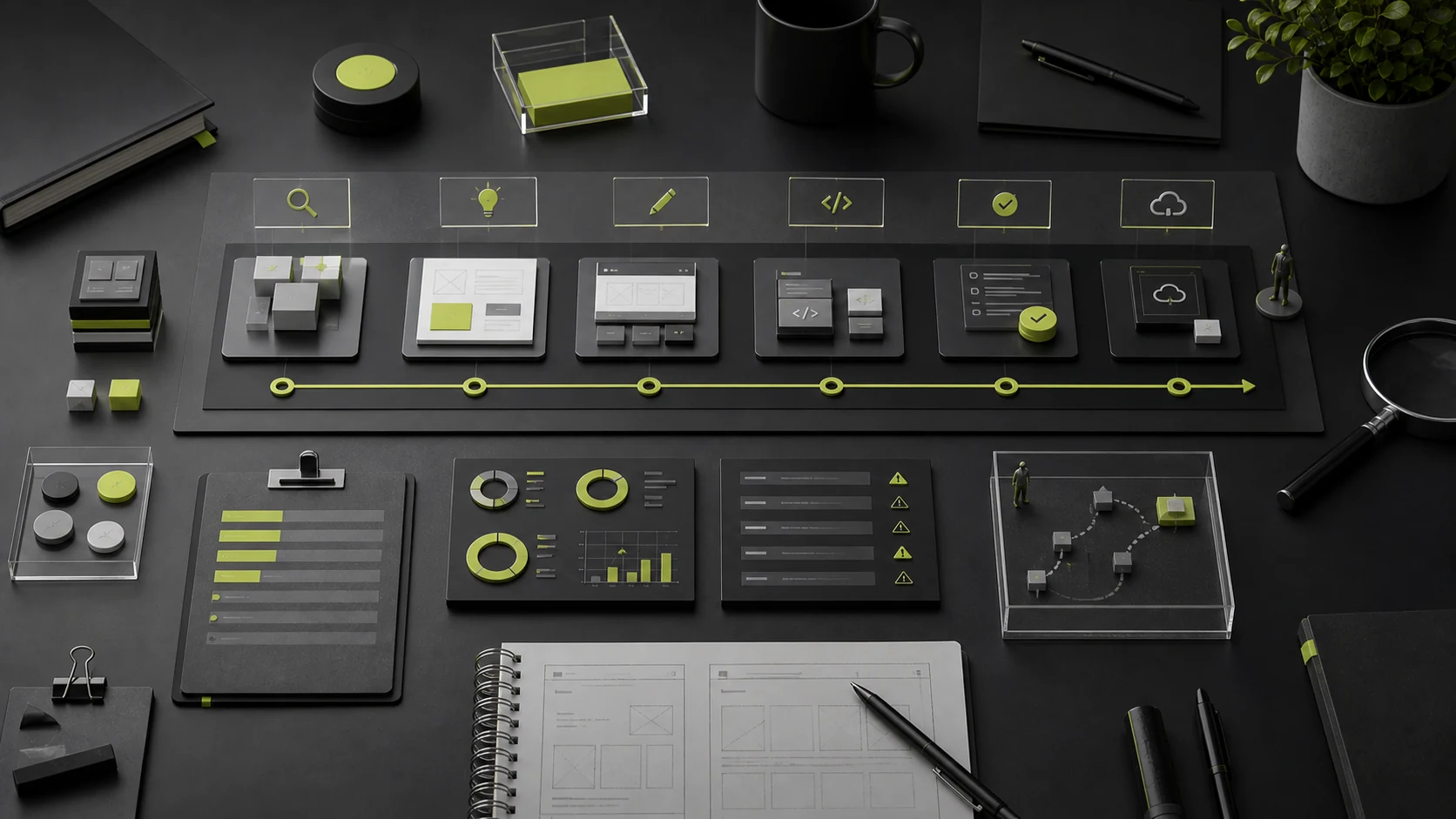
How Long Does a Corporate Website Take? Timeline Guide
A small or midsize corporate website with clearly defined content and functionality can typically be planned over 4–8 weeks. Projects involving multiple languages, custom motion, a CMS, a complex product catalog, or cross-department approvals often require 8–16 weeks or longer. The schedule depends less on how quickly the homepage is produced than on whether scope confirmation, content preparation, feedback, development integration, and launch acceptance can proceed without interruption.
 Web Insights
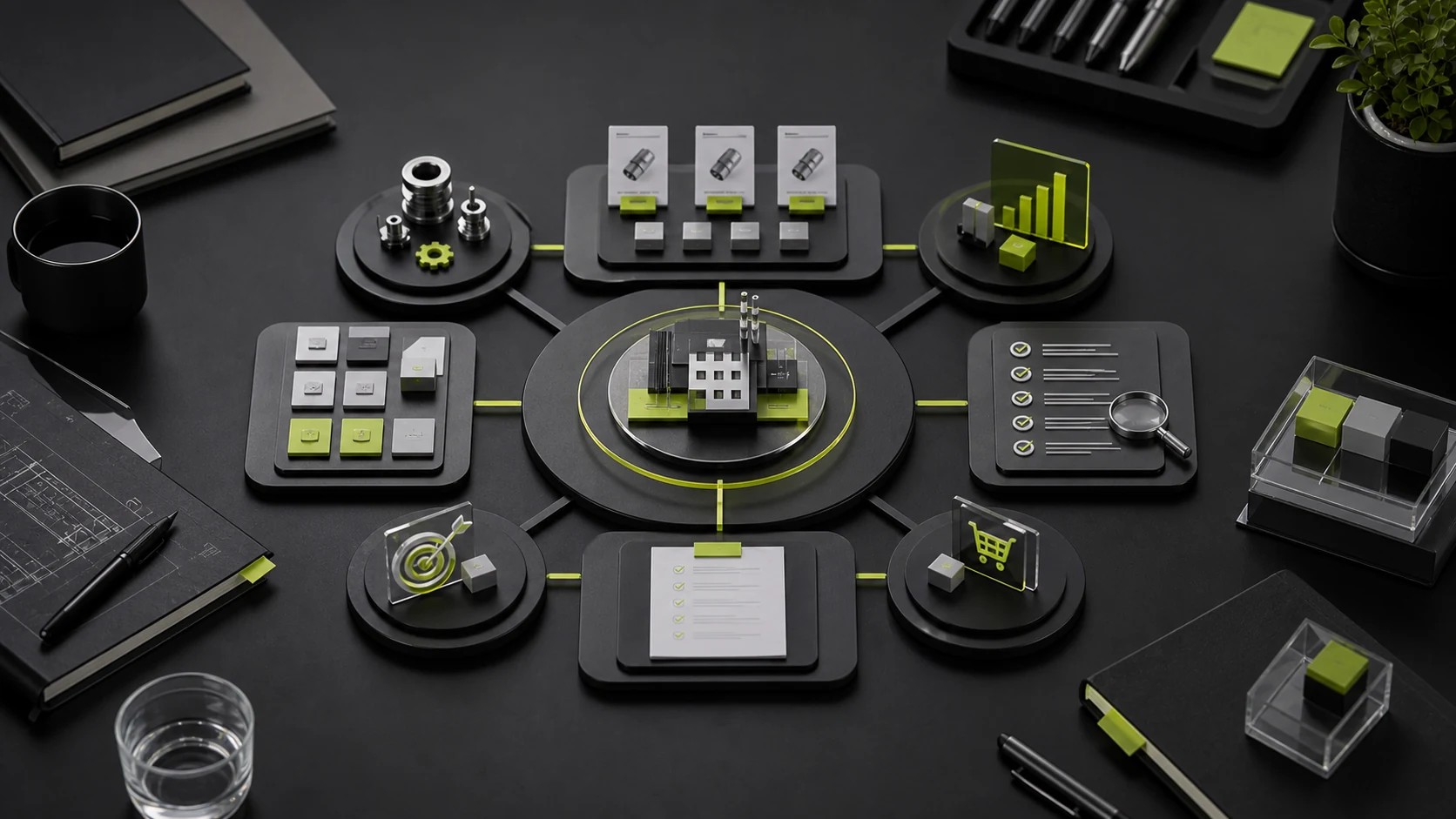
How to Design a Manufacturing Product Catalog
When redesigning their websites, many manufacturers transfer internal ERP codes or printed catalog chapters directly to the web. As a result, outside buyers and R&D engineers struggle to find what matters. In a high-converting B2B corporate website design, the product catalog should be organized around the customer's selection task (Job-to-be-Done), creating a continuous path from identifying the application → filtering by key parameters → comparing models → obtaining technical documents → making a sales inquiry.
 Interface Design
How Much Does Mobile App UI Design Cost?
“How much does it cost to design 20 mobile app screens?” sounds precise, but those 20 primary screens may require variants for new and returning users, signed-out and unauthorized states, empty data, loading, errors, keyboards, payments, and localization. If a design firm prices only the ideal screens, the scope will expand quickly.
 Interface Design
How Financial Mobile Apps Build Trust Through Security, Transparency, and Risk Disclosure
Financial mobile apps are most likely to lose trust at critical moments: when users do not know why identity documents are required, cannot see fees before a transfer, cannot understand the total cost of borrowing, are unsure whether a payment succeeded, or encounter suspicious account activity. The problem is not visual sophistication; it is missing information, control, and recovery mechanisms.
 Branding
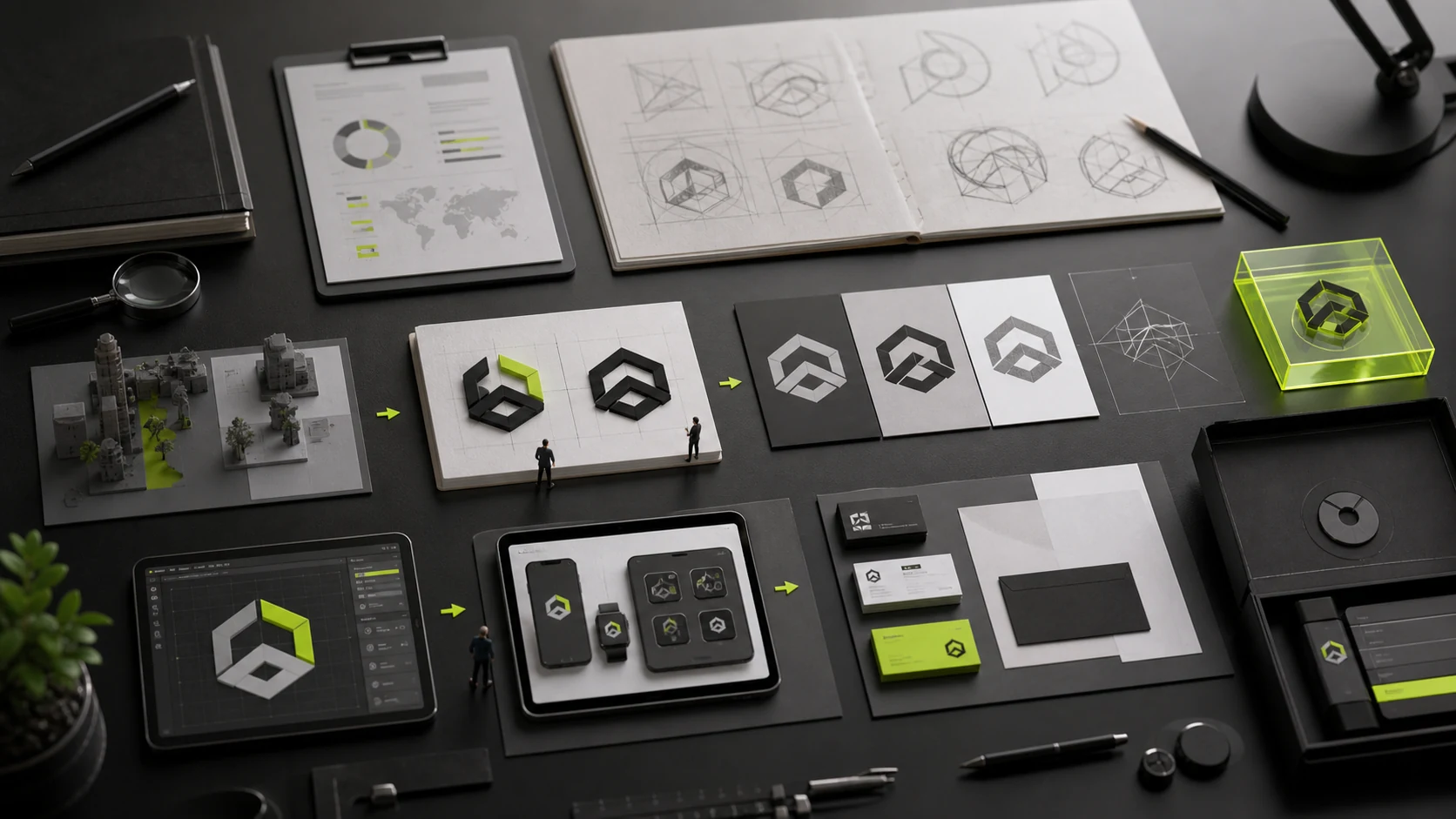
Professional Logo Design Process: Research to Delivery
Professional logo design is not about presenting as many attractive concepts as possible. Research, judgment, and testing progressively eliminate directions that are irrelevant to the business, difficult to extend or recognize, or exposed to rights risk. The final mark must work on business cards, websites, mobile app icons, products, social profiles, and black-and-white print.
 Interface Design
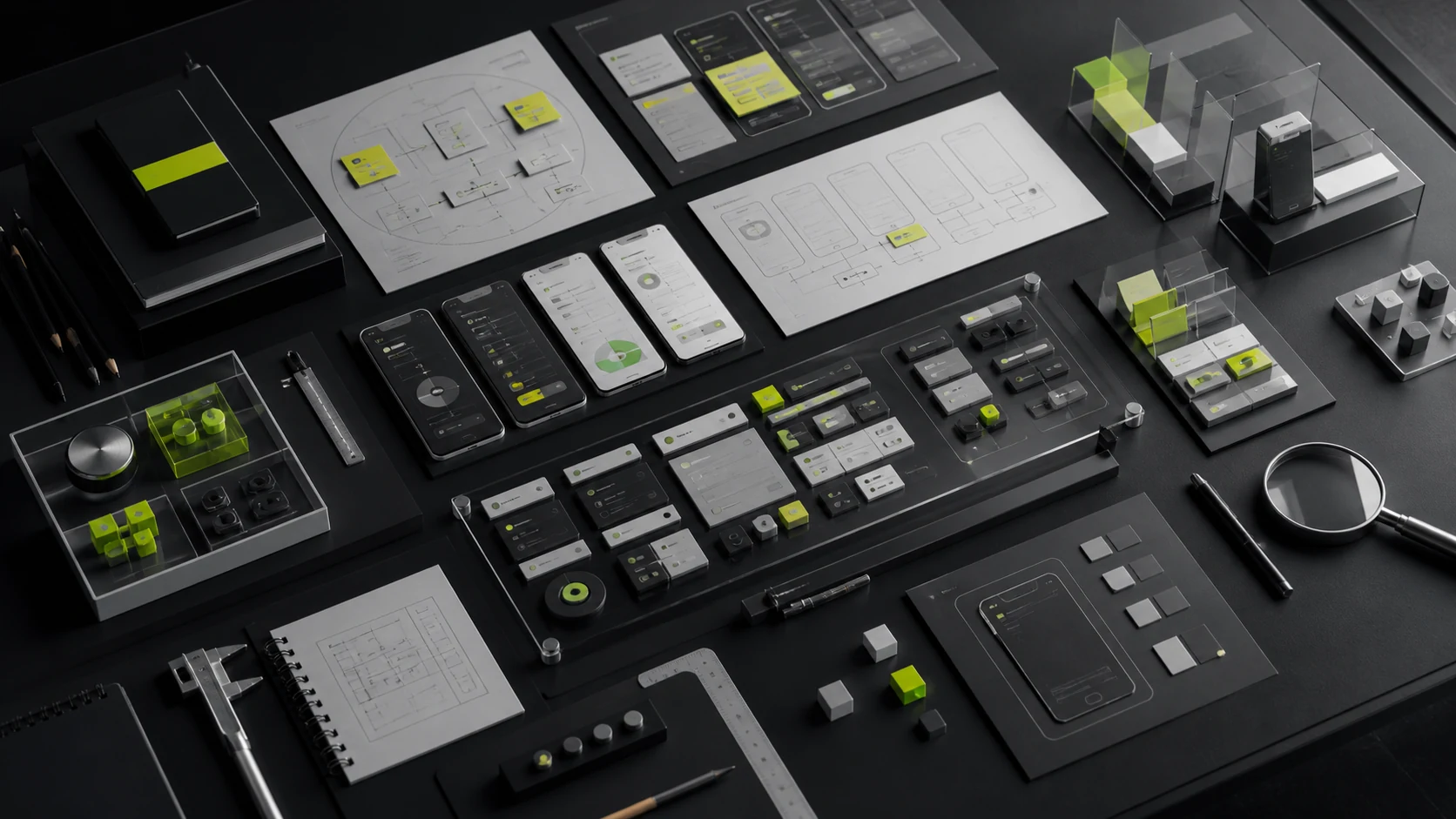
What Mobile App UI/UX Design Includes
Mobile app design is often reduced to drawing screens from a feature list. In practice, entry points, workflow sequence, input effort, status feedback, error recovery, and platform conventions determine whether users can complete their goals. Visual design alone is appropriate only when the product definition and interaction model are already mature.
 Interface Design
How Much Does Custom Mobile App Development Cost?
Features such as login, payments, messaging, memberships, and maps may sound like five simple items, but each can involve different identity systems, third-party services, business rules, exception handling, admin workflows, review requirements, and security controls. A fixed price based only on feature names is usually an early estimate with undefined boundaries.
 Web Insights
How Much Does Enterprise Website SEO Cost?
When companies ask what SEO costs, estimates can range from a few thousand yuan to well over ¥100,000 per month. The difference is not simply agency size. Some providers deliver only keyword lists and articles; others also own technical remediation, site architecture, content research, implementation coordination, analytics, and digital PR.
 Web Insights
How to Choose a Google SEO Provider: Methods, Reports, Risk
Claims such as “page-one rankings in three months,” “internal channels for faster indexing,” or “proprietary tools that directly improve rankings” may sound reassuring, but they should trigger procurement scrutiny. Google states that third-party tools do not have access to internal ranking data and cannot guarantee performance.


